
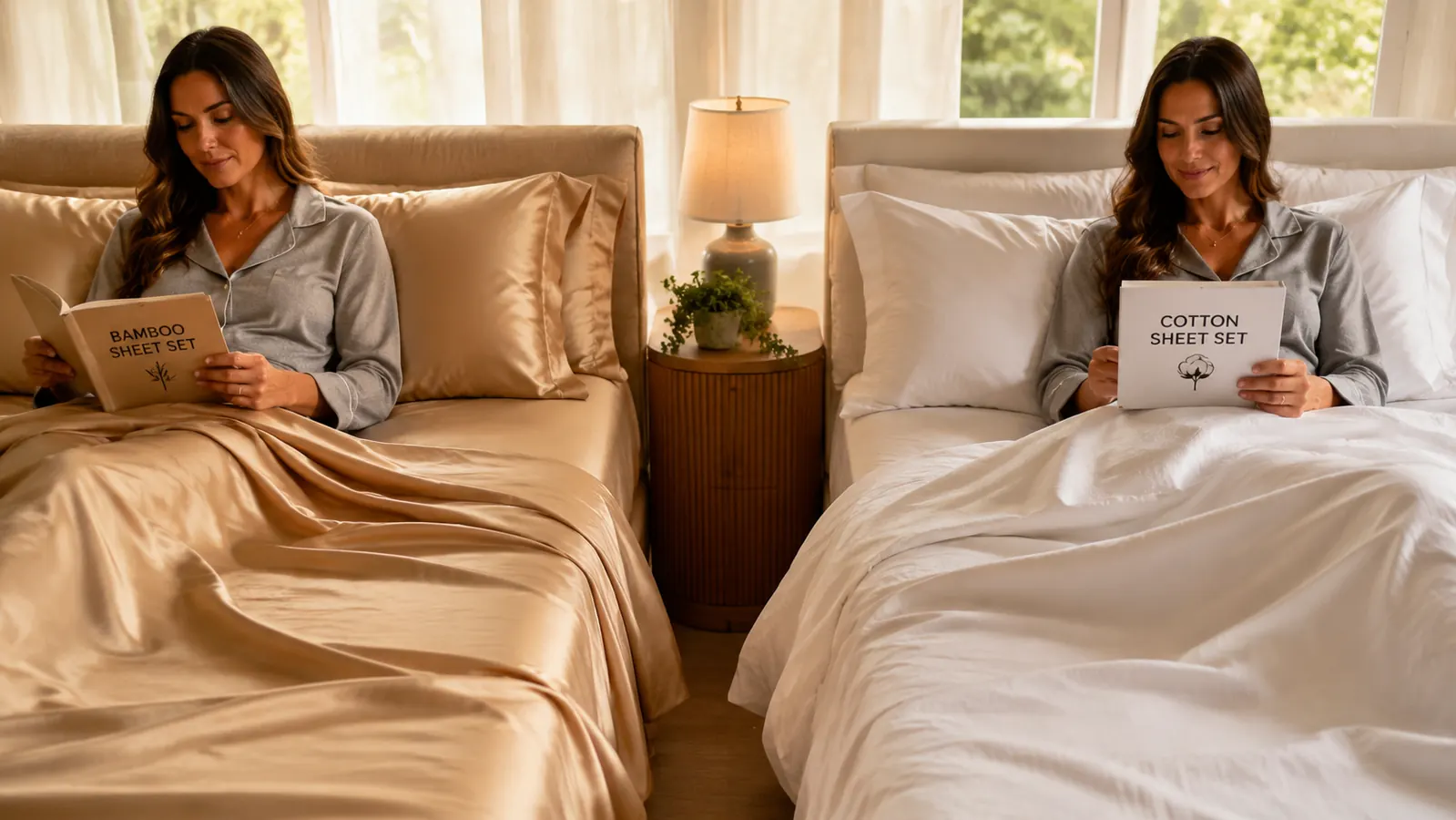
I run hot. Always have. My husband sleeps under a comforter in January while I'm kicking the top sheet off by midnight in June. So when people ask me whether bamboo sheets or cotton sheets actually sleep cooler, I don't have a theoretical answer for them. I have a month of both, back to back, on the same queen mattress, in a bedroom I keep at a stubborn 68 degrees year round.
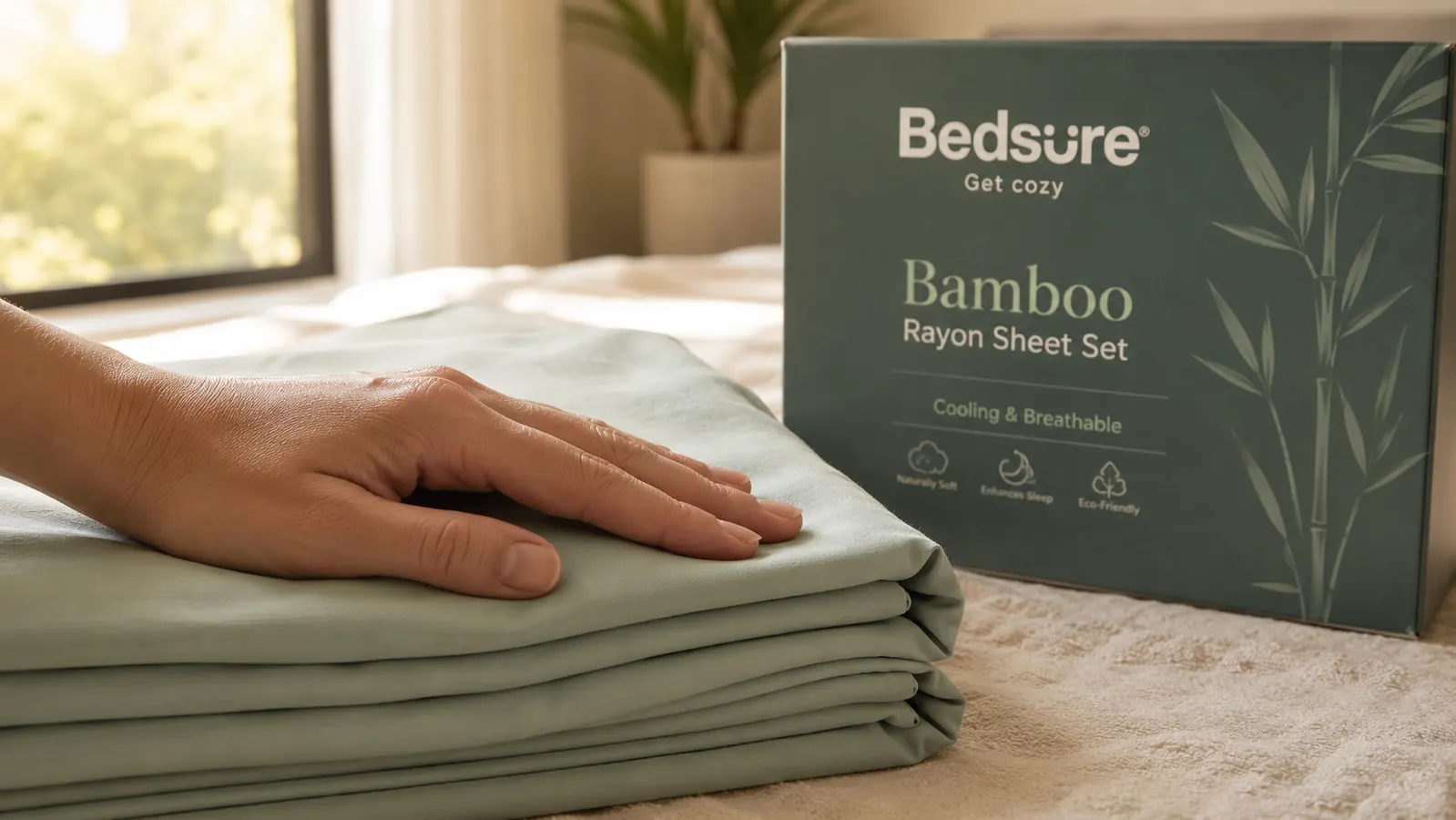
I bought the Bedsure Queen Sheet Set in rayon derived from bamboo first, after months of waking up with the sheets kicked into a ball at the foot of the bed. A friend swore by cotton instead, said bamboo was overhyped marketing on a fabric that's really just processed wood pulp. So I bought a comparable 400-thread-count cotton set and ran the same test on both, one month each, no other changes to the room, the mattress, or my nighttime routine.
The short version: the Bedsure bamboo set won on temperature and softness, by enough of a margin that I noticed it in real time at 2am, not just on a spec sheet weeks later. But cotton didn't lose everywhere. It held its shape better over the month, it looked crisper on a made bed, and it was cheaper up front. If you want the honest, no-nonsense breakdown before you spend your money on either one, here's exactly what happened during my month with each.
| Bedsure Bamboo Sheets | Cotton Sheets | |
|---|---|---|
| Material | Rayon derived from bamboo, PureWoven | 100% cotton, 400 thread count |
| Feel out of the package | Silky, almost slippery to the touch | Slightly stiff, softened after 2-3 washes |
| Temperature at night | Cool to the touch for the first 2-3 hours, evens out after | Warmed up within the first hour, held body heat |
| Moisture handling | Wicked sweat, sheets felt dry by morning | Damp feeling on warmer nights, slower to dry |
| Wrinkling | Wrinkles fast, needs a quick smooth after washing | Holds a crisper, flatter look longer |
| Durability after 1 month | No pilling, held color and softness | No pilling, slightly duller white by week 3 |
| Price (queen set) | Mid-range | Mid-range for comparable 400tc cotton |
| Best for | Hot sleepers, night sweats, sensitive skin | Budget buyers, people who like a crisp hotel-bed look |
Where Bamboo Wins
The first night on the Bedsure set, I remember actually saying out loud, that's cold, in a good way. Bamboo rayon has a different molecular structure than cotton. It's more porous, so air moves through the weave instead of getting trapped against your skin, and the fiber wicks moisture away instead of holding it. In practice that meant I fell asleep faster because I wasn't doing my usual leg-out, leg-in dance trying to regulate my own temperature under the sheet.
The softness surprised me too. I expected something closer to a silky, slidey feel that would bunch up under me during the night, but the PureWoven weave has enough grip that the fitted sheet stayed tucked under all four mattress corners for the entire month. My arms and shoulders, which tend to break out from rougher fabric, had noticeably less irritation by week two. That's not something I expected from a sheet, it's usually something I'm managing with lotion or a different laundry detergent.
There's also a moisture piece that matters more than people give it credit for. On the two nights that month when the AC struggled to keep up with a heat wave, I woke up on the cotton set feeling genuinely damp, the kind of clammy that makes you want to flip your pillow to the cool side. On the bamboo set during a similarly warm stretch, the sheets felt dry to the touch by morning even though I knew I'd been sweating. That's the wicking doing its job, pulling moisture off my skin and letting it evaporate instead of just sitting there. If you want the deeper dive on why hot sleepers specifically benefit from this fabric, I wrote up 10 reasons bamboo sheets help hot sleepers rest better after living with this exact set for six months straight.
Washing was where I expected bamboo to fall apart, honestly, since I'd heard stories about rayon fabrics getting flimsy after a few cycles in the machine. That didn't happen here. I washed the Bedsure set on cold, tumble dried on low, and by the end of the month it still had the same hand-feel as the day it arrived. No pilling along the seams, no thinning at the corners where the elastic grips the mattress. The color, a warm oatmeal tone, didn't fade either. I can't say the same confidently for every bamboo sheet on the market, some cheaper ones do break down fast, but this particular set held up better than I expected going in.
Where Cotton Wins
Cotton isn't a bad fabric, it's just a different trade-off, and I want to be fair to it here because plenty of people sleep great on it. The 400-thread-count set I compared it against held its crisp, made-bed look for days longer than the bamboo did. Bamboo wrinkles the moment you sit on it wrong, and mine needed a quick hand-smooth after every wash cycle or it looked slept-in even when it was freshly made and still on the line to dry. If you're the type who likes your bed to look like a magazine photo the second you pull the comforter over it, cotton has the clear edge there.
Cotton also won on price and on familiarity. It's the fabric most of us grew up sleeping on, so there's no adjustment period, no learning curve where a slightly cooler-feeling sheet makes you wonder if something's wrong with it instead of realizing it's working exactly as intended. And at a lower price point for a comparable queen set, if your budget is tight this particular month, cotton gets you a solid chunk of the comfort for meaningfully less money out the door.
I'll also say cotton is the safer bet if you're sharing a bed with someone who runs cold. My husband, sleeping under his own comforter regardless of which sheet was under him, didn't have a strong preference either way. But if you're the only hot sleeper in the house and the other person already complains the room's too cold, bamboo's cooling effect might be one more thing you're negotiating over the thermostat.
There's also a seasonal angle worth mentioning. Cotton actually held up fine during a cold snap that same month, staying warmer against the skin on nights when the heater couldn't quite keep the room comfortable. Bamboo, being the better heat conductor of the two in this case, felt slightly cool to get into on those colder nights before my body warmed the bed up. If your climate swings hard between seasons and you don't want to swap sheet sets twice a year, that's a real point in cotton's favor, even if bamboo still wins on the hot nights that bother me most.
Still waking up sweaty at 2am? That's the cotton problem, not you.
The Bedsure bamboo sheet set is the one I've stuck with since this test ended. It's the fabric doing the work, not willpower or a colder thermostat setting.
Amazon Check Today's Price on Amazon →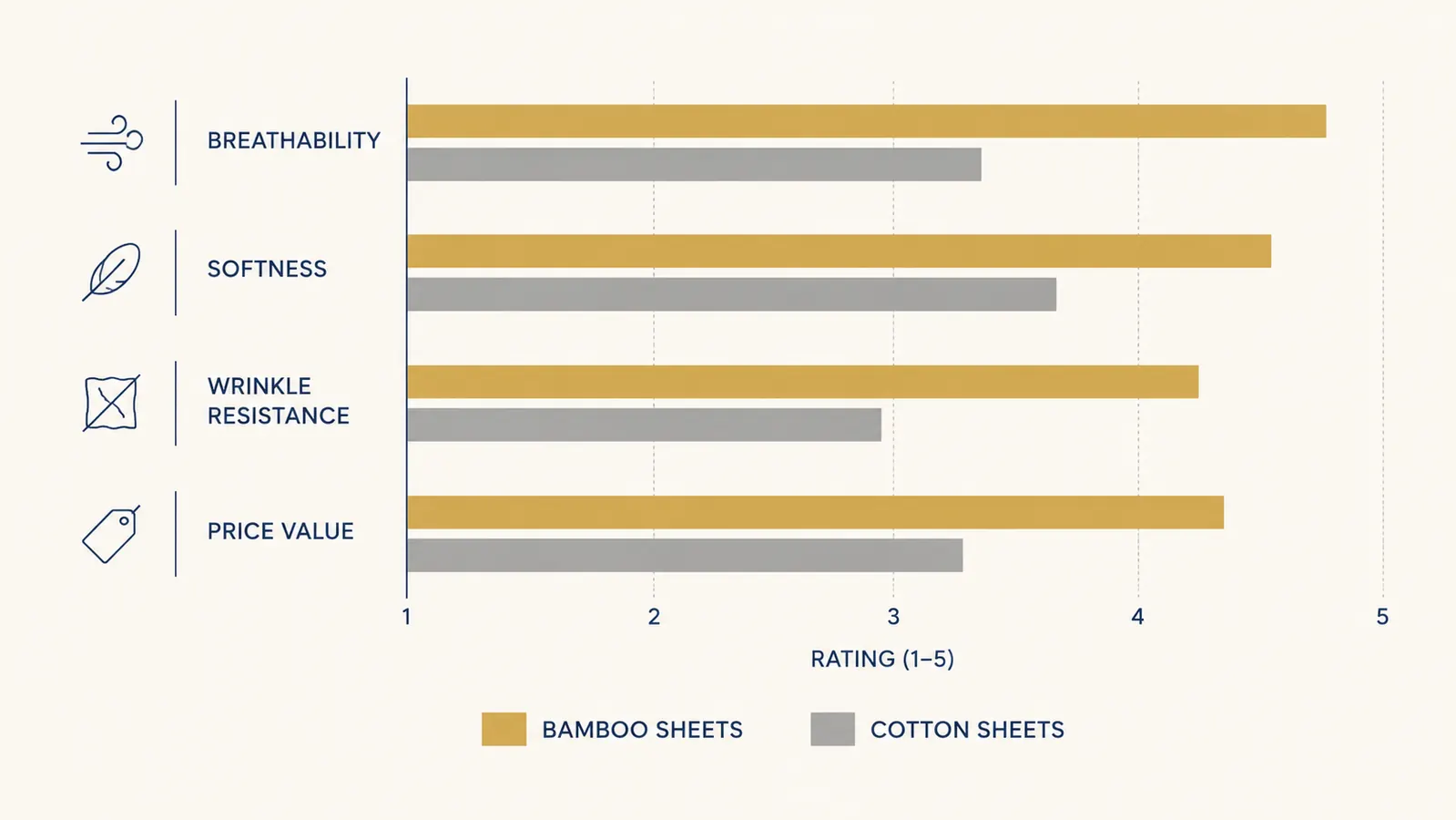
What the Price Difference Actually Buys You
On paper, the price difference looks like cotton is the obvious value pick. But I started thinking about it in terms of nights instead of dollars. A decent sheet set gets used most nights of the year for a couple of years before it starts showing real wear. Spread across that timeline, the gap between these two sets works out to pennies a night. What actually moved the needle for me wasn't the sticker price, it was whether I woke up rested or whether I woke up peeling a damp sheet off my leg at 3am. Once I framed it that way, the extra cost for bamboo stopped feeling like an upgrade and started feeling more like the baseline I should've been paying for years.
Fit is the other quiet factor nobody puts on a spec sheet. Both sets I tested were labeled queen, both claimed deep pockets for thicker mattresses, but the Bedsure fitted sheet had noticeably more stretch in the elastic band, which mattered on my 14-inch mattress with a topper. The cotton fitted sheet needed a firmer tug to get the last corner on, and it rode up slightly by the third week of nightly use, exposing a sliver of mattress at 3am more than once. If you've got a taller mattress or you use a topper, that stretch is worth factoring in alongside the temperature difference.

Who Should Buy Which
If you're a hot sleeper, if you wake up with the sheets kicked to the floor, or if you deal with night sweats, hormonal or otherwise, bamboo is worth the extra cost. The temperature difference isn't subtle, and it's the kind of thing you feel within the first few nights, not something you have to talk yourself into liking. If you sleep cold already, or you share a bed with someone who runs cold and you're both fine with the room's current temperature, cotton at a lower price point makes more sense, and you'll get a crisper-looking bed out of the deal without paying extra for a cooling effect you don't need.
There's a middle case too, worth naming honestly. If you run warm but you're also someone who cares a lot about a tidy, hotel-crisp bed, you might find yourself annoyed by bamboo's wrinkle tendency even while you appreciate the cooler nights. In that case, a slightly heavier hand with the iron, or just accepting a more lived-in look, is the price of the temperature benefit. I made peace with it. Your mileage may vary depending on how much a wrinkled top sheet bothers you before coffee.
One more consideration: if you're dealing with night sweats specifically, rather than just general overheating, I put together a step-by-step guide on how to stop night sweats with bamboo sheets that covers more than just the fabric swap, things like what to wear to bed, how to layer a lighter comforter on top so you're not fighting the sheet and the blanket at the same time, and when night sweats are worth mentioning to a doctor instead of just buying your way around them.
Comparison's done. Here's the one I kept using.
After a full month of side-by-side testing, the Bedsure bamboo set is still the one on my bed. If you run hot at night, it's the simplest fix I found, and it didn't require changing anything else about my routine.
Amazon See the Bedsure Bamboo Sheet Set →