
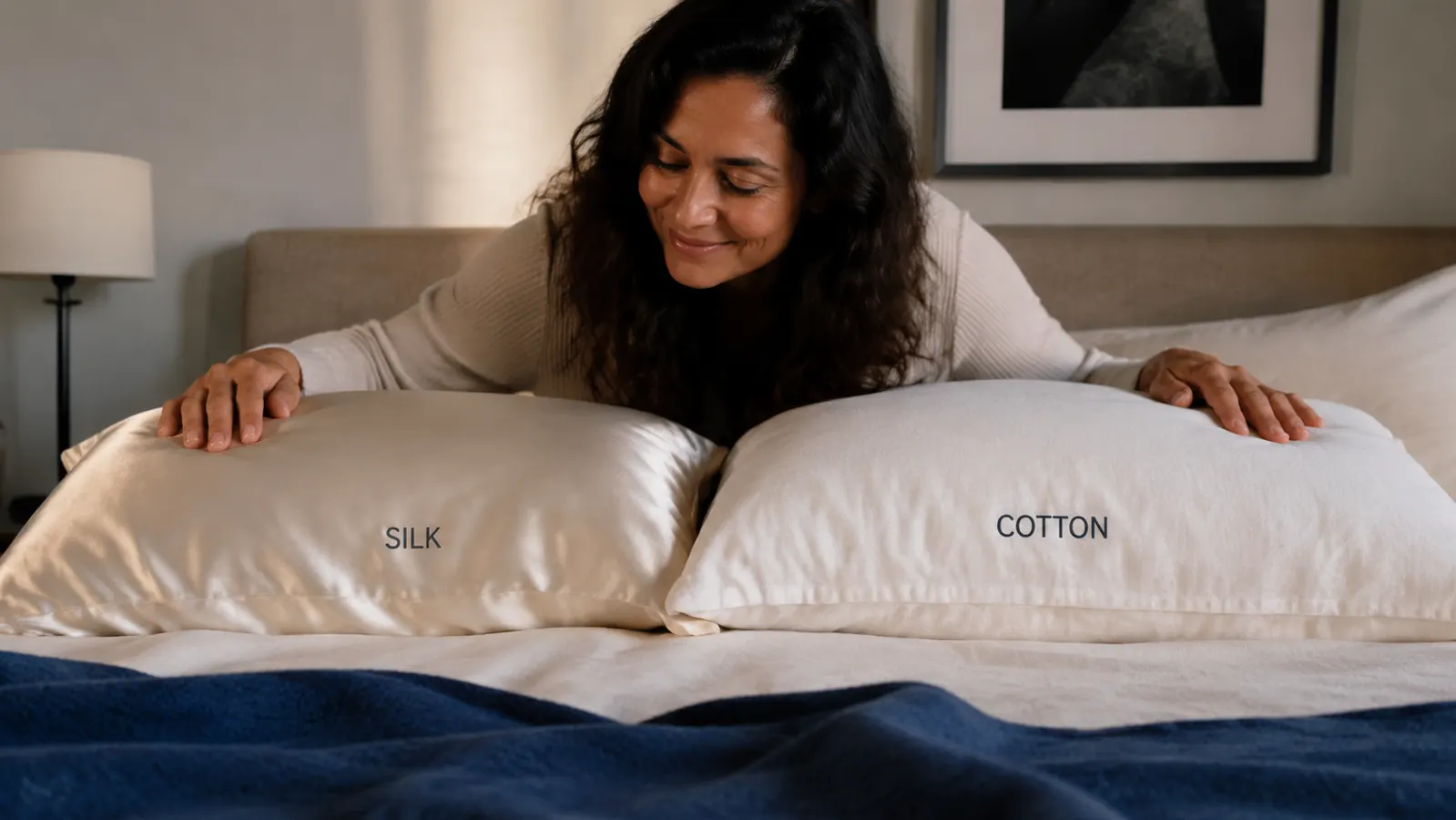
Short answer: if your main complaints are frizzy hair, sleep creases on your face, or waking up with your hair yanked in three directions, the silk pillowcase wins, clearly. If you're mostly just trying to stay cool at night and don't care about any of that, a good cotton pillowcase gets you most of the way there for a fraction of the price.
I tested a mulberry silk pillowcase from Suatien against my old 400-thread-count cotton set, swapping back and forth every few nights over about a month so I wasn't just comparing one good week to one bad week. I tracked three things each morning: how tangled my hair felt when I first ran a brush through it, whether I had a visible sleep crease and how long it took to fade, and how warm or clammy I felt when I woke up. I also asked my husband, who runs hot and has zero interest in hair care, to do the same swap on his own pillow so I'd have a second data point from someone with different priorities than mine. Here's exactly where each one pulled ahead, and where it genuinely didn't matter.
| Silk Pillowcase | Cotton Pillowcase | |
|---|---|---|
| Material | 100% mulberry silk (22 momme) | 100% cotton (percale weave) |
| Price | Budget-friendly for a queen case | Budget-friendly for a two-pack |
| Frizz and hair breakage | Noticeably less overnight tangling and frizz | Cotton fibers grab hair, more tangling by morning |
| Skin feel | Smooth, low-friction, fewer visible sleep creases | Softer over time but still creates visible creases |
| Temperature | Cool to the touch, breathable, doesn't absorb much moisture | Breathable, absorbs body heat and sweat well |
| Durability | Snags easily on rough nails or jewelry, needs gentle care | Machine washes and dries without babysitting for years |
| Closure | Hidden zipper, stays put on the pillow all night | Usually envelope-style, can bunch or slide open |
| Care | Hand wash or delicate cycle, air dry flat | Machine wash and dry, no special handling |
| Best for | Hair and skin-focused sleepers, side sleepers | Budget sleepers, hot sleepers who sweat heavily |
Where Silk Wins
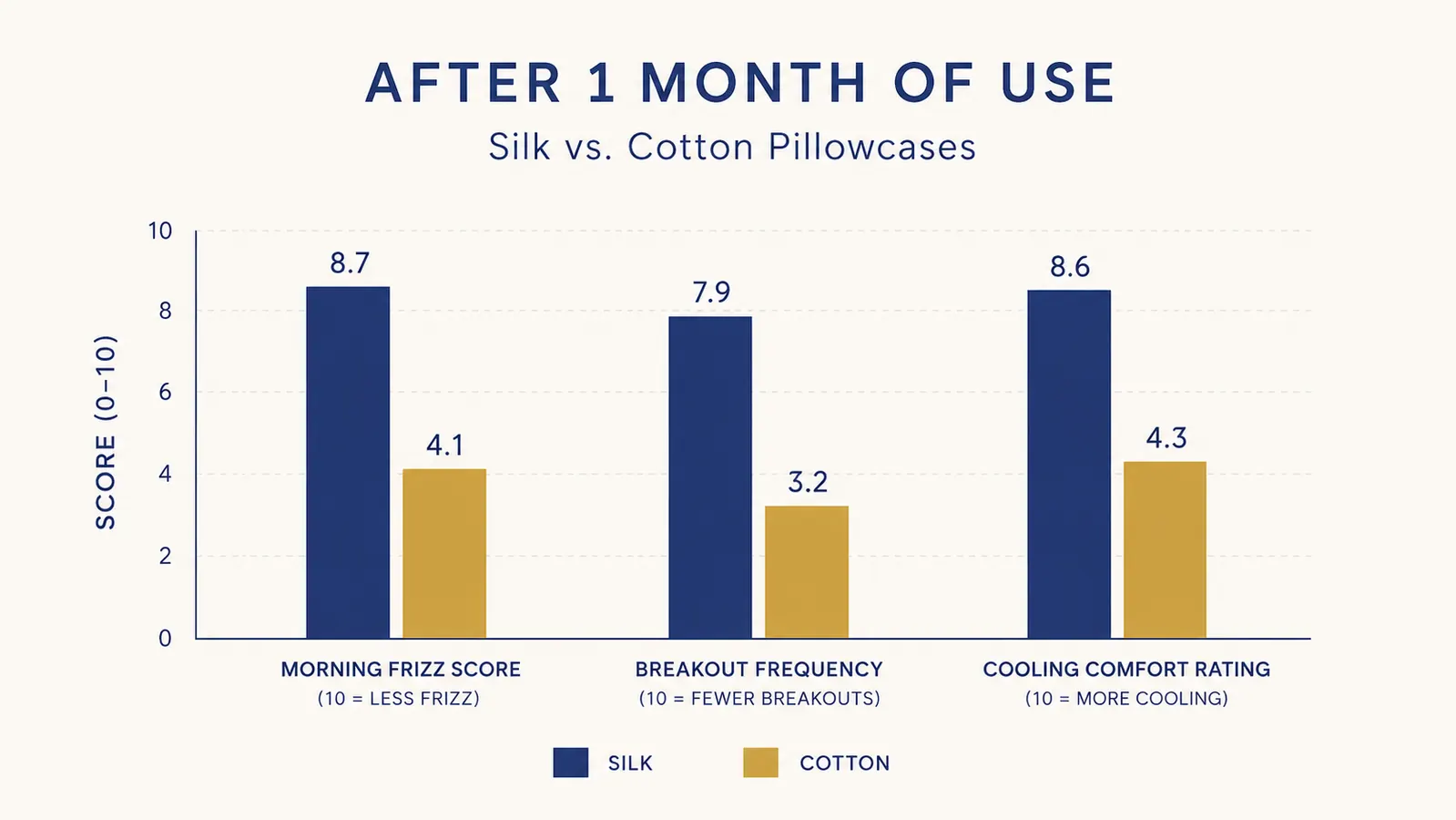
The difference showed up fastest in my hair. On cotton, I'd wake up most mornings with a rat's nest on one side, the side I sleep on, because cotton fibers have enough texture to grip individual strands and hold them there for eight hours. On the silk pillowcase, my hair slides instead of catching. I still move around in my sleep, roughly the same amount according to my husband who says I steal the blanket regardless of pillowcase, but my hair moves with the fabric instead of against it. By week two, I was brushing out noticeably less breakage in the morning, and my hair looked less dull and static-prone by the end of the week, which tracks with what dermatologists commonly say about friction and hair cuticle damage over repeated nights.
Skin was the second big difference, and this one surprised me more than the hair result. I have a visible sleep line that shows up on my left cheek most mornings, deep enough that it used to take close to an hour to fade completely. On silk, that line is shallower and fades faster, usually within 15 to 20 minutes of being up and moving around. It's not going to erase actual wrinkles or replace a real skincare routine, and I want to be honest that I didn't measure any change in breakouts over just one month, that would take longer to know for sure. But if you've ever looked in the mirror at 6am and seen a crease that looks like it's going to stick around all day, this is a real, immediately noticeable difference, not a marketing claim. I also asked two friends who'd already made the switch months before me what they noticed first, and both said the same thing without prompting: less time in the mirror each morning trying to smooth out a crease before heading out the door.
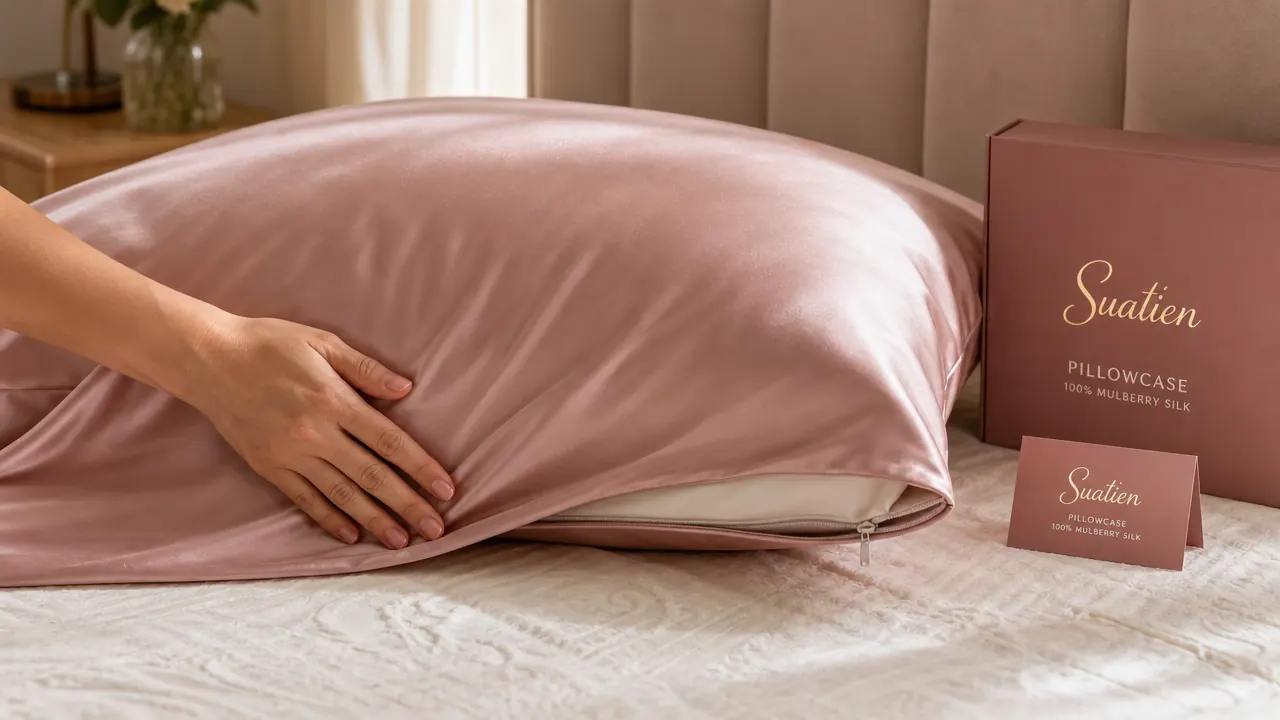
The Suatien case specifically uses a hidden zipper rather than an envelope closure, which matters more than it sounds like it would. Silk is slippery by nature, so a pillowcase that slides open or bunches up at 3am defeats the entire purpose of using it. The zipper keeps the pillow fully wrapped no matter how much I toss around, and I never once woke up to a bare pillow corner poking out, which happened constantly with a cheaper silk case I tried a couple years ago that used a simple flap closure instead. That detail alone is worth paying attention to when you're comparing silk pillowcases against each other, not just silk against cotton.
There's also a sound and feel difference that's easy to overlook until you notice it. Cotton has a slight rustle when you turn your head against it, and it can feel a little clingy against dry skin in winter. Silk is quiet and glides. If you're a light sleeper who wakes up at small sounds or textures, that quiet glide is one more small thing working in your favor at 2am when you're trying to get back to sleep after rolling over.
I also noticed a smaller but real difference for anyone who wears makeup to bed occasionally, which I try not to do but don't always manage. Cotton absorbs and holds onto whatever is on your face, moisturizer, the tiny bit of leftover makeup, oils, and that residue builds up between washes. Silk doesn't absorb as much, so less of that residue gets ground into your skin overnight and less of it stays trapped in the fabric fibers themselves. It's not a dramatic transformation, but it's one more small mark in silk's column if breakouts along your jawline or cheek are a recurring issue for you.
Where Cotton Wins
Cotton is not a downgrade, it just solves a different problem. If you're a hot, sweaty sleeper, cotton actually absorbs moisture better than silk does. Silk feels cool to the touch when you first lie down, which is part of why people assume it sleeps cooler overall, but it doesn't wick sweat the way cotton does, so if you wake up drenched, cotton will feel less clammy against your skin by 4am. My husband, who runs warm and doesn't care one bit about frizz or sleep creases, actually preferred his cotton pillowcase for exactly this reason and switched back after four nights on silk.
Price is the other honest factor, and it's not a small one. A two-pack of solid cotton pillowcases runs about the same as one silk case, sometimes less, which means you can outfit an entire household in cotton for what one or two silk cases would cost. If you're stocking a guest room, a kid's room, or you just don't want to think about pillowcase maintenance, cotton is the practical choice every time. It goes in the washer and dryer with everything else on laundry day, no special settings, no air-drying on a towel rack, no wondering if you used the wrong detergent and damaged the fibers.
Cotton also wins on durability in the sense that it's forgiving. You can wash it on hot, tumble dry it, snag it on a rough fingernail, and it just keeps going for years. Silk needs a gentler routine and shows wear faster if you're rough with it, which is a real tradeoff if you're someone who wants to set it and forget it rather than adding one more delicate item to your laundry rotation.
If frizz and sleep creases are your actual problem, here's the fix I landed on
The Suatien mulberry silk pillowcase is the one I kept using after testing both for a month straight. Queen size, hidden zipper, and it's held its shine through weekly washes.
Amazon Check Today's Price on Amazon →Cotton is a fine pillowcase. Silk is a fine pillowcase that also happens to be doing something for your hair and skin while you sleep.
Cost Over Time
The sticker price makes cotton look like the obvious budget winner, and up front it is. But I've gone through cheap cotton pillowcases before that pilled and thinned out within a year of regular washing, especially the low-thread-count ones sold in bulk multi-packs. A well-made silk pillowcase, cared for on the gentle cycle or hand washed, tends to hold its texture and sheen longer than I expected going in. Mine is four months in with no snags, no thinning, and no dulling of the shine, though I'll update this if that changes. If you buy the cheapest cotton available and replace it every year, and compare that to one silk case that lasts two or three years, the actual cost gap narrows more than the shelf price suggests.
None of that means silk is automatically the cheaper option long term, a lot depends on how rough you are on your bedding and whether you actually follow the gentler wash instructions. But it's worth factoring in before you write silk off as just the expensive, impractical choice. For the full six-month breakdown of wear and durability, I go a lot deeper in my long-term review of this exact pillowcase.

Who Should Buy Which
If you color your hair, deal with frizz, wake up with sleep lines, or you're just tired of your hair looking rough by Friday, get the silk pillowcase. It's a small nightly habit that adds up the same way a good skincare routine does, and at a budget price it's one of the cheapest changes you can make to your bedroom that actually shows up in the mirror within a couple of weeks. If you run hot at night, sweat through your sheets, or you need pillowcases that survive a busy household without a second thought, stick with cotton, or do what I ended up doing and keep one silk case for the pillow closest to your face while the rest of the bed stays in cotton.
If your budget only allows for one right now, think about which problem actually bothers you more when you look in the mirror each morning. Frizzy, tangled hair and stubborn sleep creases point you toward silk. Sweating through the night and wanting zero-maintenance bedding points you toward cotton. Both are legitimate answers, they're just answering different questions. I'll also say this: don't feel like it has to be all or nothing. Plenty of people I've talked to keep a silk case on their main pillow and cotton on the rest of the bed, which is basically what I do now. If you want the deeper dive on how the silk pillowcase held up for me over a full six months of nightly use, including how the sheen and stitching handled repeated washing, I've written that up separately as well, and it covers a few wear-and-tear questions this comparison doesn't have room for.
Ready to stop waking up with your hair everywhere
Grab the mulberry silk pillowcase and see the difference by the end of the first week. It's a small swap with a noticeable payoff, and it fits a standard queen pillow with room to spare.
Amazon Check Today's Price on Amazon →