

For about two years, my worst heartburn nights had nothing to do with what I ate for dinner. They had to do with what happened the second I laid down flat. I'd be fine sitting on the couch, then ten minutes after climbing into bed, that familiar burn would creep up my chest. It took me longer than I'd like to admit to connect the dots: lying flat was the problem, not just the spicy tacos I kept blaming. Once I started sleeping on a wedge pillow instead of flat with a couple of stacked pillows behind my neck, the difference was almost immediate, and it kept holding up week after week. Here are the 10 reasons a wedge pillow actually helps with acid reflux, not just in theory, but in what I felt happen in my own body, night after night.
The fix isn't a new diet. It's a different angle.
Before you cut another food off your list, consider this: gravity is free, and it works all night long if you give it the right slope. This is the wedge I switched to and I still use it every night.
Amazon Check Today's Price on Amazon →Gravity keeps acid where it belongs
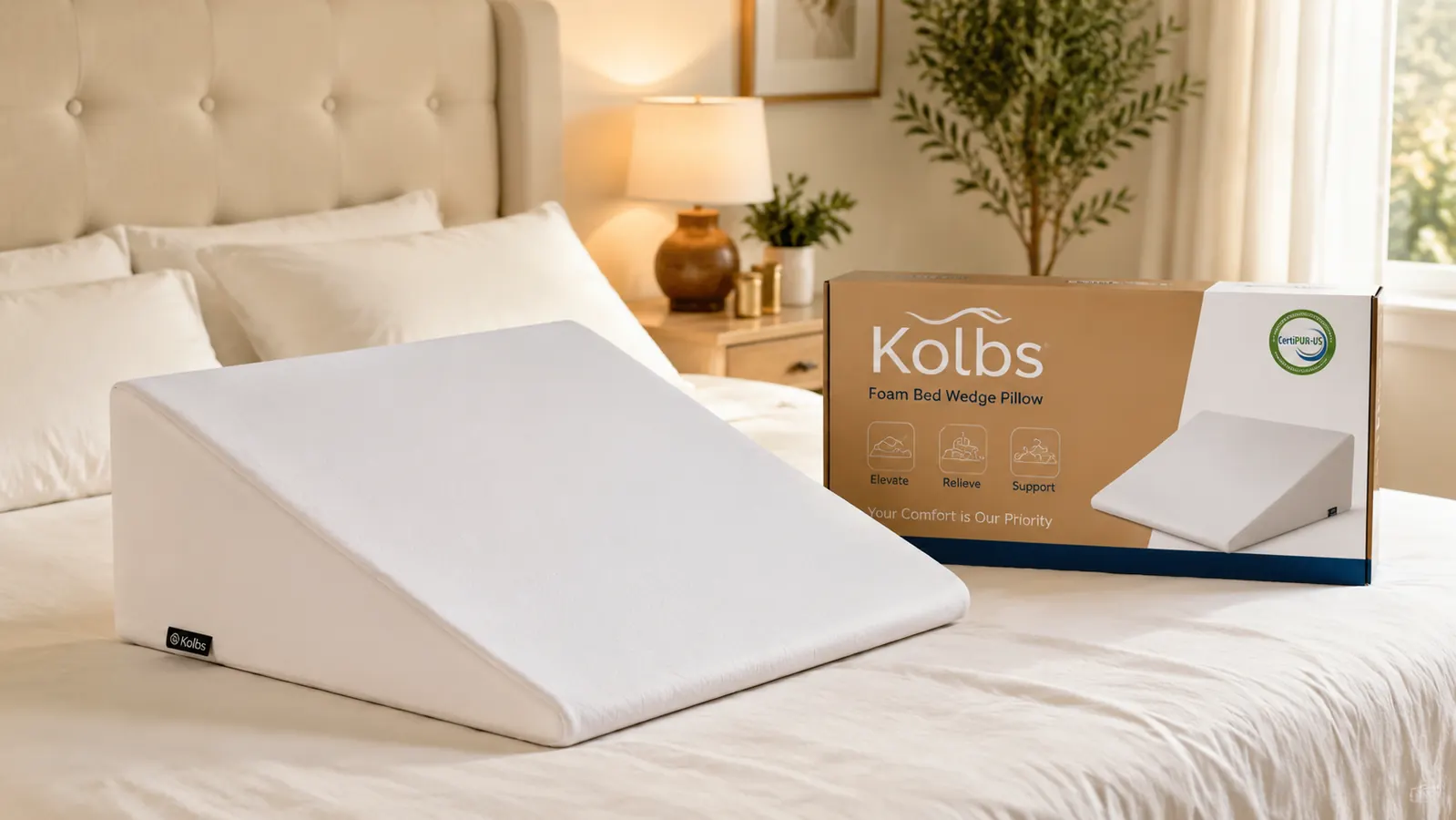
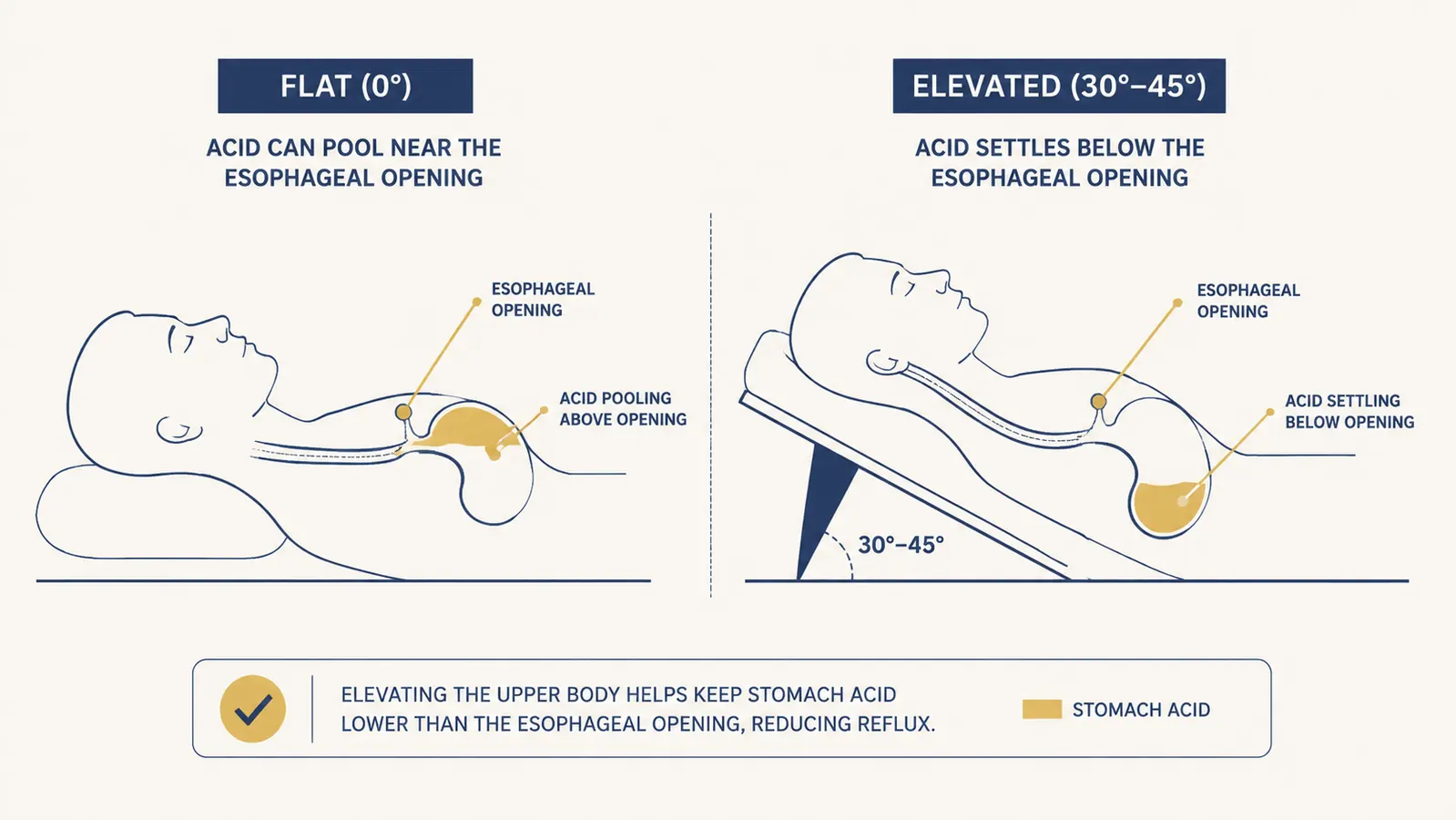
When you're upright or elevated, stomach acid sits low, below the opening of your esophagus. Lie flat and there's nothing stopping it from creeping upward, especially if your stomach is even a little full. A wedge pillow keeps your torso at an incline all night, so gravity is doing the job your esophageal sphincter can't quite finish on its own. This one reason alone is why most gastroenterologists recommend elevation before they recommend anything else. The <a href="/kolbs-wedge-pillow-review-long-term">Kolbs Bed Wedge Pillow</a> gave me a consistent 30-degree angle without me having to think about it, which mattered more than I expected once I stopped having to guess at my own setup.
It reduces pressure on the lower esophageal sphincter
The valve between your stomach and esophagus, the lower esophageal sphincter, is under more strain when you're flat because your stomach contents press against it evenly in every direction. Elevated, that pressure shifts downward and away from the valve. I noticed I stopped waking up mid-swallow with that sour taste in my mouth within the first week of switching.
You stop waking up at 2am with that burning throat
This was my most hated symptom. Not falling asleep with heartburn, which is annoying but manageable, but being woken up by it hours later, throat raw, chest tight, heart racing a little from the shock of it before I even knew what woke me. Elevation means there's less acid making the trip up in the first place, so there's less to wake you at all. I went from three or four of these nights a week, sometimes worse after a stressful day, to maybe one a month now, and even that one is milder than it used to be.
It cuts down on nighttime coughing and throat clearing
Acid that creeps up while you sleep doesn't always wake you fully. Sometimes it just irritates your throat enough to make you cough or clear your throat without really registering why. My husband used to nudge me because I was doing this every night, sometimes enough to wake him too. A wedge pillow reduced how often that happened enough that he actually mentioned it unprompted a few weeks in, which told me it wasn't just me imagining an improvement.
It's gentler on your body than propping up on random pillows
Before I owned a real wedge, I'd stack two or three regular pillows behind my back trying to get the same effect. It never held an actual incline for long, my hips stayed flat while only my head and shoulders got lifted, which bends your body at an odd angle at the waist and can actually make reflux worse, not better, by squeezing your stomach. A wedge pillow supports your whole upper body in one continuous slope from the hips up, so there's no fold putting pressure where it shouldn't be. If you want the full side-by-side, I wrote up the comparison in <a href="/kolbs-wedge-pillow-vs-extra-pillows">wedge pillow versus stacking extra pillows</a>, including how many nights it took the pillow stack to slide apart on me.
It helps you stay on your left side more naturally
Sleeping on your left side is supposed to help reflux because of how your stomach sits relative to your esophagus, but flat and on your side, most people slide onto their back over a few hours without noticing. The incline of a wedge keeps your body settled into that side position longer because gravity is holding you into the slope rather than letting you roll flat. I still shift around some, everyone does, but I wake up on my side far more often than I used to.
Amazon See how the incline holds your position all night → →
It takes pressure off a full stomach after late dinners
I know, I know, you're not supposed to eat within three hours of bed. Real life doesn't always allow that, especially on nights with a late shift or a family dinner that runs long. On nights I eat later than I should, the wedge is what keeps that heavier stomach from working against me. It doesn't cancel out a bad choice, but it buys you real relief instead of paying for it at 1am with your chest on fire.
It reduces reflux-related sleep fragmentation
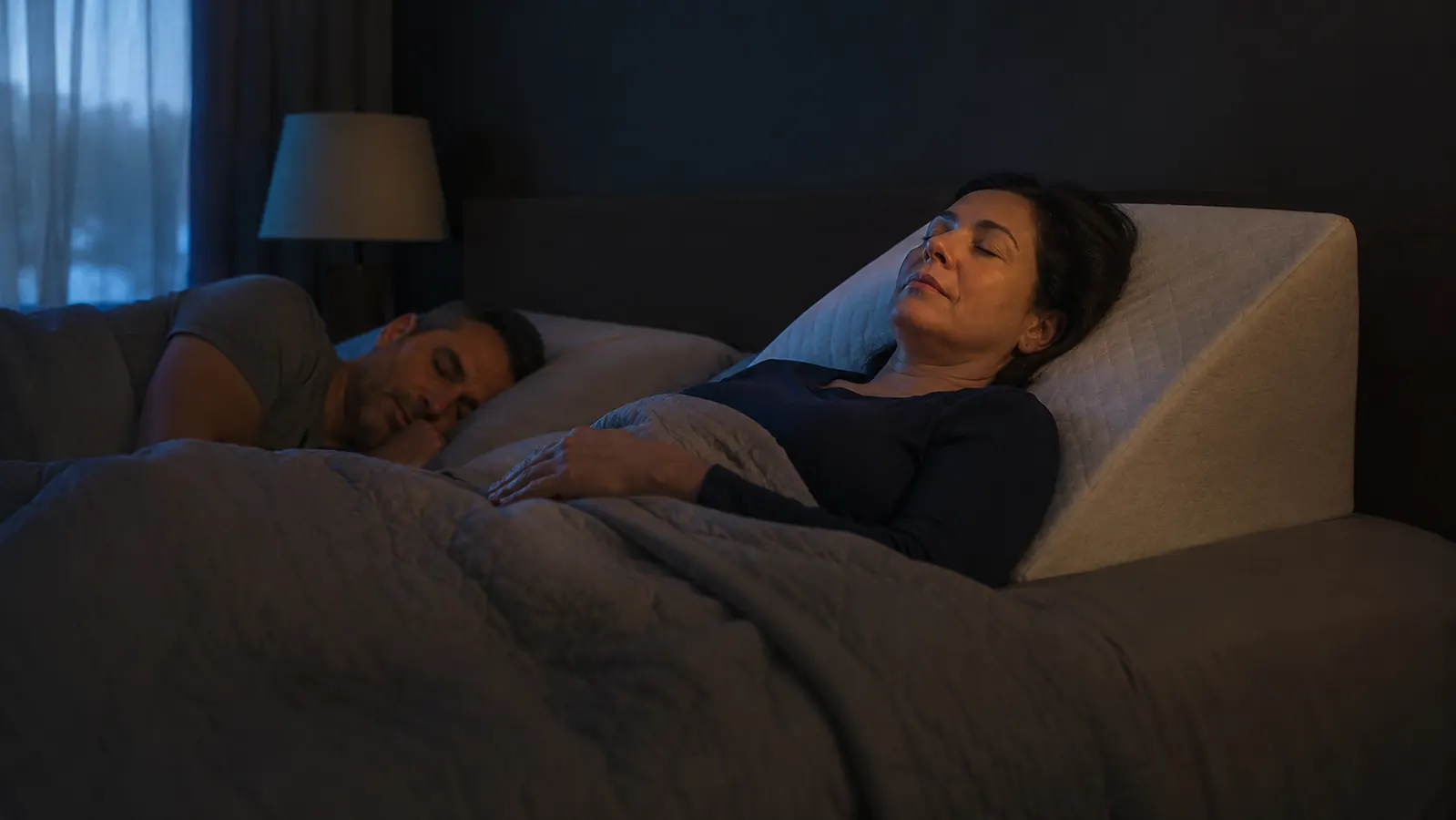
Even reflux episodes too mild to fully wake you still pull you out of deep sleep without you ever knowing it happened. Sleep studies on people with GERD consistently show more of these brief arousals during flat sleep than elevated sleep, which adds up over a full night even if you never remember waking. I can't see my own sleep stages, but I can absolutely feel the difference the next morning: I wake up groggier and more worn down after a flat night, even one without an obvious heartburn flare I can point to.
It also helps with the sinus pressure and post-nasal drip that reflux drags along
Reflux and sinus irritation travel together more than people realize, especially if you deal with silent reflux that doesn't always feel like classic heartburn but shows up instead as a sore throat or stuffy nose in the morning. Elevation reduces both the acid creeping up and the drainage pooling in the back of your throat overnight. My mornings went from a raspy, clearing-my-throat, almost sinus-infection-feeling start to something much closer to normal, and that surprised me more than the heartburn improvement did.
It's a habit you don't have to remember to do
This is the underrated one. Diet changes, not eating late, avoiding trigger foods, all require willpower every single day, and willpower runs out fast when you're tired or stressed. A wedge pillow requires none of that. You just lie down on it the way you'd lie down on any pillow, and the elevation does its job without you having to be disciplined about anything else that day. That's the reason it stuck for me long after other reflux fixes quietly fell off my routine.
I didn't need a stricter diet. I needed a different angle to sleep at, and nobody told me that for two years.
What I'd Skip
Skip the ultra-cheap inflatable wedges. I tried one before the foam version and it slowly deflated over the night, which meant I'd wake up flat again by 4am without noticing the slide had happened. I'd also skip anything under a 30-degree incline if your reflux is more than mild, since a gentle slope looks nice in photos but doesn't do much once gravity actually needs to work against a real amount of acid. And don't buy a wedge assuming it replaces medication your doctor has you on. It's a strong complement to that, not a swap for it, and I still keep antacids in the nightstand just in case.
Stop losing sleep to something a slope can fix
If your reflux is worse the second you lie flat, that's not a coincidence, it's the mechanism. The Kolbs Bed Wedge Pillow is the one I've used every night for months, and it's still doing the job.
Amazon Check Today's Price on Amazon →