
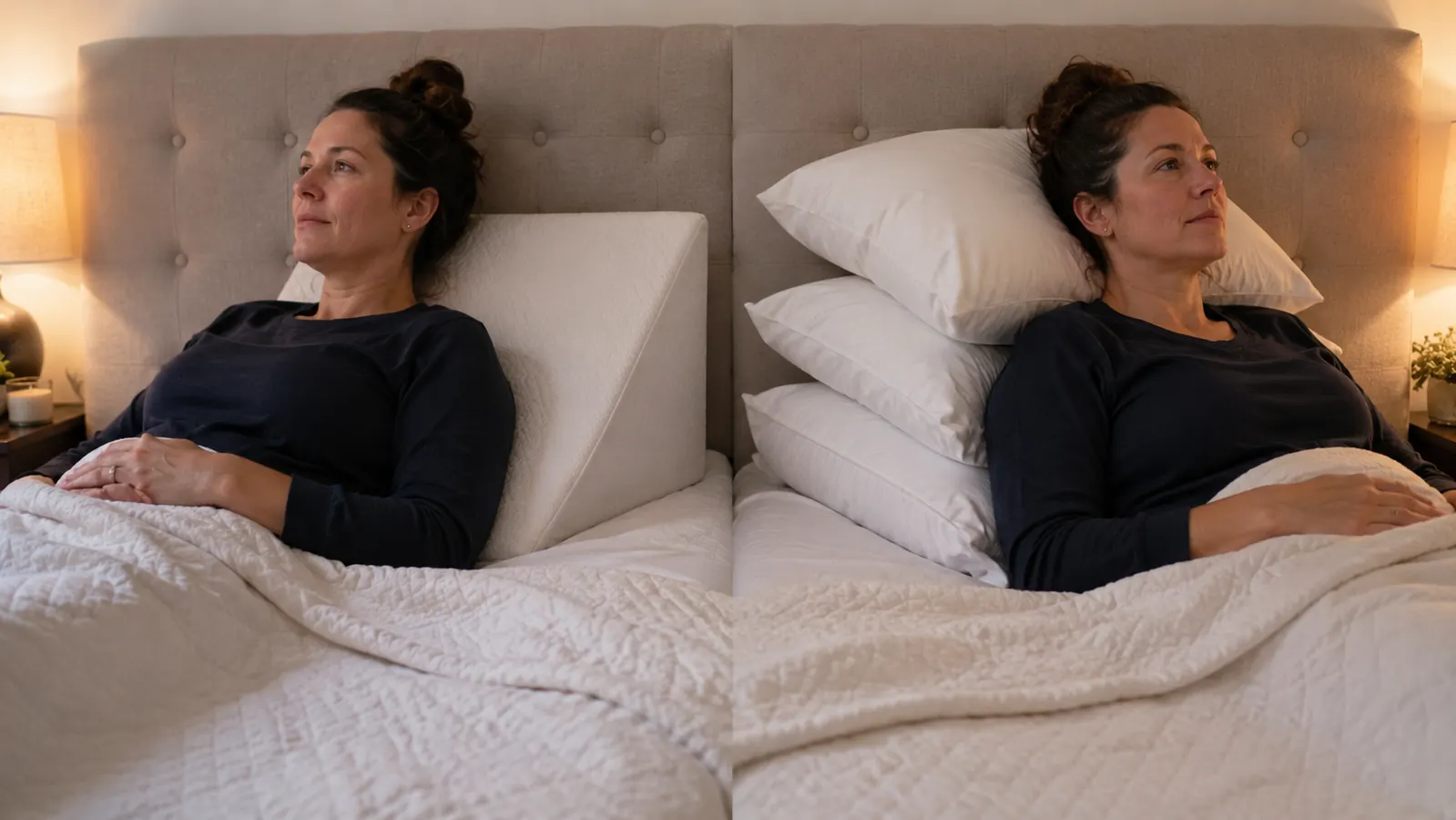
For about two years, my solution to nighttime heartburn was whatever pillows happened to be on the bed. I'd grab my regular pillow, stack a spare on top, sometimes wedge a couch cushion in there if things were bad, and hope gravity did the rest. It never really did. By 3am I'd wake up flat on my back again, pillows scattered, chest burning, wondering why I bothered stacking anything in the first place.
I finally bought the Kolbs Bed Wedge Pillow after a particularly rough week, more out of frustration than research. I wanted to know, honestly, whether a real wedge does something stacked pillows can't, or whether I'd just spent money on a fancier version of the same fix. So I ran it as a real comparison. Two weeks on my old stacked-pillow setup, immediately followed by two weeks on the Kolbs wedge, same bed, same mattress, same 10pm bedtime, same dinner habits so I wasn't accidentally comparing apples to a lighter dinner.
The short version: the wedge won, and it wasn't close. But stacked pillows aren't worthless, and there are a couple of situations where I'd still tell someone to save their money and just grab what's already in the closet. Here's the full breakdown.
| Kolbs Wedge Pillow | Stacking Extra Pillows | |
|---|---|---|
| Incline angle | Fixed 7-inch foam wedge, consistent 30 to 35 degree slope all night | Variable, flattened to roughly 15 to 20 degrees by 2am |
| Material | High-density foam core, removable cover | Standard poly-fill or memory foam pillows not designed to bear weight at an angle |
| Overnight stability | Held its shape and angle from lights-out to alarm | Pillows shifted, separated, or slid apart within 1 to 2 hours |
| Reflux relief | Noticeably fewer wake-ups from heartburn, most nights none at all | Some relief early in the night, gone by the second half |
| Snoring reduction (partner-reported) | Consistently quieter, partner confirmed | Mild improvement, inconsistent night to night |
| Comfort for side sleeping | Wide surface, stayed supportive when I rolled onto my side | Awkward, pillows compressed unevenly when I shifted position |
| Setup effort | One piece, same placement every night | Re-stacking and adjusting every single night |
| Price | Moderate one-time cost | Free if you already own extra pillows |
| Best for | Regular acid reflux, sleep apnea, back pain, snoring | Occasional mild heartburn, tight budget, short-term fix |
Where the Wedge Wins
The single biggest difference was the angle actually staying put. With stacked pillows, I'd start the night at a decent incline, maybe 20 degrees if I really packed them in tight, but by the time I woke up around 2am to use the bathroom, I'd slid down into a mostly flat position with pillows bunched somewhere near my shoulders instead of under my back. The Kolbs wedge doesn't do that. It's one solid piece of foam, so the slope I fall asleep on is the same slope I wake up on. That consistency turned out to be the whole game for keeping stomach acid where it belongs instead of creeping up my esophagus at 3am.
The reflux relief followed directly from that stability. During my two weeks on stacked pillows, I woke up with that burning-throat feeling four or five nights out of fourteen, usually somewhere between 1am and 4am, right when the pillows had flattened out from under me. During my two weeks on the wedge, that dropped to one night, and even that night I could point to a late, heavy dinner as the obvious cause rather than the pillow failing me. If you want the deeper explanation of why elevation specifically calms nighttime reflux, I wrote up 10 reasons a wedge pillow helps with acid reflux after paying close attention to exactly this mechanism for a full six months.
My husband also noticed a difference he wasn't expecting, since he wasn't the one testing the pillow. He mentioned, unprompted, that I'd stopped snoring as much on the wedge. That tracks with what elevation does for the airway generally, it keeps tissue in the throat from collapsing inward the way it does when you're lying flat. With stacked pillows I got a partial version of that benefit early in the night, but once the stack collapsed, so did the improvement. The wedge held the angle long enough that the benefit lasted until morning instead of fading out around midnight.
There's also something to be said for not having to think about it. With stacked pillows, propping myself up correctly became a nightly chore, get the base pillow flat, angle the second one just right, tuck a third in if the first two weren't holding, and redo the whole thing if I rolled over and it collapsed. The wedge is just there. I put the fitted case on it once and it's stayed in the same spot on my bed for months, no nightly assembly required.
Back pain was the benefit I didn't expect going in. I've had a stiff lower back for years, nothing serious, just the kind of ache that gets worse the flatter I lie. Stacked pillows never really addressed that because the incline was too inconsistent to take real pressure off my spine for a full night. The wedge, because it holds a fixed angle, kept my hips and lower back in a position that didn't aggravate things the way lying fully flat does. I wasn't testing for that specifically, but by the second week I noticed I wasn't doing my usual slow, careful roll out of bed in the morning. That's a small thing to some people and a big deal to anyone who's dealt with a cranky back for years.
Where Stacked Pillows Win
I want to be fair here, because stacked pillows aren't a scam, they're just a lower-effort tool with real limits. The obvious win is cost. If you already own two or three regular pillows, stacking them costs nothing, and for someone with occasional, mild heartburn, maybe once or twice a month after a spicy meal, that free option might genuinely be enough. You don't need a dedicated piece of foam taking up permanent space on your bed if the problem itself is occasional.
Stacked pillows are also more flexible in the short term. If you're traveling, sleeping at a relative's house, or just testing whether elevation helps you at all before committing to buying anything, grabbing extra pillows off a guest bed is a reasonable way to find out. I did exactly that for two years before buying the wedge, and honestly, it's what convinced me elevation was worth pursuing more seriously in the first place. Nobody should spend money on a wedge pillow without first confirming that sleeping elevated actually helps their specific symptoms.
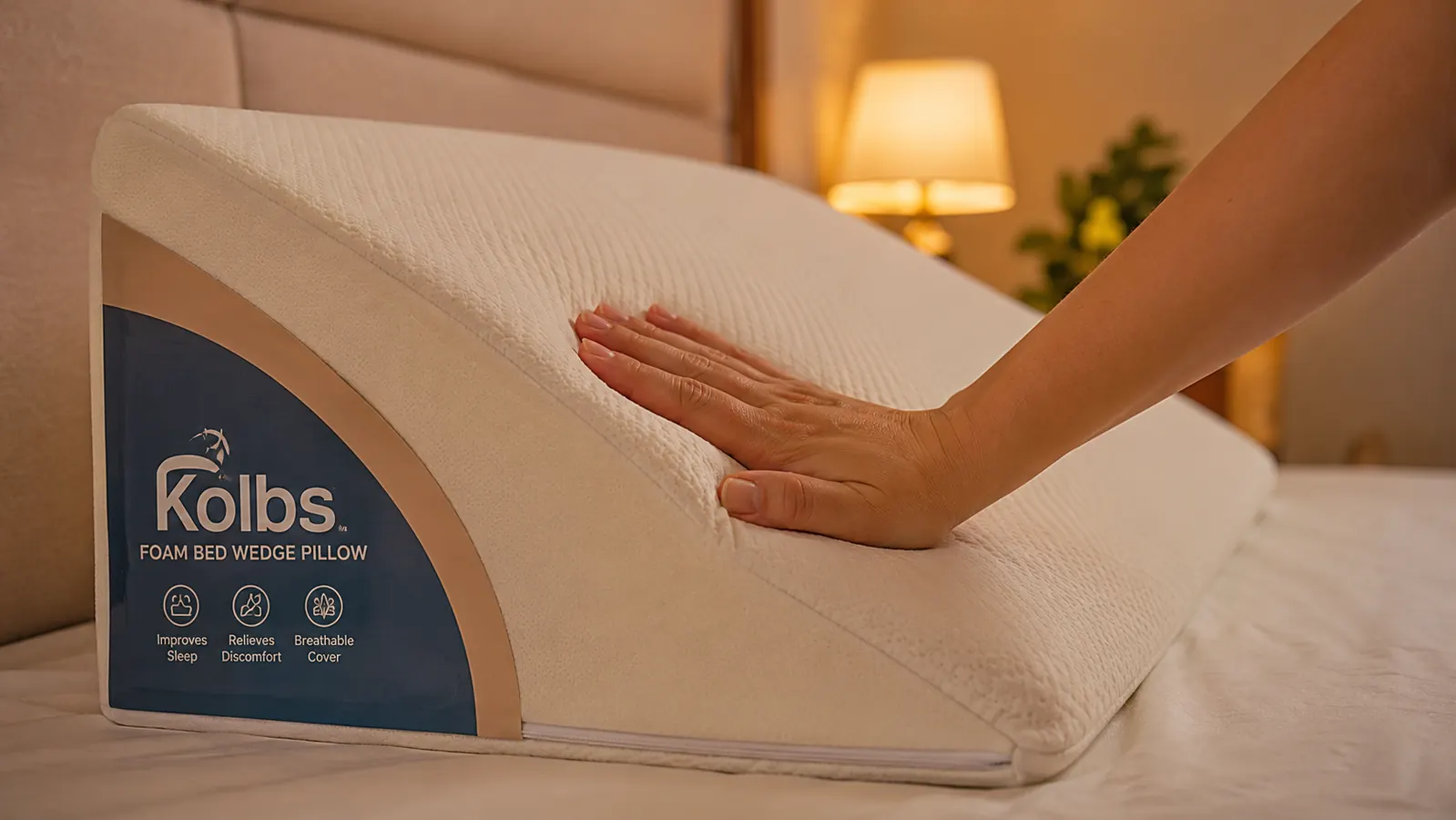
There's also a texture and softness argument. Regular pillows are, well, pillow-soft. The Kolbs wedge is firm foam, and that firmness is part of why it holds its angle all night, but it does mean it feels less plush against your back than a stack of your normal bed pillows. A few nights into using the wedge I missed the softer feel, even though I didn't miss waking up with heartburn. If plush comfort matters more to you than consistent incline, that's a real trade-off worth naming honestly.
Tired of rebuilding your pillow fort every single night?
The Kolbs wedge is the one piece of foam that replaced my entire nightly stacking routine. No re-propping at 2am, no pillows sliding to the floor.
Amazon Check Today's Price on Amazon →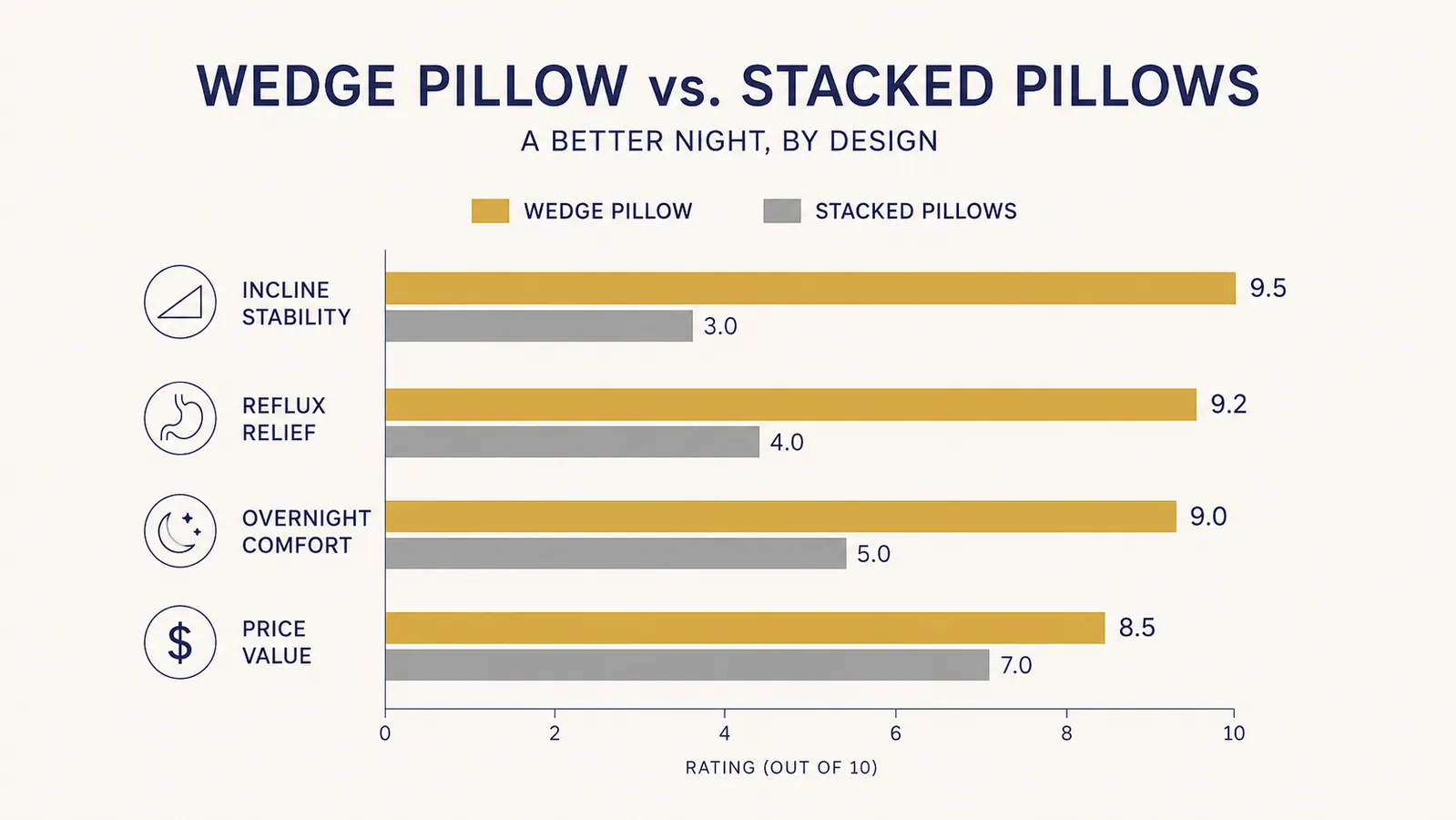
What the Angle Difference Actually Feels Like
It's easy to read incline numbers on a spec sheet and gloss over them, so let me put it in plainer terms. A 30 to 35 degree wedge angle feels like sitting up in a recliner, upper body clearly elevated, chin naturally tucked, chest open. A stack of pillows that's flattened to 15 or 20 degrees feels a lot closer to just lying down with a slightly puffier pillow than usual. That's not a small difference when the whole point of the exercise is keeping stomach acid below your esophagus. Gravity only helps you if the angle holds, and pillows compress under body weight in a way solid foam doesn't.
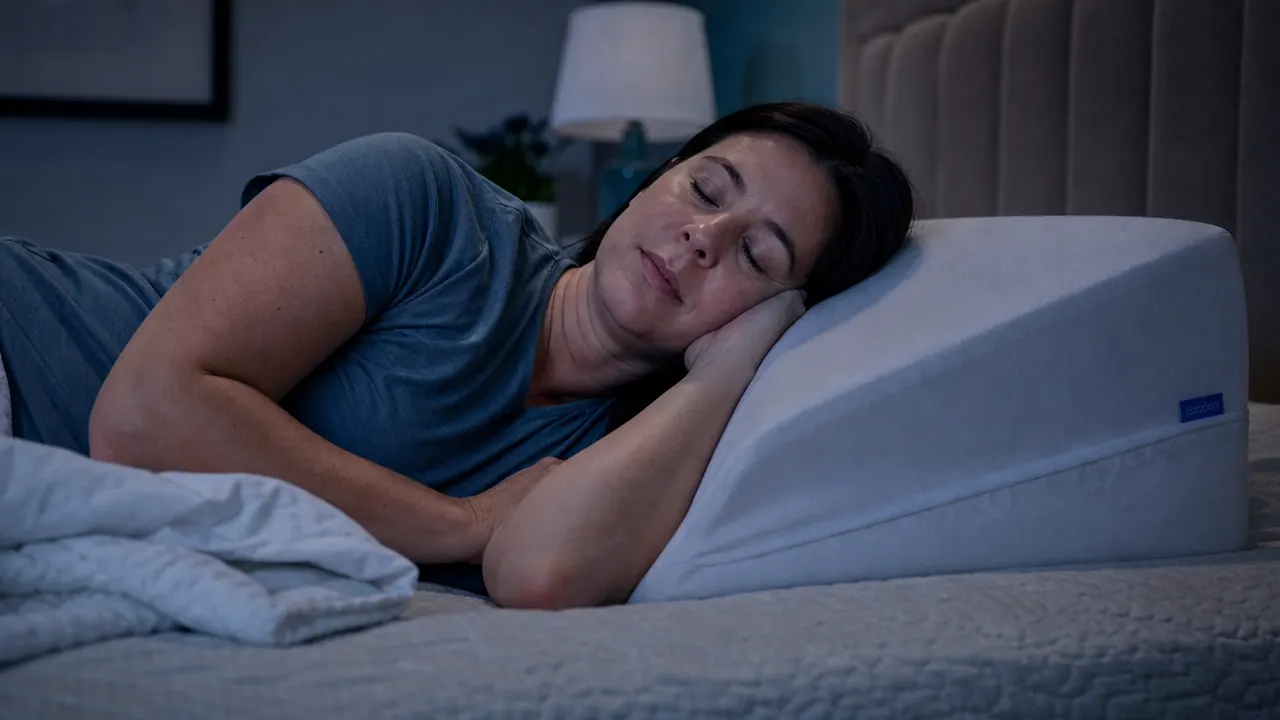
I also noticed the wedge handled side sleeping better than I expected. I'd assumed a wedge was strictly a back-sleeper's tool, but the surface is wide enough that when I rolled onto my side, which I do most nights at some point, my shoulder and upper arm still had support instead of sliding off an edge. Stacked pillows, by contrast, fell apart almost immediately the moment I shifted off my back. One pillow would stay put and the other two would slide toward the headboard or off to one side, and I'd wake up more from the readjustment than from anything acid-related.
Who Should Buy Which
If you're dealing with regular acid reflux, diagnosed sleep apnea, chronic snoring, or back pain that gets worse lying flat, the wedge is worth the one-time cost. The consistency alone, waking up at the same angle you fell asleep at, solves a problem stacked pillows structurally can't solve no matter how carefully you arrange them. If your issue is occasional and mild, or you just want to test whether elevation helps before spending anything, start with pillows you already own. It's a reasonable first step, and it's exactly how I ended up buying the wedge in the first place, my old stacking habit proved the concept even though it couldn't deliver it consistently.
If you've already confirmed elevation helps and you're still stacking pillows every night out of habit or budget, I'd gently push you toward making the switch sooner than I did. Two years of inconsistent relief cost me more in bad sleep than the wedge would have saved me. For the exact setup that worked best once I made the switch, including how high to prop the wedge and how to position it if you also sleep on your side some nights, I put together a full guide on how to sleep with acid reflux using a wedge pillow that walks through the positioning details this comparison doesn't have room for.
One practical tip if you're on the fence: before you buy anything, spend three or four nights stacking pillows as high and as stable as you can actually get them, and pay attention to whether the relief holds past midnight or falls apart the moment you move. That's the real test. If stacked pillows keep working for you past the first couple of hours, you may not need to spend anything at all. If they collapse the way mine did, night after night, that's your answer, and it's the same answer that sent me looking for something that wouldn't need to be rebuilt every single night.
Comparison's done. This is the one still on my bed.
After two weeks of stacked pillows and two weeks of the Kolbs wedge, side by side, the wedge is what stayed. If nighttime reflux or snoring is the problem, it's the simplest fix I found that didn't need re-doing every night.
Amazon See the Kolbs Wedge Pillow →