
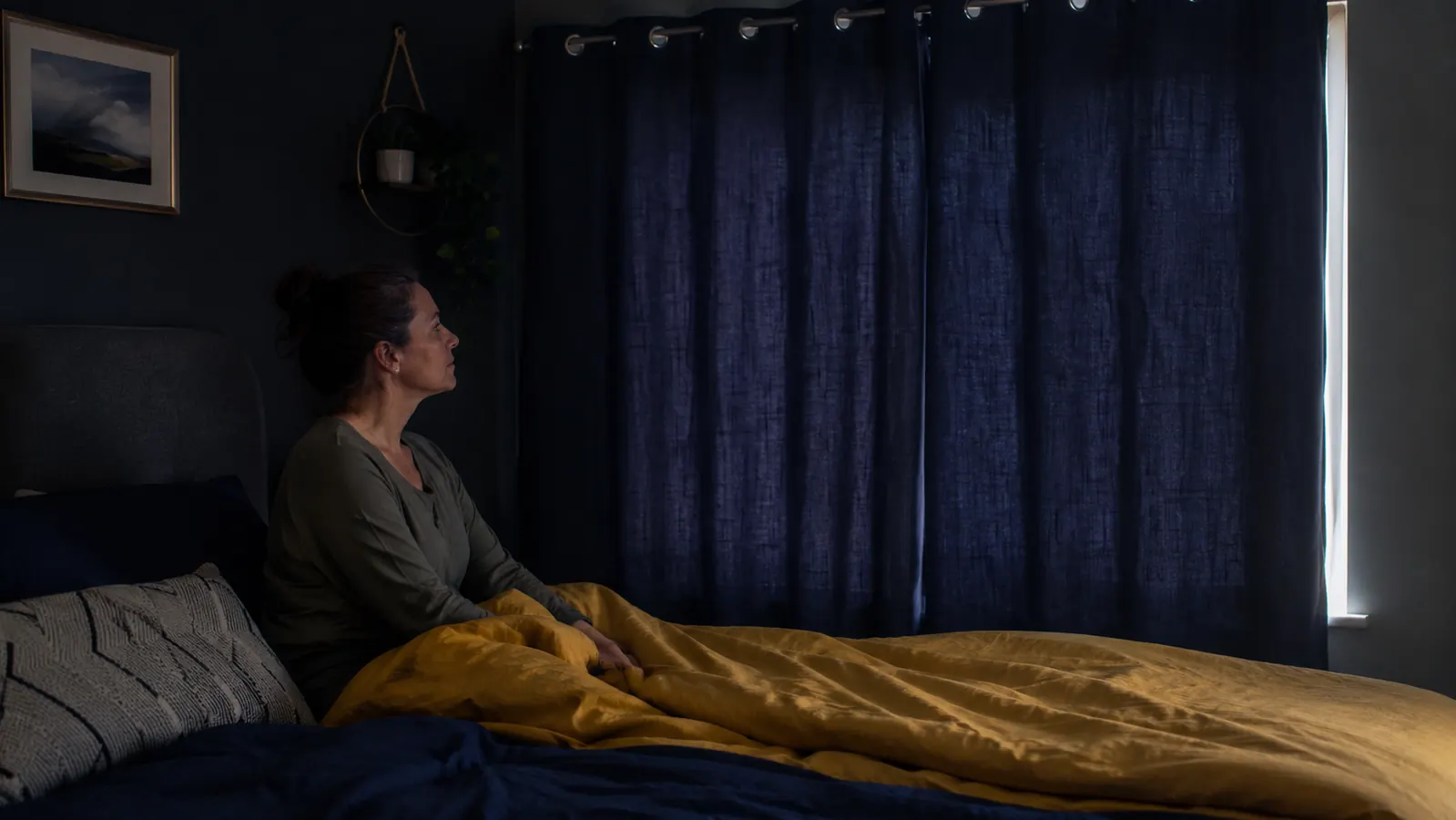
I put up the BGment blackout curtains in my bedroom in early January, and the reason was almost embarrassingly simple. My window faces east, and every single morning from about March through September, the sun would hit my face at 5:30 or 5:40 and that was it, I was awake. I'm a light sleeper to begin with, so once the room brightened even slightly, I couldn't fall back asleep no matter how tired I was. Six months later, I've lived with these curtains through a full change of seasons, and I want to walk through exactly what they blocked, what they didn't, and the details nobody mentions in the star ratings.
This isn't a first-week reaction. This is what the fabric looks like after half a year of daily opening and closing, what actually happened to my sunrise wake-ups, and the honest tradeoffs I ran into along the way.
The Quick Verdict
Genuinely dark-room-dark once hung correctly, with a noticeable drop in early-morning wake-ups and a small but real dent in my summer cooling bill. The grommets are sturdy and the fabric held its color, but you have to deal with light gaps at the edges yourself.
Amazon Check Today's Price →Still waking up the second the sun clears the neighbor's roofline? That's a window problem, not a discipline problem.
A regular curtain panel slows light down. A true triple-weave blackout panel stops it, so your body stays in deep sleep past sunrise instead of getting nudged awake by the first bit of glow through thin fabric.
Amazon Check Today's Price on Amazon →How I've Used Them
I hung two 52-by-84-inch BGment panels on the existing rod in my bedroom, which covers a single standard window with about four extra inches of overlap on each side. I close them every night around 9:30 when I start winding down, and I open them again most mornings around 8, once I'm actually ready to be up. For the first two weeks I kept a simple note on my phone tracking what time I woke up naturally, no alarm, just to see if the curtains actually changed anything or if I was imagining it.
Weeks one and two were mixed. The room was dramatically darker than before, but I still noticed a thin strip of light creeping in where the curtain met the wall on the left side, since my rod is a few inches narrower than ideal for full coverage. By week three, I'd bought a cheap set of L-shaped wall brackets and extended the rod so the panels overlapped the window frame by a good six inches on each side. That one fix did more for total darkness than anything else I tried.
By April, closing them had become as automatic as brushing my teeth. I stopped thinking about it as a sleep intervention and started thinking of it as just what my window looks like at night. The two times I traveled for a few days and slept in rooms with regular curtains, I woke up jarringly early both times and remembered exactly why I bought these in the first place.
The Fabric and the Grommets, Six Months In
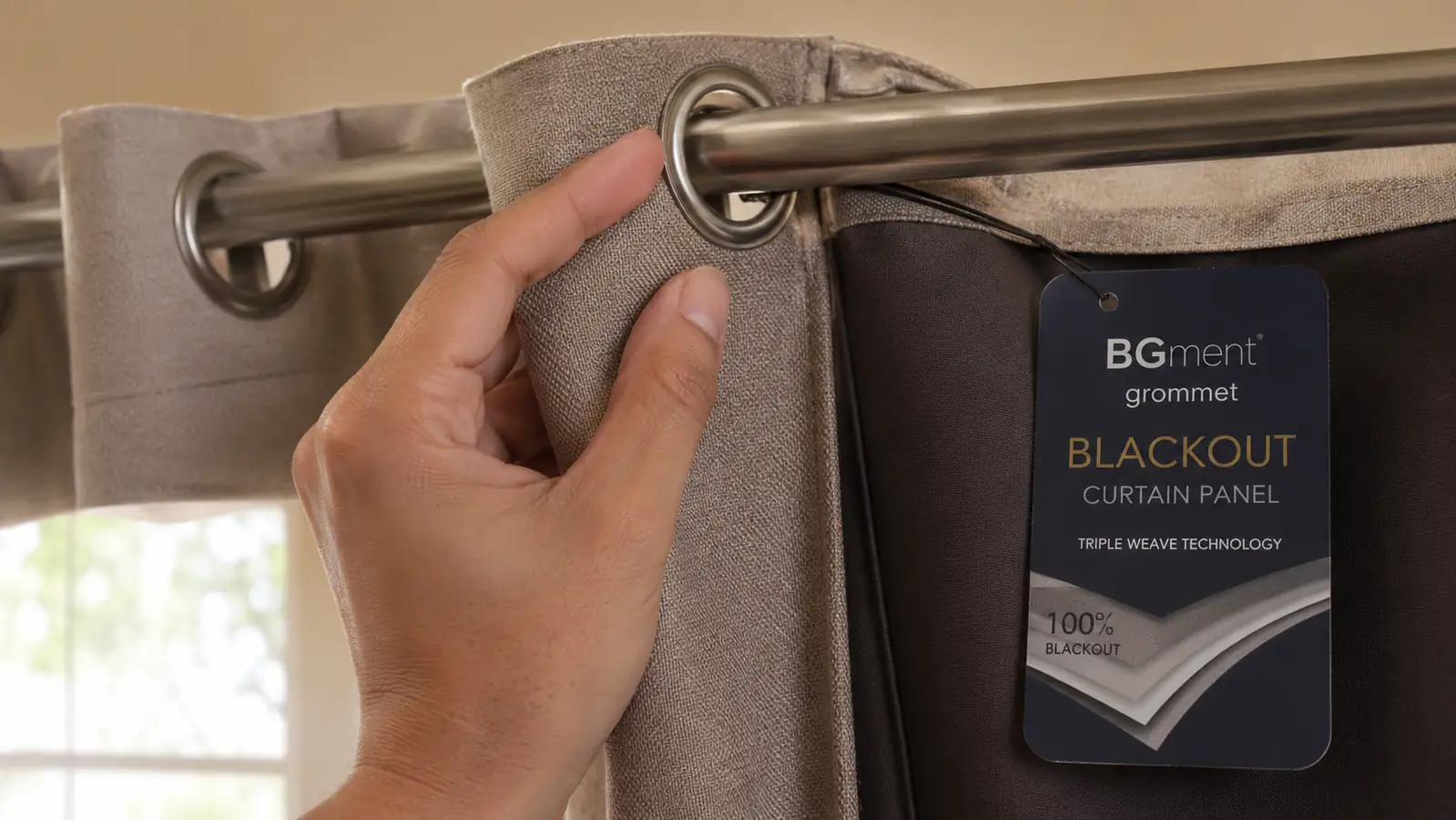
BGment uses what they call a triple-weave fabric, which in plain terms means the front decorative layer, the black middle layer, and the back layer are woven together as one panel rather than a thin curtain with a separate blackout liner clipped on. That matters for durability, because liners tend to separate or bunch up over time. Six months in, mine still hangs as one solid piece with no separation between layers, and no visible thinning at the fold lines where the fabric gets creased every day from opening and closing.
The grommets are the metal ring style, and they've held up better than I expected given how many times a day these get slid open and shut in my house. No cracking, no rust, and the rings still glide smoothly along my rod without that scraping sound cheaper grommet curtains develop after a few months. I did add a small dab of clear furniture wax to the rod early on, which several other reviewers suggested, and that kept the slide silent even at 5:45 a.m. when I don't want to wake my husband opening them.
One thing I noticed only after several months: the color, a deep navy in my case, has not faded at all despite getting direct afternoon sun exposure on the outward-facing side most days. I was half expecting some fading by month four given how much sun this window gets, and there's simply none that I can see.
What Happened to My Sunrise Wake-Ups, Specifically
This is the part I actually cared about. In the two weeks before I hung these, I was waking up before my alarm, purely from light, on 6 out of 7 mornings, almost always between 5:30 and 6:15 depending on the time of year. By week four with the curtains properly overlapping the frame, that dropped to about 1 or 2 mornings a week, usually when a sliver of light snuck through the small gap where the panels meet in the middle. By month three, once I'd added a small magnetic clip to hold that center seam shut, I was down to maybe one early wake-up a month, generally on a night the moon was unusually bright, which tells you how close to true dark this room gets now.
I'm not a sleep doctor, and I know darkness is only one piece of good sleep, my own noise sensitivity still plays a role some nights. But the mechanism here is straightforward: even closed eyelids let in enough light to signal your brain that morning has arrived, which nudges your melatonin production down earlier than it should. Once that light source was actually gone instead of just dimmed, my body stopped getting that early wake-up signal, and I started sleeping through to my actual alarm far more consistently.
What surprised me was the daytime effect. Fewer 5:40 a.m. wake-ups meant more full sleep cycles, and by month two I noticed I wasn't dragging through my early afternoon the way I used to. I want to be careful not to oversell a curtain here, it's fabric, not medicine, but disrupted sleep from early light was clearly costing me more rest than I'd realized before I fixed it.
If you want the specific hanging technique that fixed my edge-gap problem, including how far to extend your rod, I broke it down step by step here: how to block streetlight with blackout curtains.
The Heat and Noise Side Effects Nobody Warned Me About
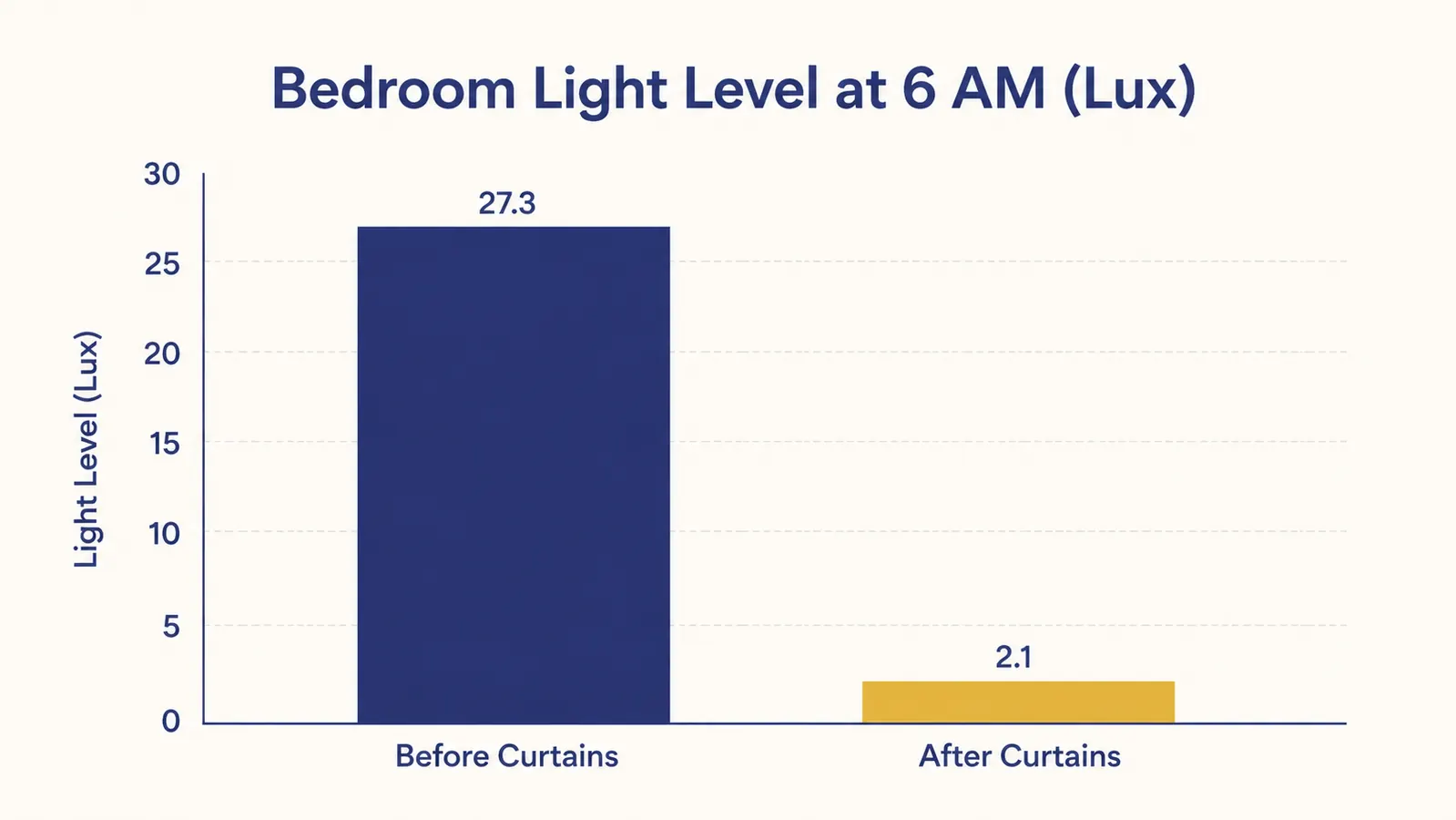
I didn't buy these for temperature control, but I noticed a real difference once summer hit. My bedroom faces east, so the worst of the heat comes in the morning rather than the brutal afternoon sun, but even that early heat used to make the room noticeably warmer by 9 a.m. With the curtains closed overnight and through the early morning, the room stays measurably cooler, enough that I've been running my window unit a little less on the hottest weeks. I can't give you an exact dollar figure since I don't isolate that one window on my utility bill, but the room itself is a few degrees cooler at 9 a.m. than it was last summer without them.
The noise dampening was a pleasant surprise too. My street isn't loud, but there's a garbage truck that comes through around 6 a.m. twice a week, and the combination of thicker fabric plus a fuller, more insulated seal around the window frame has taken enough edge off that sound that it no longer fully wakes me, where it reliably did before. I want to be honest that this isn't soundproofing, if you need serious noise blocking, this fabric alone won't get you there. But as a side benefit to the light blocking, it's real and I noticed it within the first month.
The Light Gap Problem, and How I Solved It
My one real complaint, and it's the same one I see in a lot of other reviews, is that the BGment panels are only as good as your rod setup. Straight off the rod at standard width, I had light leaking in from both the top, where the rod sits a few inches above the frame, and the sides, where the panels didn't overlap the window at all. The fabric itself blocks light extremely well. The gaps around it are what let light through, and that's a hanging problem, not a fabric problem, though it took me a couple of weeks of frustration before I figured that out.
What fixed it for me: extending the rod brackets so the curtains overlap the window frame by 4 to 6 inches on each side, mounting the rod a few inches above the frame so the panel drapes over the top edge instead of sitting flush with it, and adding a cheap magnetic clip at the center seam where the two panels meet. None of that costs much, but none of it is mentioned on the product page either, so budget an extra 20 minutes and a trip to the hardware store if total darkness is your actual goal.
If you're trying to decide whether curtains like these are even the right tool compared to blinds, I put both head to head in a separate piece, since the light-blocking mechanism is genuinely different between the two: blackout curtains vs blinds.
Washing and Everyday Wear
I've machine washed these twice in six months, both times on cold with a gentle cycle and no bleach, then hung them to air dry rather than using the dryer, since heat can affect the coating on blackout fabric. Both times they came out looking essentially like new, no shrinkage that I could measure against my rod width, no cracking in the blackout layer, no fading. I will say the first wash did leave a faint neutral smell that took a day of airing near an open window to fully clear, similar to new fabric off any bolt, but it was mild and gone quickly, nothing like a chemical odor that lingered.
What I Liked
- Cut my early sunrise wake-ups from 6 mornings a week down to roughly one a month once hung correctly
- Triple-weave fabric shows no separation or thinning after 6 months of daily use
- No visible color fading despite direct afternoon sun exposure on the outward side
- Noticeable extra coolness in the room during summer mornings
- Meaningfully dampened early morning street noise as a side benefit
- Survived 2 machine washes with no shrinkage, cracking, or fading
Where It Falls Short
- Standard rod hanging leaves light gaps at the top and sides that you have to fix yourself
- Not true soundproofing, just a noticeable dampening effect
- Faint new-fabric smell for about a day after the first wash
- Requires extending your rod width for full coverage, which is an extra step and small extra cost
The fabric blocks the light. The gaps around it are what let light through. Once I fixed the hanging, not the curtain, is when this actually became sunrise-proof.
Who This Is For
If you're a light sleeper who gets woken by early sun, work an overnight or rotating shift and need to sleep during daylight hours, or you're just tired of your room brightening up an hour before your alarm, these are worth the modest cost before you consider something more involved like blackout window film or shutters. They're also a smart pick for a nursery or a shared bedroom where one person needs to sleep later than the other. Because they're just curtains, you can take them down and move them to a new place or a different window without any installation cost lost.
I'd also point these toward anyone dealing with a streetlight or a neighbor's porch light shining directly into their window at night, since the same full-coverage fabric that blocks sunrise blocks that artificial glow just as effectively once it's hung with enough overlap.
Who Should Skip It
If you need genuine sound isolation rather than a mild dampening effect, don't expect these to solve a loud street or a noisy upstairs neighbor on their own, you'll want dedicated soundproofing alongside them. And if you're not willing to adjust your rod width or add a small clip at the center seam, you'll likely end up with the same light-gap frustration I had in the first two weeks, since the fabric alone can't compensate for a too-narrow rod.
Six months of actual darkness later, this is still the first thing I recommend to anyone who tells me the sun wakes them up before their alarm does.
If sunrise has been quietly stealing your sleep the way it stole mine, a proper blackout panel hung with a few extra inches of overlap is the simplest fix before anything more expensive. Check today's price and see what's in stock for your window size.
Amazon Check Today's Price on Amazon →