

I used to wake up two or three times a night with my t-shirt stuck to my back. Not from a fever, not from menopause, just plain old heat trapped in bed with nowhere to go. I tried a fan pointed straight at my face, I tried sleeping on top of the covers, I even tried a frozen water bottle wrapped in a towel between my knees. None of it fixed the actual problem, which was that my sheets were holding heat against my skin all night long and I didn't realize it because I'd never slept on anything else.
The fix that finally worked wasn't a gadget, and it wasn't a supplement, and it definitely wasn't the frozen water bottle. It was switching to bamboo sheets. Specifically, I've been sleeping on a set of Bedsure bamboo sheets for the better part of a year now, and the night sweats that used to wreck three or four nights a week dropped to maybe one bad night a month, usually when I've eaten something spicy too late or the AC is having a rough day in July. If you've been chasing this problem the way I did, here's the step-by-step version of what actually helped, starting with the sheet swap and moving through the smaller habits that stack on top of it to close the gap the rest of the way.
Start with the sheets, not another fan
Before you buy a cooling mattress topper or a second fan, swap the sheets touching your skin all night. Bedsure's bamboo-derived rayon sheets are the single change that made the biggest dent in my night sweats.
Amazon Check Today's Price on Amazon →Step 1: Swap your regular sheets for bamboo sheets
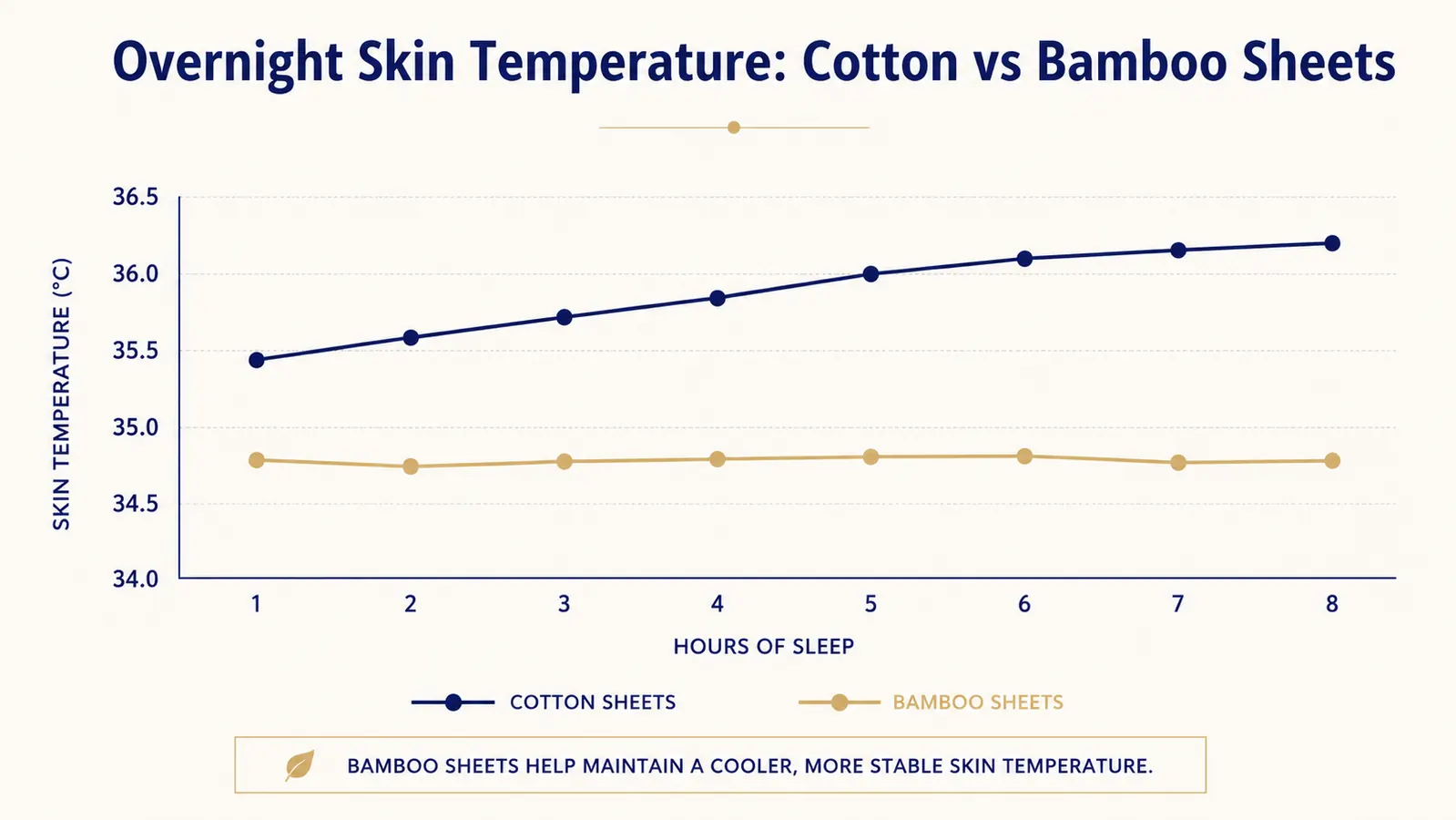
This is the step that matters most, so I'm putting it first instead of burying it in the middle of a list. Regular cotton sheets, especially the cheap 200 thread count kind that comes bundled with a mattress or gets picked up on a Target run, hold onto moisture instead of moving it away from your skin. Once you start sweating, the sheet gets damp, stays damp, and then you're lying in a slightly clammy layer for the rest of the night while your body tries to keep regulating its temperature against a fabric that's working against it. That's what was happening to me for years without realizing the sheets themselves were the culprit. I blamed my mattress, I blamed my hormones, I even blamed stress before I ever thought to blame a budget set of sheets.
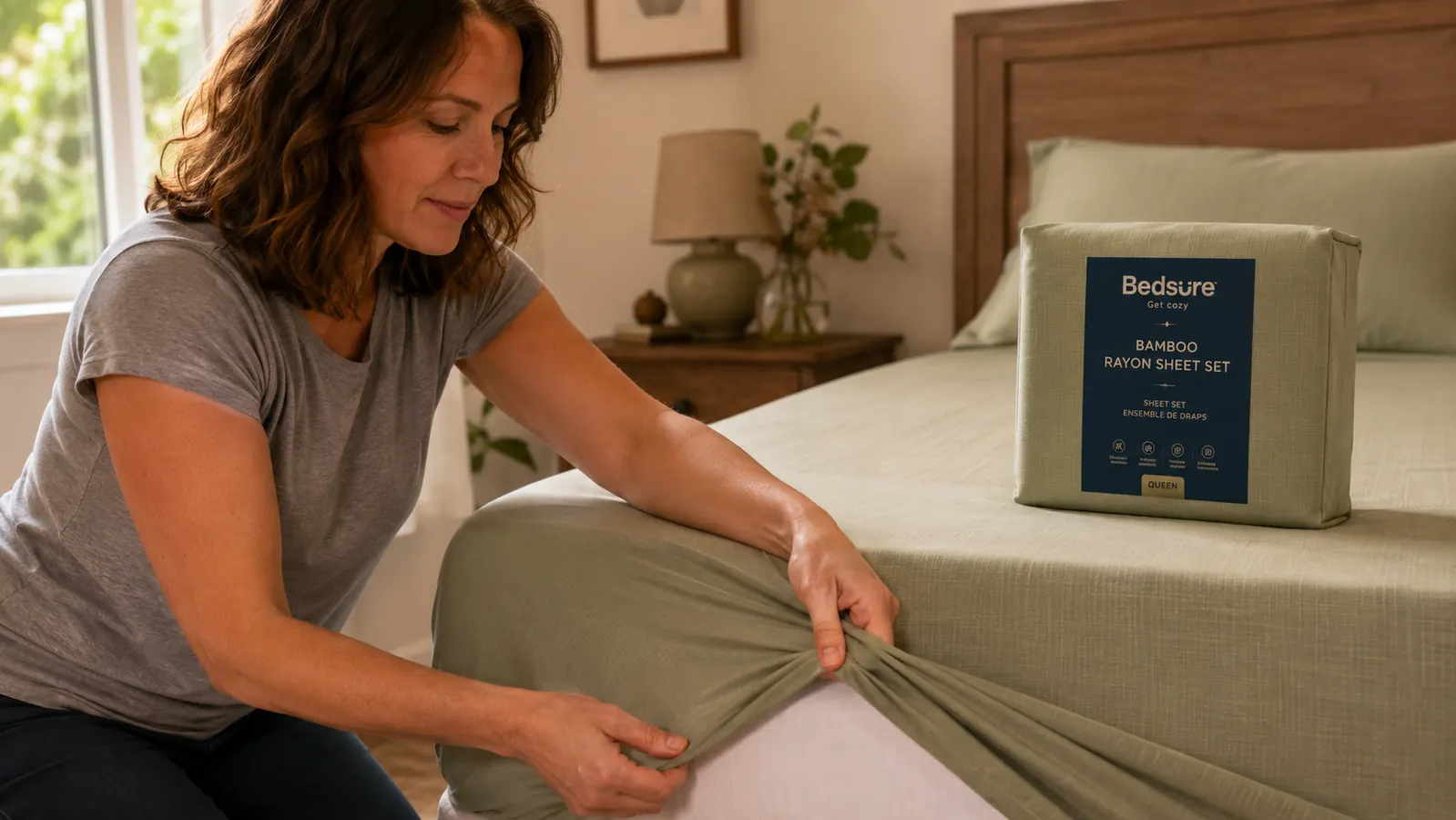
Bamboo sheets, or more precisely the rayon-from-bamboo fabric most bamboo sheet sets are made from, work differently. The fibers are naturally more breathable and wick moisture away instead of trapping it against your skin, which sounds like a marketing line until you actually feel the difference on a warm night. I went with the Bedsure Queen Sheet Set because it's rated 4.4 stars across nearly 64,000 reviews, which told me a lot of other hot sleepers had already tested it and stuck with it long enough to leave a review. That's not nothing. A sheet set that annoyed people would have a pile of one-star reviews about pilling or ripping within a few washes, and this one doesn't.
The fabric is called PureWoven, and the first night I slept on it I noticed the sheet felt cool to the touch even after I'd been under it for twenty minutes, something my old cotton set never did no matter how long I'd had it in the dryer beforehand. By week two I'd stopped waking up at 2am to flip my pillow to the cool side, which had been a nightly ritual for longer than I want to admit. If you only do one thing from this guide, do this one. Everything else below helps close the remaining gap, but this is the step that changes what happens while you're actually asleep and can't do anything about it yourself.
Step 2: Wash your bamboo sheets the right way so they keep working
I almost undid my own night sweats fix by washing the sheets in hot water the first time, purely out of habit from years of washing cotton on whatever cycle was fastest. Bamboo rayon holds up best in cold or warm water on a gentle cycle, and skipping fabric softener actually helps, since softener coats the fibers and blocks some of the breathability that makes bamboo sheets work in the first place. It's a small thing, but it's the difference between a sheet set that still feels cool after six months and one that starts feeling like regular cotton by week three.
I dry mine on low heat and pull them out slightly damp, then let them finish air drying over a chair for twenty minutes. It sounds fussy, and the first time my husband saw me do it he asked if I was starting a laundry cult, but it takes maybe two extra minutes of effort and keeps the sheets performing the way they did on night one. I wash mine once a week, twice if I've had a rough sweaty stretch, since built-up body oil and skin cells also reduce how well any fabric breathes, bamboo included. Treat the sheets like they're doing a job for you, because they are, and they'll keep doing it.
Step 3: Lower your bedroom temperature before you get in bed, not after
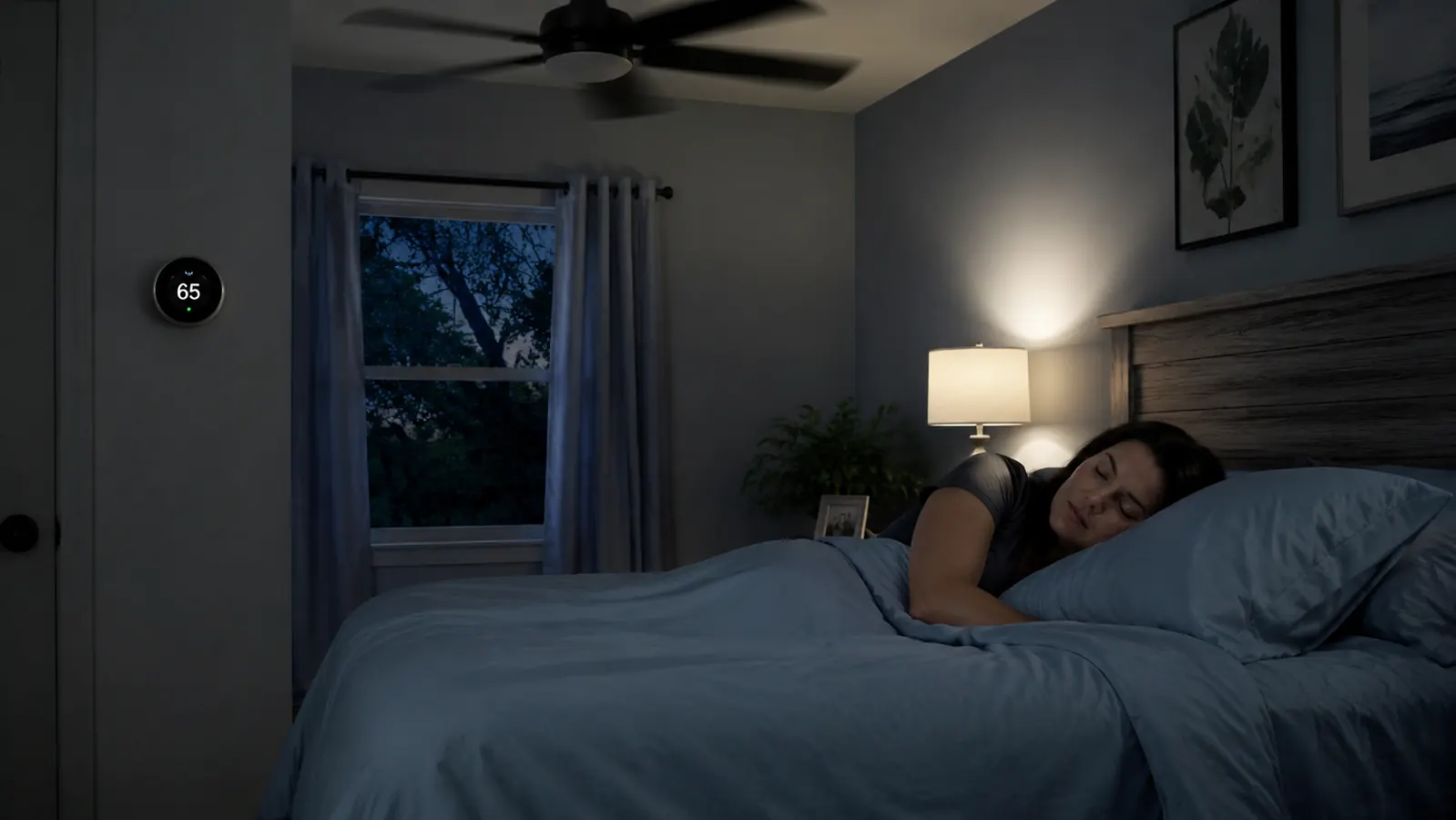
Bamboo sheets do a lot of the work, but they're not magic, and I want to be honest about that instead of pretending one product fixes everything. If your bedroom is sitting at 74 or 75 degrees, you'll still sweat some, just less than you would on cotton at that same temperature. I keep my thermostat at 67 for the hour before bed and let it drift to 68 overnight. That range is backed by enough sleep research that I stopped second guessing it and just set a schedule on the thermostat so I don't forget on nights I'm tired and just want to collapse into bed. The combination of a cooler room plus breathable sheets is what actually stopped the night sweats, not either one alone, and I wasted a few months testing them separately before I put both pieces together.
If you're someone who shares a bed with someone who runs cold, this is usually the sticking point, and I get messages about it more than almost anything else. My solution was a small clip fan aimed at my side of the bed rather than fighting over the thermostat every night like it's a courtroom case. It's a cheap workaround, it ends most of those arguments, and it means neither of us has to compromise on the temperature we actually sleep best at.
Step 4: Rethink what you're wearing to bed
I used to sleep in an old cotton t-shirt because it was soft and familiar, and it was doing the exact opposite of what my new sheets were doing, trapping heat and moisture right against my chest and back like a second skin that never got the memo about the upgrade underneath it. Switching to a lighter, moisture-wicking sleep shirt, or honestly just sleeping in less, closed the gap noticeably. Cotton pajamas on top of bamboo sheets is a bit like putting a wool sock inside a breathable shoe. The shoe can only do so much if the sock is working against it the entire time.
This doesn't mean you need to buy special bamboo pajamas to match your sheets, though some people do and like the consistency of having the same fabric touching them everywhere. It just means paying attention to whether your sleepwear breathes the same way your bedding does, because a mismatch there quietly cancels out some of the benefit you just paid for.
Step 5: Watch what you eat and drink in the three hours before bed
This one isn't about the sheets at all, but it's the step people skip and then wonder why they're still sweating occasionally even after doing everything else right. Alcohol, spicy food, and large late meals all raise your core body temperature while you sleep, and no sheet fabric, bamboo or otherwise, can fully cancel that out from the inside. My worst remaining sweaty nights, even now, a full year into this bamboo sheet setup, line up almost exactly with the nights I had a glass of wine or Thai food after 8pm. It's consistent enough that I can basically predict it.
I'm not saying cut those things out entirely, because I still have wine on weekends and I still order the pad see ew with extra chili on occasion. I just know now that on those nights I should expect a slightly warmer night regardless of what I'm sleeping on, so I don't blame the sheets when it happens, and I don't panic and think the fix stopped working. It's just my body doing what bodies do when you feed it something that runs hot.
The sheets fixed the nightly problem. Watching what I ate fixed the occasional one.
What Else Helps
A few smaller things rounded out the fix for me once the bamboo sheets were already doing most of the heavy lifting. I moved from a memory foam pillow to one with better airflow, since a hot pillow under your neck and face matters more than people expect, and memory foam in particular tends to trap heat the same way old cotton sheets do. I also stopped using a heavy duvet in the warmer months and switched to just the bamboo sheet set with a light blanket folded at the foot of the bed for when I get cold closer to morning, which happens more often now that I'm not overheating for most of the night.
None of these small changes would have solved the problem on their own, and I want to be clear about that so nobody goes out and buys a fancy pillow expecting it to fix night sweats without addressing the sheets first. They just removed the last few percent of heat once the sheets had already handled most of it. If you're curious how bamboo sheets compare to plain cotton across a longer stretch of nights, with actual before and after detail, I go through that in more depth in my full breakdown of why bamboo sheets help hot sleepers. And if you want the unfiltered version of my experience with this exact set, including the parts that annoyed me at first, I wrote up a longer review of the Bedsure bamboo sheets after using them for six months straight.
The honest summary is that this problem rarely has one single cause, but it usually has one dominant cause, and for most hot sleepers that cause is the sheets. Fix that first, add the room temperature and the food timing on top, and the occasional bad night stops feeling like a losing battle and starts feeling like a rare exception instead of the nightly norm.
Ready to stop waking up soaked?
The Bedsure bamboo sheet set is the single swap that had the biggest impact on my night sweats. It's a simple place to start before you spend money on anything more complicated.
Amazon Check Today's Price on Amazon →