

For about two years, my mornings started the same way. Alarm goes off, I sit up, and before I can even think about coffee, I'm working a wide-tooth comb through a rat's nest at the back of my head. Some mornings it was bad enough that I lost strands just getting the knots out. I have long, fine hair that tangles if you look at it wrong, and a regular cotton pillowcase was basically sandpaper against it all night long.
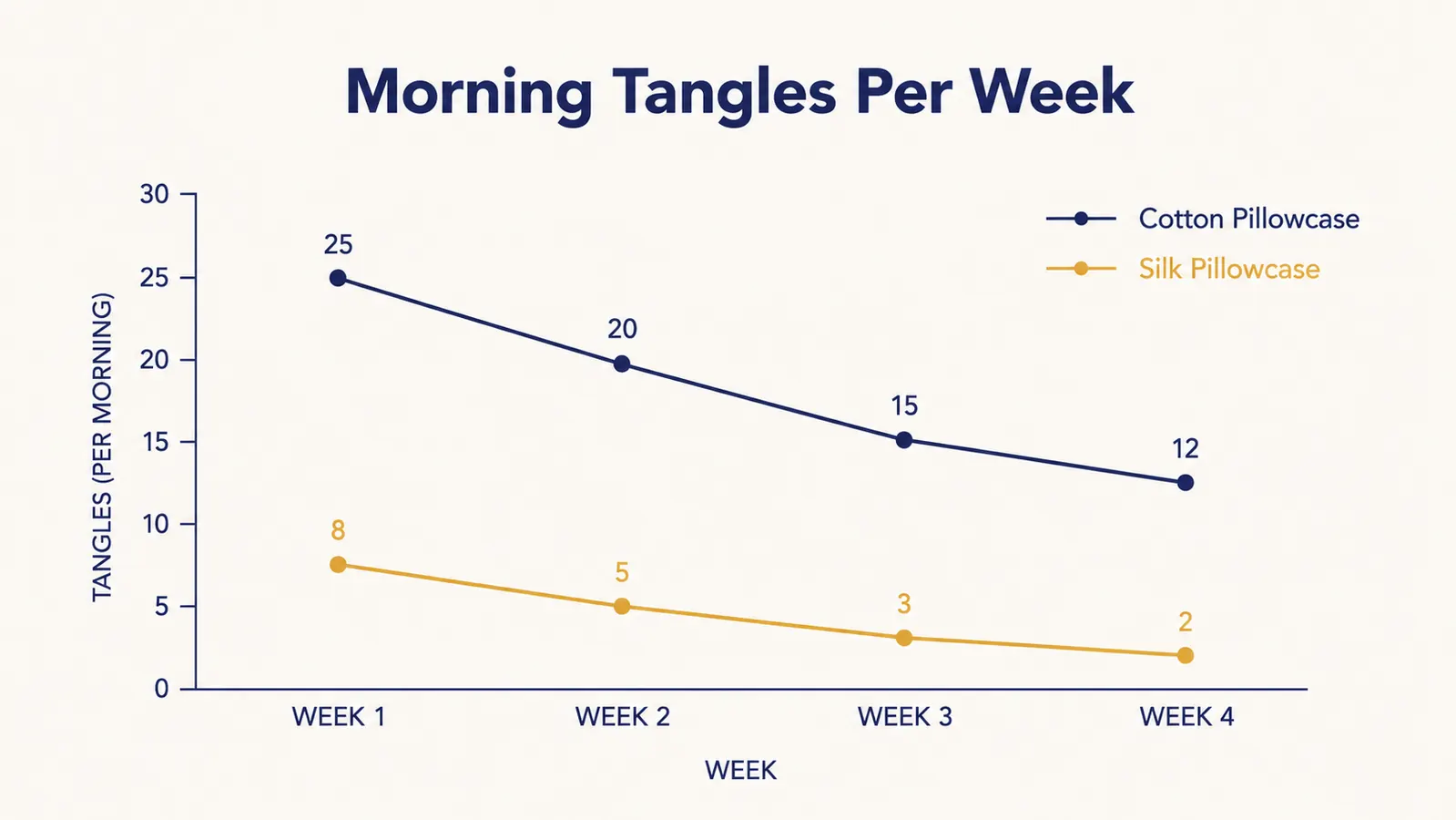
I want to walk you through exactly what fixed it, because it wasn't one magic trick. It was a mulberry silk pillowcase (I use the Suatien Queen with the hidden zipper) plus four small habit changes around it. Skip any one of the five steps below and you'll get partial results. Do all five and I'd bet your tangles cut by more than half within two weeks. I timed myself for a month before I made any changes, and my average morning detangling session was almost nine minutes. That's not a huge number until you multiply it by 365 mornings a year of tugging at your own scalp.
Stop fighting your hair every morning before your feet even hit the floor.
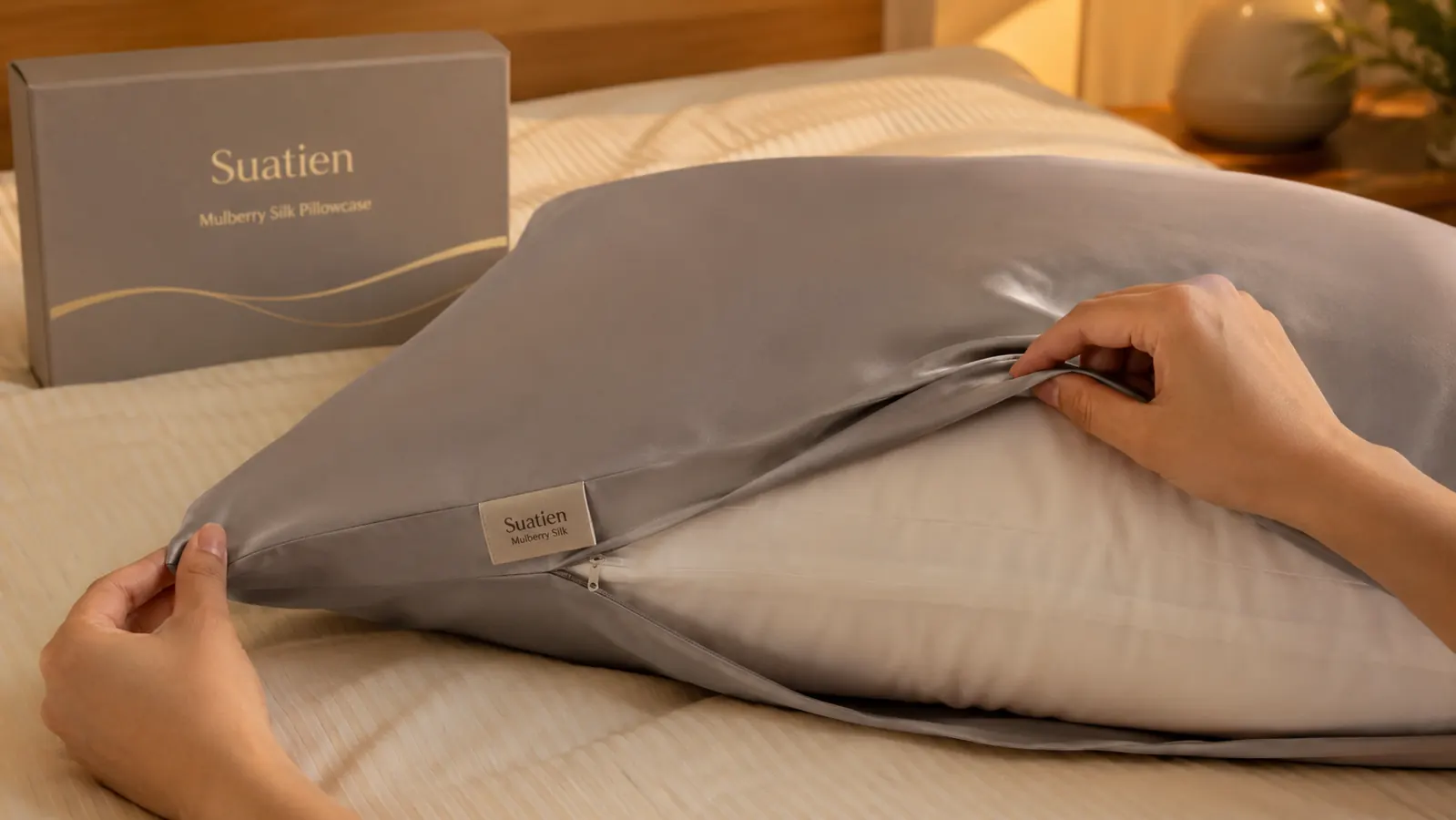
The Suatien mulberry silk pillowcase is the first thing I changed, and it's still the biggest single reason my mornings got easier.
Amazon Check Today's Price on Amazon →Step 1: Swap your pillowcase for a mulberry silk pillowcase
This is the step that does most of the heavy lifting, so I'm not burying it. Cotton fibers are rough at a microscopic level, and when your hair moves across cotton all night (and it does move, even if you think you sleep still), the fibers grab onto your hair's outer layer, called the cuticle. That friction is what creates tangles, frizz, and those little breakage hairs you find on your pillow in the morning. Every time your hair catches on a cotton fiber and gets tugged back the other way, the cuticle lifts slightly, and lifted cuticles are exactly what makes strands grab onto each other and knot.
Silk is smoother. Not marketing-smooth, actually smoother under a microscope, with a much flatter fiber surface than cotton or even most polyester blends. Your hair glides across it instead of catching. I switched to the Suatien mulberry silk pillowcase in a queen size, mostly because it has a hidden zipper closure instead of an envelope flap, which meant the pillow stayed fully wrapped even when I tossed around. An envelope-style pillowcase can bunch and shift over a few hours, exposing the pillow's rougher inner fabric right where your hair rests. The first night I used the zippered one, I remember waking up and being almost annoyed there was nothing to detangle. It felt like I'd skipped a step in my morning.
One thing worth knowing going in: silk pillowcases are more slippery than what you're used to, and that's the whole point, but it takes a few nights to stop noticing it. I woke up the first two mornings with the pillowcase half slid off the pillow, which felt like a step backward until I realized it was a sign the fabric was doing exactly what it's supposed to do. I mention this in more detail in my full silk pillowcase review, including the slipping issue and how it eventually stopped bothering me.
Step 2: Loosely braid or twist your hair before bed
Even on silk, hair that's left completely loose can still shift around and catch on itself, especially if you have a lot of hair or hair past shoulder length. I do one loose, low braid before bed, nothing tight, just enough to keep the length from wrapping around itself while I sleep. This took some trial and error. My first attempts at a bedtime braid were too tight and I woke up with a headache from the tension pulling at my hairline all night.
A tight braid actually works against you here. It creates tension at the scalp and can leave a crimped wave pattern that's its own kind of annoying in the morning, especially if you're trying to wear your hair straight that day. I go loose enough that I could slide two fingers under the braid without much resistance. If your hair is shorter, a loose twist held with a soft scrunchie (never a plain elastic, that thing is a hair-breaking machine) does the same job. If your hair is very short, a lot of this section won't apply to you, and you can lean more heavily on steps one and three.
The combination of the braid and the silk surface is what really changed things for me. The silk keeps the surface friction low, and the braid keeps the hair organized so it's not free to wrap around itself while you move through sleep positions. I tend to change position four or five times a night without waking up, according to my partner, and each of those shifts used to be another chance for hair to wind around itself.
Step 3: Apply a light leave-in or hair oil at the ends
Dry ends tangle more than moisturized ends. It's simple physics, dry hair has more surface roughness, and rough surfaces catch on each other more easily than smooth ones. I keep a small bottle of lightweight hair oil on my nightstand and work a few drops through just the bottom third of my hair before I braid it. I avoid the roots entirely since oil near the scalp just leaves my hair looking greasy by the next afternoon.
I want to be honest that this step alone, without the silk pillowcase, didn't do much for me. I tried oiling my ends for a couple of weeks while still using a cotton pillowcase, and I still woke up with tangles, just slightly less crunchy ones. It's the combination that matters. The oil reduces friction at the hair level, the silk reduces friction at the surface level, and together they compound rather than just adding up.
Don't overdo it. A few drops is plenty. I made the mistake early on of using too much and woke up with an oily silk pillowcase that needed an extra wash cycle, which brings me to the next step. If you have fine hair like mine, start with less than you think you need. You can always add more the next night, but you can't undo an oil-soaked pillowcase without an extra trip through the wash.

Step 4: Wash the silk pillowcase weekly, and wash it right
This step doesn't directly reduce tangles the night you skip it, but skip it for a month and you'll start sliding backward. Hair oil, skin oil, and product residue build up on any pillowcase, and once that happens even silk starts to grip a little more than it should. The buildup essentially recreates a rougher texture on top of the smooth fiber, undoing some of the benefit you switched fabrics for in the first place.
I hand wash mine in cold water with a gentle detergent, no fabric softener, and lay it flat to dry. Fabric softener in particular is something I'd avoid entirely, since it coats fibers with a residue that can actually make silk feel rougher over time, not softer. The Suatien care tag says it can go in a mesh bag on a gentle cycle too, and I've done that when I'm short on time, but I've had better luck with the pillowcase staying smooth and holding its color with hand washing. Either way, once a week is the sweet spot. I tried stretching it to every two weeks during a busy stretch last winter and noticed the tangles creeping back by day ten.
If you're deciding between silk and a regular pillowcase for this exact reason, I broke down the full side-by-side in my silk versus cotton pillowcase comparison, including what happens to both fabrics after a few months of regular washing and which one actually holds up better.
Step 5: Rethink how you go to sleep, not just what you sleep on
The last piece is behavioral, and it's the one people skip because it's less satisfying than buying something. How you position yourself matters. Sleeping face-down or with your face pressed into the pillow all night means more direct friction on the hair closest to your scalp, which is usually the most tangle-prone hair anyway, since it moves the most and gets the least airflow.
I'm a side sleeper, and I noticed I tangle less on the side I don't favor, simply because there's less repeated contact in one spot. I can't tell you to become a back sleeper overnight, that's not realistic, but I did start alternating which side I lead with when I get in bed, and it spread the wear more evenly across both sides of my head instead of concentrating all the friction on one spot night after night.
I also stopped going to bed with damp hair. Wet hair is more elastic and more prone to breakage and tangling than dry hair, since the hair shaft swells slightly when wet and the cuticle sits more open. So I moved my shower earlier in the evening or, when that's not possible, I let my hair air dry for at least thirty minutes before getting under the covers. Even a partial dry makes a difference over a full night.
What Else Helps
Beyond the five steps above, a couple of smaller things made a noticeable difference. I switched to a wide-tooth wooden comb for any morning detangling that's still needed, since plastic combs with narrow teeth tend to snag more and generate static that makes flyaways worse. I also stopped brushing my hair completely dry in the morning and instead spritz a little water first, which softens the hair before the comb goes through it. A dry detangling spray works too if you don't want to deal with a spray bottle of plain water first thing in the morning.
The pillowcase did the most work, but it was the pillowcase plus the small habits around it that actually stuck.
If you're someone who runs warm at night or deals with night sweats on top of tangled hair, it's worth knowing that silk also handles moisture differently than cotton, wicking it away rather than holding onto it. That's a separate benefit but it compounds nicely with everything above, since damp hair against a hot, damp pillowcase is close to a worst-case scenario for morning tangles. Cooler, drier hair simply moves less and catches less.
I'll also say plainly that a silk pillowcase isn't a fix for every hair type or every tangle problem. If your tangles are coming from a deeper issue like severe dryness, chemical damage from coloring, or a medical condition affecting your hair or scalp, the pillowcase will help at the margins but it won't solve the root cause on its own. For most people dealing with everyday morning tangles from friction and movement, though, it's the single highest-leverage change you can make, and I go into the full six-month picture, including what surprised me about durability, in my long-term silk pillowcase review.
The nights of waking up to a knotted mess don't have to keep happening.
Start with the pillowcase. It's the one change that keeps paying off every single night without any extra effort on your part.
Amazon Check Today's Price on Amazon →