
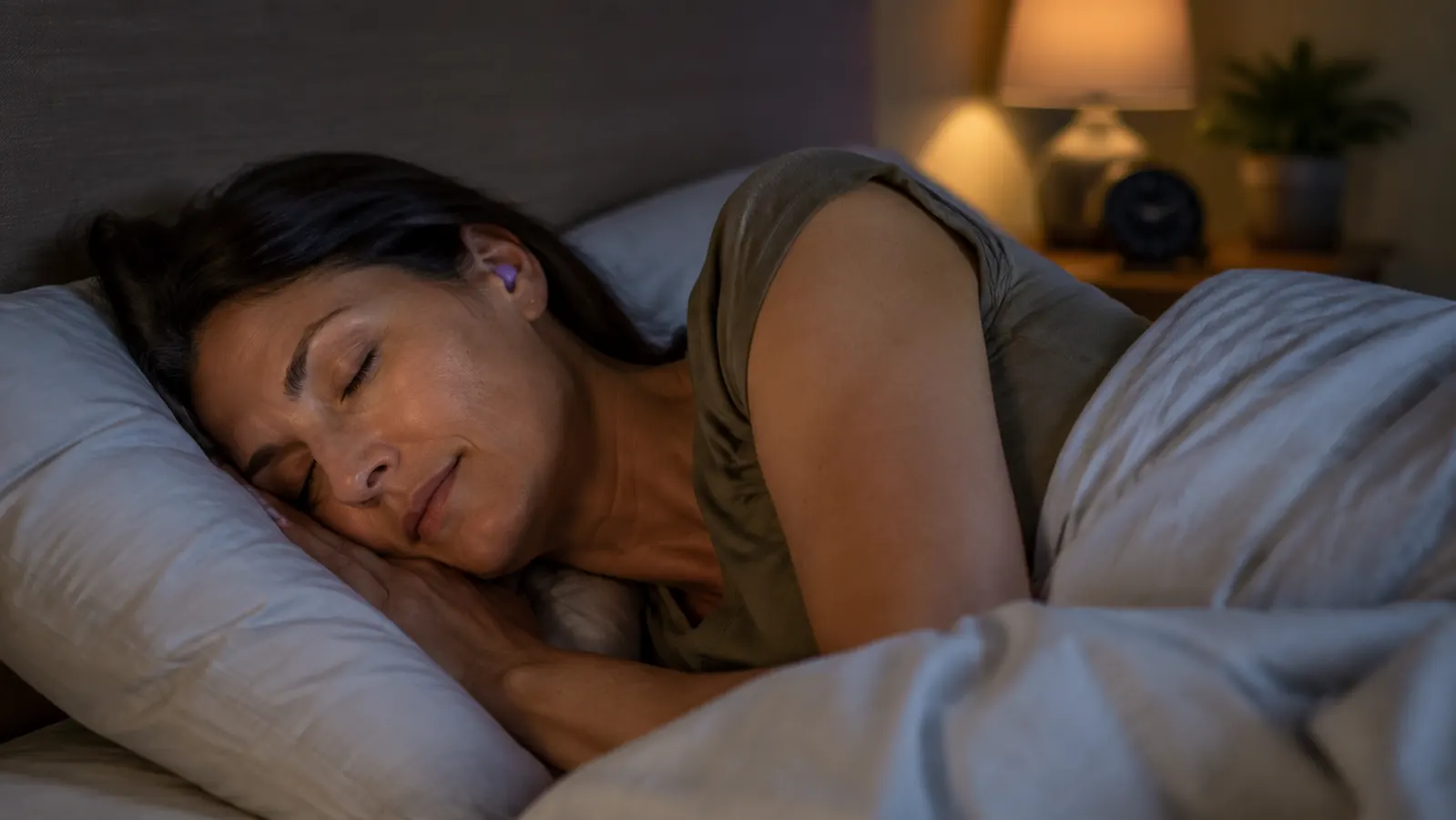
My husband Mark snores. Not a cute little rumble, either. Some nights it sounds like he's idling a lawn mower two feet from my head. I tried everything before I tried earplugs, a white noise app, sleeping in the guest room, elbowing him awake at 2 a.m. so many times he started sleeping on the far edge of the bed out of self-preservation. Six months ago I bought a pack of reusable silicone earplugs from Becheln for very little, mostly out of desperation, and I want to walk you through exactly what changed and what didn't. I wasn't expecting much, honestly, after two other earplug brands had already let me down.
I'm a light sleeper by nature. I wake up if the fridge compressor kicks on two rooms away. So this review isn't coming from someone who could've slept through anything anyway, with or without help. If these worked for me, on top of a snoring husband, a rattly window AC unit, and an upstairs neighbor who apparently only walks in work boots, they'll probably work for you too.
The Quick Verdict
Genuinely effective for snoring and steady background noise, moldable and comfortable for side sleepers, but they need real upkeep and won't fully block sudden sharp sounds like an alarm or a barking dog.
Amazon Check Today's Price →Tired of waking up every time he rolls over?
These moldable silicone plugs shape to your ear canal instead of jamming in like foam. Check today's price on Amazon and see if tonight's the night you actually sleep through it.
Amazon Check Today's Price on Amazon →How I've Used It
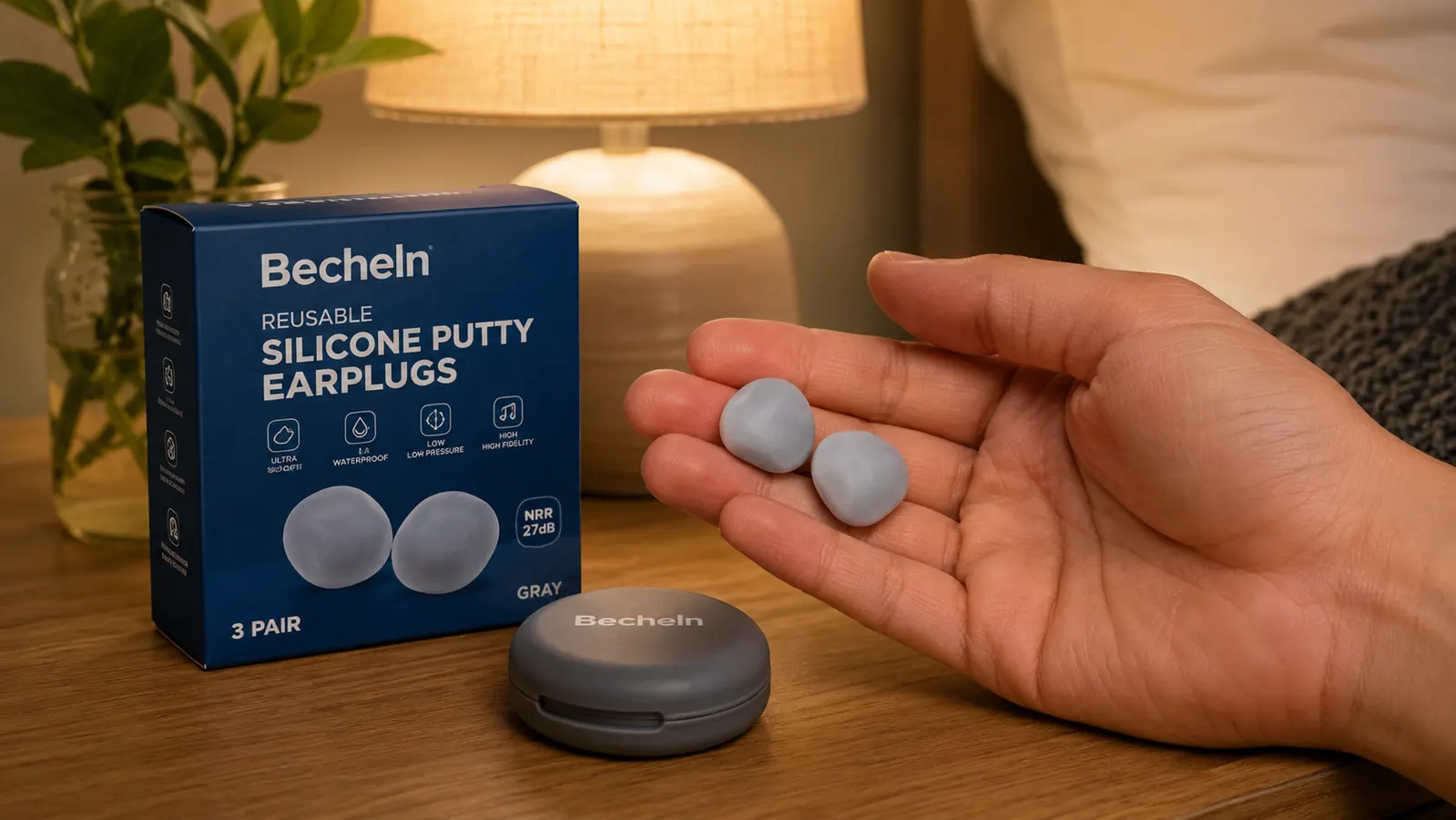
I started using the Becheln earplugs in early January, and I've worn them at least five nights a week since, sometimes all seven if Mark's had a beer or two with dinner, which for whatever reason always makes the snoring worse. The pack comes with six pairs plus a little plastic carrying case, and I've rotated through three pairs so far, replacing one set roughly every two months as they picked up lint and lost some of their tackiness. I keep the case clipped to the zipper pocket of my overnight bag now, so it travels with me without me having to think about it.
My routine is simple now, though it wasn't at first. I warm the putty between my fingers for about ten seconds until it goes soft and pliable, roll it into a small ball, then press it gently against the outer part of my ear canal rather than pushing it in deep the way you would with a foam plug. It seals across the opening instead of plugging inside it, which took me a night or two to get used to but became second nature fast once I understood I wasn't supposed to be shoving it in like foam. My mother-in-law, who's used foam plugs for decades, was genuinely surprised the first time she tried mine and realized how little pressure they actually apply.
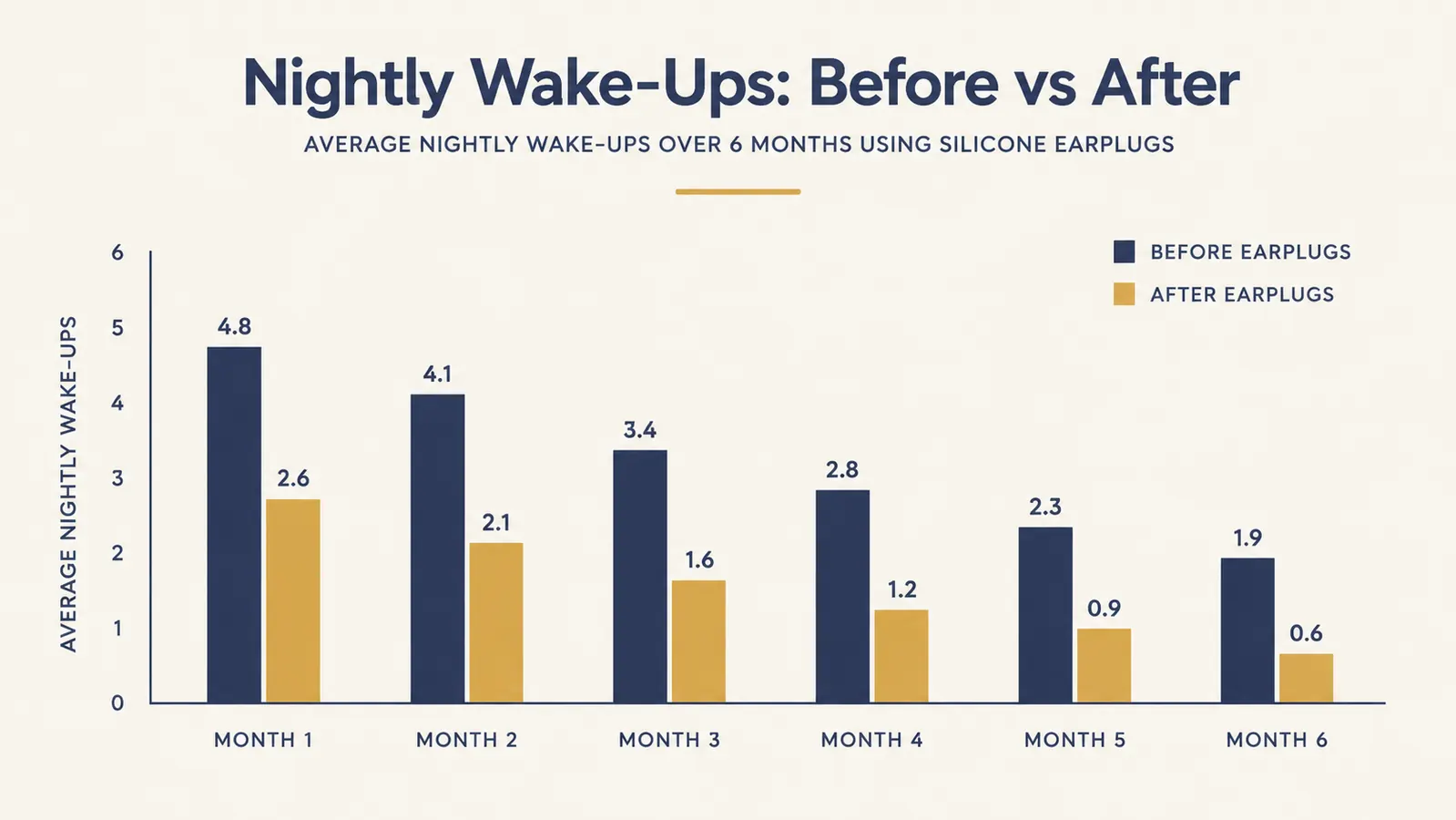
The first week, I'll admit, I woke up twice because I'd rolled onto my side in my sleep and the seal broke without me noticing until the snoring came flooding back in. By week three I had the shaping down to under 30 seconds and hadn't had a seal failure in days. That learning curve is worth mentioning because a lot of the reviews I read before buying made it sound completely instant, and for me it genuinely wasn't. Give yourself a week to get good at it before you decide whether these work for you, because the difference between night one and night ten is significant.
What They Actually Block (and What They Don't)
Silicone putty plugs work differently than the orange foam ones you'd grab at a pharmacy. Foam expands inside the canal and relies on sheer volume to dampen sound. These sit across the entrance of your ear like a soft seal instead, which means they're excellent at cutting steady, low-frequency noise: think snoring, a box fan, highway hum through a window, an air conditioner cycling on and off all night. Mark's snoring dropped from what felt like a jackhammer next to my pillow to a distant hum I could genuinely tune out and fall back asleep through most nights.
What they're less good at is sudden, sharp, high-pitched sound. My phone alarm at 60% volume still wakes me up fine, which is actually a feature and not a bug, since I don't want to sleep through my alarm no matter how good my earplugs are. But our neighbor's dog barking at 5 a.m., or a car alarm going off down the street, those still get through more than I'd like. With the Becheln earplugs, I'd put the real-world noise reduction somewhere around 60 to 70 percent for steady sound and maybe 30 to 40 percent for sharp, sudden sound. The listing claims up to 32 decibels of reduction, and for the low rumbling stuff, that number tracks pretty closely with what I've actually experienced night after night for half a year.
Comfort for Side Sleepers
This was my biggest worry going in, honestly the reason I almost didn't buy them. I sleep almost entirely on my side, and I'd tried foam plugs years ago that dug into my ear against the pillow and left me repositioning all night just trying to get comfortable. The silicone putty is genuinely different here. Because it sits flush against the outer ear rather than deep in the canal, there's nothing rigid pressing into cartilage when I turn my head into the pillow the way there was with foam.
That said, I do notice them slightly if I sleep directly on that ear with a firmer pillow. It's not painful, more like a low-level awareness that something's there, similar to sleeping with a hair tie on your wrist. Switching to a slightly softer pillow on the side I favor mostly solved it for me. My sister, who's a stomach sleeper and tried my extra pair one weekend she stayed over, said she barely noticed them at all, which makes sense given how different the pressure points are lying face down versus on your side.
Traveling and Sleeping Away From Home
I didn't expect this to be one of the bigger wins, but it has been. I took these on a work trip in March, staying at a hotel right off the interstate, the kind of place where trucks idle in the parking lot most of the night. Normally that's a guaranteed bad night for me. With the earplugs in, I actually slept close to seven hours, which almost never happens for me on the road. I've since kept a spare pair in my travel bag permanently, next to my phone charger, so I'm never caught without them somewhere unfamiliar and loud.
They've also come in handy on flights, oddly enough. The steady drone of jet engines is exactly the kind of low, constant noise these are built to muffle, and I've napped on two cross-country flights this year using nothing but these and a travel pillow, which used to be impossible for me. I've since recommended them to a cousin who drives long-haul and naps in his cab at rest stops, and he's told me the same thing, the generator hum and idling engines around him blur into background noise instead of jolting him awake every twenty minutes.
Hygiene and How Long a Pair Actually Lasts
This is the part nobody tells you clearly enough before you buy. The Becheln silicone earplugs pick up ear wax, lint, and skin oil over repeated use, and they genuinely need to be washed on a regular basis. I rinse mine with mild soap and lukewarm water most mornings and let them air dry on a small dish I keep on my nightstand specifically for this. Skip that routine for a few days in a row and they start to look genuinely gross, slightly yellowed and noticeably less tacky than a fresh pair.
Realistically, I've gotten about six to eight weeks of nightly use out of each pair before the putty stops holding its shape as well and starts crumbling a little at the edges when I roll it. With six pairs in the box, that math works out to roughly a year of steady use if you rotate through them and clean properly, which at this low price for the whole pack is genuinely hard to complain about. I mark the date I open a fresh pair on the case with a marker, just a small habit that keeps me from forgetting how old a pair is.

Alternatives I Considered First
Before these, I tried a wax-and-cotton hybrid plug and a pricier medical-grade silicone brand that ran almost four times the cost per pair. The wax ones worked fine acoustically but felt gummy and uncomfortably warm against my skin in a way I never loved, especially in summer. The pricier silicone brand had a nicer texture straight out of the box, slightly less tacky and easier to handle, but it wasn't meaningfully quieter once I compared them side by side for a week each, and honestly performed about the same once both had been broken in a bit. If you're weighing whether to spend more on a premium brand, my experience says the acoustic difference is marginal for sleep-specific use, and I break this down in more detail in my silicone vs foam earplugs comparison.
What I Liked
- Moldable putty seals comfortably for side sleepers
- Cuts steady low-frequency noise (snoring, fans, traffic hum) dramatically
- Reusable, six pairs per pack lasts close to a year with care
- Doesn't block phone alarms entirely, so you won't sleep through your morning alarm
- Very affordable compared to premium silicone options
- Compact and easy to travel with in the included case
Where It Falls Short
- Requires daily or near-daily cleaning to stay hygienic
- Learning curve of a few nights to get the seal right
- Doesn't block sudden sharp sounds like a barking dog or car alarm nearly as well
- Putty degrades and needs replacing every 6-8 weeks with nightly use
- Can feel slightly noticeable pressed against a firm pillow
The snoring didn't stop. I just stopped being the one lying awake because of it.
Who This Is For
If you're sleeping next to a snorer, dealing with a noisy street, a window unit, or thin apartment walls, and you've never gotten along with foam plugs, this is worth trying. Side and stomach sleepers especially will likely find the fit more comfortable than traditional foam over a full night. Truck drivers and shift workers trying to sleep during the day in unfamiliar or noisy environments have told me similar things when I've recommended these to them, the steady drone of traffic or a rest stop generator gets muffled enough to actually let you rest. I'd also add anyone sharing a thin-walled apartment or a college dorm to that list, since footsteps and muffled conversation through drywall fall into that same steady, low-frequency category these plugs handle well. If you want ten more specific scenarios where these help, I laid them out in 10 reasons earplugs help you sleep through noise.
Who Should Skip It
If you need near-total silence, say you're someone dealing with sudden loud noises like sirens, alarms, or a partner who talks in their sleep at full volume, these won't fully solve it on their own. I'd also skip these if you're not willing to do the small daily cleaning routine, because skipping that turns a comfortable product into an unpleasant one fast. And if you've had ear infections or ear canal sensitivity issues before, check with a doctor first, since anything sealing against the ear isn't the right fit for every ear. And if you're the kind of person who forgets to clean things you're supposed to clean daily, foam disposables might genuinely serve you better despite the ongoing cost, since there's no upkeep required with a pair you throw away after one use.
Six months in, I still reach for these every single night.
At a budget-friendly price for six reusable pairs, it's one of the lowest-risk things I've tried for noise-sensitive sleep. See today's price and give your ears, and your patience, a break tonight.
Amazon Check Today's Price on Amazon →