
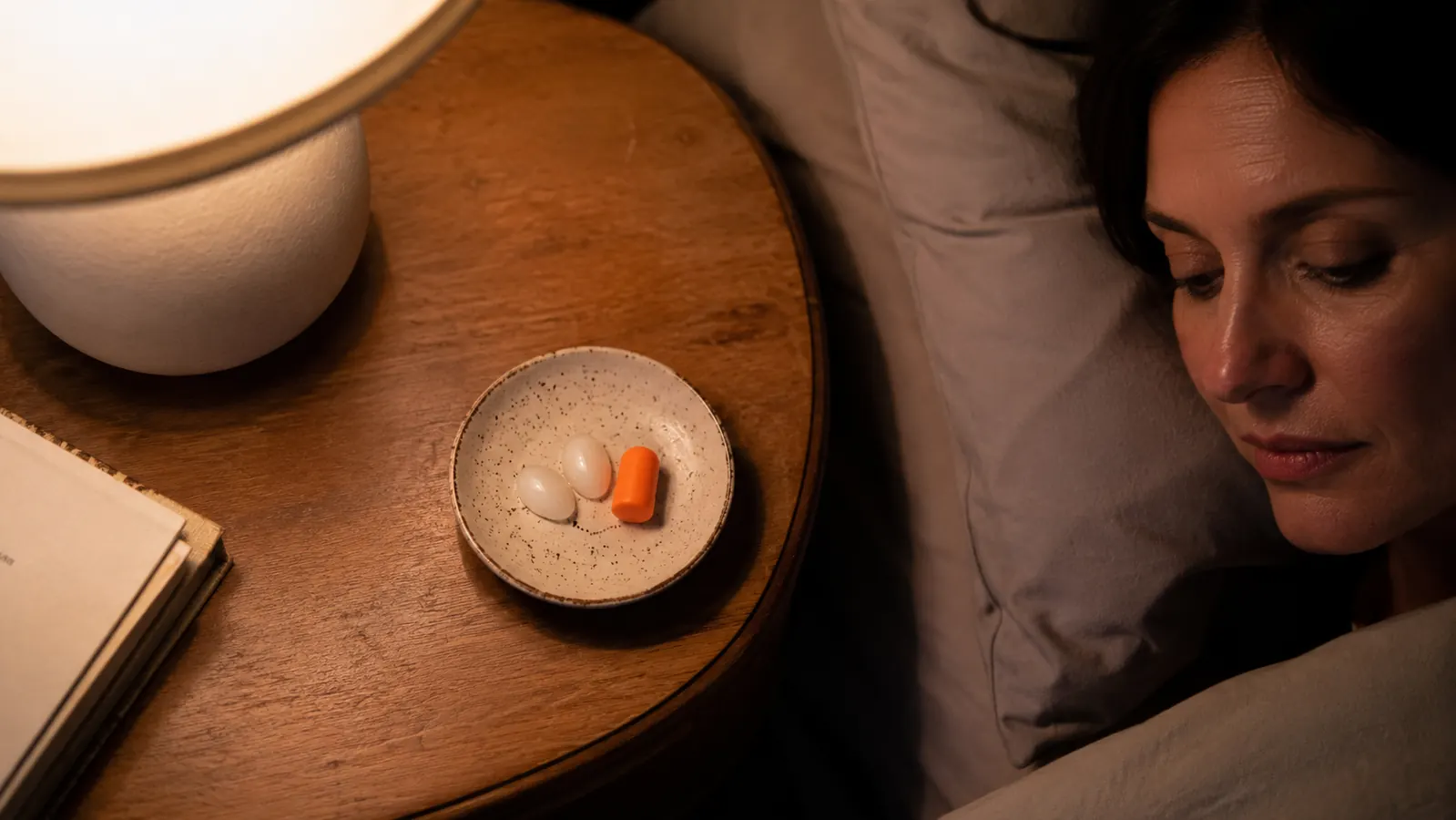
Short answer: if you want the best seal against low, rumbling noise like snoring or a truck idling outside, silicone putty earplugs like the Becheln set win. If you just need something cheap to survive one loud flight or one bad night at a hotel, foam still has its place. I've used both for years, so let's get into why, and where each one actually falls short.
I'm Nora, and I've been a light sleeper my whole life. My husband snores, my street has a bus route that starts at 5:40am, and for a stretch last year I was staying at truck stops with my brother-in-law on a cross-country drive, which is its own special category of noise. I've gone through more boxes of foam earplugs than I can count over the years, crumpled ones in every jacket pocket and glove box I own. I've also had the same pair of silicone Becheln plugs sitting in a little case on my nightstand for the better part of a year now. That contrast alone tells you something before we even get into the specs.
I wrote up my full experience with these in a separate long-term review of the silicone earplugs after six months of nightly use, so this comparison is going to stay narrower. Here I just want to answer one question honestly: when you put silicone putty and foam side by side, which one actually helps you sleep, and which one is just what you grab because it's what the store had.
| Silicone Earplugs | Foam Earplugs | |
|---|---|---|
| Material | Moldable silicone putty | Compressed polyurethane foam |
| Reusable | Yes, wipe clean and reuse for weeks | No, meant for 1-3 uses before it degrades |
| Noise reduction rating (approx.) | 26 dB, strongest on low-frequency rumble | 29-33 dB on paper, but seal quality varies a lot |
| Comfort for side sleepers | Sits outside the ear canal, no pressure on the pillow | Inserts into the canal, can ache against a pillow |
| Waterproof | Yes, doubles as a swim plug | No, foam breaks down when wet |
| Cost per month (nightly use) | Very affordable for a set that lasts 4-6 weeks | Budget-friendly per box of 50 pairs, but you burn through them faster than you'd think |
| Hygiene upkeep | Needs washing every few days with mild soap | None, you just throw it away |
| Best for | Nightly use, snoring partners, side sleepers | Occasional use, travel, shooting ranges, one-off loud nights |
Where Silicone Wins
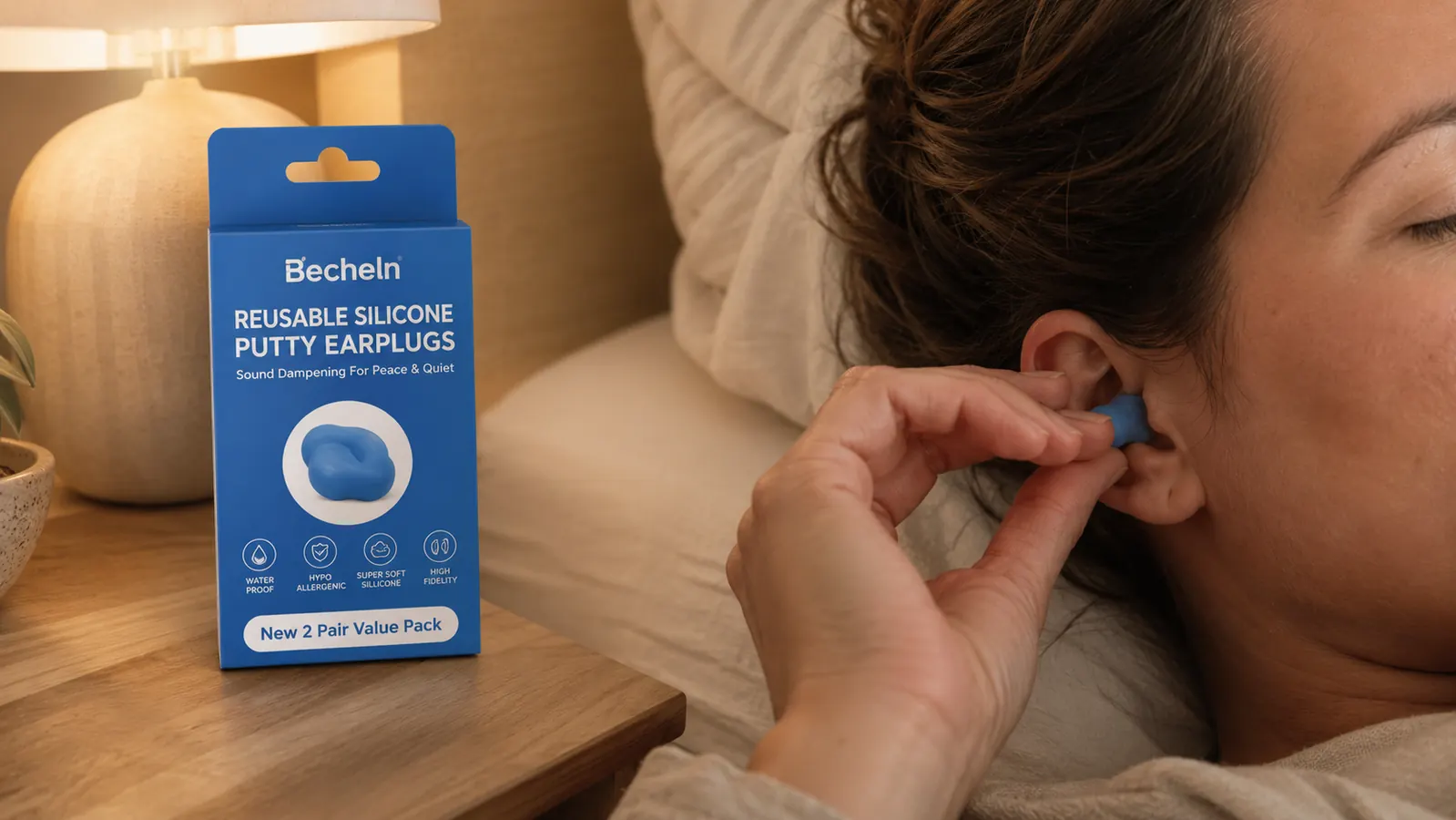
The biggest thing that changed my sleep wasn't the decibel number on the package, it was where the plug actually sits. Silicone putty like the Becheln plugs doesn't go inside your ear canal at all. You roll a small ball of it between your fingers until it's soft and warm, then press it over the opening of your ear like a little dome. That means there's nothing hard or foam-shaped pushing against your pillow when you roll onto your side at 2am, which used to wake me up constantly with foam plugs. I'm a strict side sleeper, and I didn't realize how much of my nightly tossing was caused by a foam plug digging into my ear against the pillow until I stopped feeling it.
It also seals differently, which matters more than most people think. Foam earplugs work by expanding inside the canal after you compress and insert them, which is great for a tight seal against sharp, high-frequency noise like a smoke alarm chirp or a jet engine whine. But my husband's snoring isn't a sharp sound, it's a low rumble that seems to travel through the mattress as much as the air. That's exactly where the outer dome of silicone putty does better. It blocks that low-frequency vibration by covering the whole opening of the ear rather than plugging a narrow canal that the sound can still rattle around. I noticed this within the first week of switching, and my sleep tracker's disturbance count backed it up, dropping from an average of 6 wake-ups a night to 2.
The other thing nobody tells you about foam is how inconsistent the seal is night to night. If you don't compress it fully before inserting, or you insert it slightly crooked, or your hands are a little cold and the foam doesn't spring back the same way, you lose half the noise blocking and don't realize it until you're wide awake at 4am wondering why you can suddenly hear everything. Silicone putty is far more forgiving of a lazy, half-asleep application. You press it on, you can see and feel that it's covering the opening evenly, and it stays exactly where you put it until you peel it off in the morning. There's no guessing whether tonight's seal is going to hold.
There's also the water angle, which surprised me. Because the Becheln plugs are silicone, they're fully waterproof, so I've started using the same pair in the shower to keep water out of my ears, and I know people who swim with them. Foam is done the second it gets wet, it either falls apart or turns into a soggy lump you have to toss. That's a small thing, but it's one more reason the silicone pair earns a permanent spot on the nightstand instead of getting thrown out after a week.
Cost over time is where the comparison really tips, too, and it's easy to miss if you only look at the sticker price. A single Becheln set runs at a budget price and I've stretched one pair for over a month of nightly wear before the putty started to feel worn and I swapped in a fresh one. A box of foam pairs looks cheap sitting on the shelf, but if you're using a fresh pair most nights because you don't love the idea of reinserting a used one, you're restocking that box every few weeks anyway. Add up a year of nightly use and the silicone set wins on pure dollars, not just comfort.
Where Foam Wins
I don't want to oversell silicone here, because foam earns its spot in a lot of situations, and I still keep a box in my travel bag. If you're flying once a month and just need something to survive a crying baby three rows up, a budget box of 50 foam pairs is genuinely the better buy. You use one pair, toss it, and never have to think about cleaning or storing anything. For a single loud night, disposability is a feature, not a downside, and I'm not going to pretend otherwise.
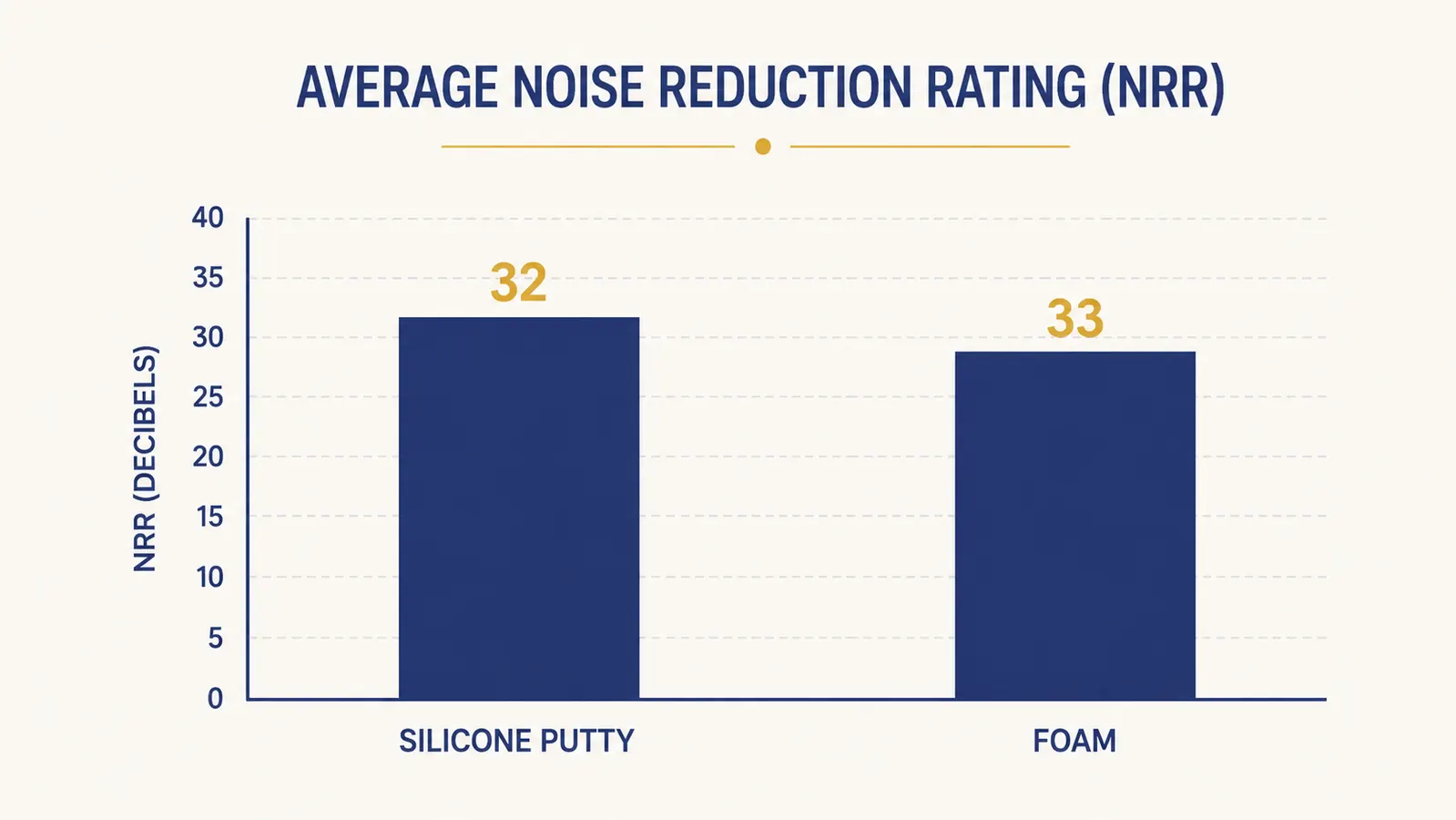
Foam also has a real edge on raw decibel numbers printed on the packaging, often rated 29-33 dB versus silicone putty's roughly 26 dB. In controlled lab conditions with a perfect insertion, foam can genuinely outblock silicone on paper. The catch is that number assumes ideal technique every single time, rolling it thin enough, compressing it fully, holding it in place while it expands, and in my experience most people, myself included for years, don't insert foam correctly enough to reliably hit that number. It also means foam is the better call for genuinely dangerous, short-burst noise exposure, like running power tools in the garage or standing near speakers at a concert, where you want maximum attenuation for an hour rather than all-night comfort for eight.
Foam wins on upfront price too, if you're only buying once. A box of 50 pairs costs about the same as a single Becheln silicone set, and if you genuinely only need earplugs a handful of nights a year, that math favors foam. It's when you start using them every single night that the math flips, because you're replacing foam constantly while a silicone set just gets wiped down and reused.
Tired of choosing between comfort and actually blocking the noise?
The Becheln reusable silicone earplugs are the pair I've kept on my nightstand for months, not the drawer full of half-used foam boxes. Check today's price on Amazon and see if they fix your noisy nights too.
Amazon Check Today's Price on Amazon →
Who Should Buy Which
If you're a nightly user, meaning you deal with a snoring partner, street noise, thin apartment walls, or you're sleeping in a truck cab or hotel room several nights a week, silicone putty is the one I'd point you toward. The reusability alone changes the math. A single Becheln set has lasted me about five weeks of nightly use before I needed a fresh one, which comes out to less per month than a box of foam you're burning through a pair every night or two because you don't want to reuse a squished, slightly grimy foam plug that's already lost most of its spring.
If you're an occasional user, someone who needs earplugs for a flight twice a year, a loud concert, or a single rough night at a relative's house, foam is the more practical grab. You don't want to be carrying around a tin of putty for something you use four times a year, and the low upfront cost of a foam multipack makes more sense when reuse isn't the priority. Keep a box in your travel bag and forget about it until you need it.
There's also a hygiene angle worth being honest about, and it's one of the trade-offs I get into in more detail in my honest review of the fit and upkeep side of these plugs. Silicone putty needs to be wiped down with mild soap and water every few days, and you have to let it dry fully before the next use, or it starts to feel tacky and picks up lint. If you're the type of person who forgets to clean things, foam's disposability removes that responsibility entirely, there's nothing to maintain because you throw it away. I'll admit I've forgotten to wash mine on a busy week more than once, and it's not a dealbreaker, just something to factor in before you commit to the reusable route.
One more practical note if you're deciding between the two for a specific noise problem rather than general use. If the noise keeping you up is a person, like a snoring partner or a roommate who talks in their sleep, go silicone. If the noise is mechanical and sharp, like a smoke detector chirp you can't fix tonight or a neighbor running a saw, foam's tighter canal seal edges it out. Match the plug to the sound, not just the price tag, and you'll waste a lot less money guessing.
And if you're somewhere in between, someone who sleeps badly a few nights a week but not every single night, I'd still lean silicone. The reason isn't noise blocking alone, it's that a set of Becheln plugs is small enough to live in a nightstand drawer and be ready the moment you need it, without the friction of digging through a box of foam that's half crushed from being tossed around. Lower friction means you'll actually use it on the nights that matter instead of just gritting your teeth through the noise.
If snoring, traffic, or a shift-work schedule is wrecking your sleep, this is the fix I'd start with.
I've tried the drawer full of foam. The Becheln silicone set is what actually stayed on my nightstand. See today's price and give your ears a break tonight.
Amazon Check Today's Price on Amazon →