

I bought the Suatien mulberry silk pillowcase after reading maybe forty reviews on Amazon, and almost every one of them said some version of the same thing: my hair is softer, my skin feels better, five stars, buy it. What none of them mentioned is that I'd wake up on my third morning with the case pulled halfway off the pillow, one bare corner staring at me, and no idea it was even a known issue until I went digging. Six months later, I still love this pillowcase. But I want to write the review I wish I'd read before I bought it, the one that tells you what the five-star crowd leaves out.
The Quick Verdict
A good, honestly-priced silk pillowcase with real upkeep demands and a slipping habit that the glowing reviews conveniently skip over.
Amazon Check Today's Price →Nobody mentions the part where you have to hand wash it. Here's the rest of what they left out.
This is the same pillowcase I've used for six months, slipping issue, wash routine, and all. Worth knowing what you're actually signing up for before you buy.
Amazon Check Today's Price on Amazon →How I've Used It
I'm a side sleeper who runs warm, and I bought this pillowcase mostly for the temperature relief, not the beauty claims, since I'd already tried a cheap satin one years ago that didn't hold up past two months. This one is queen size, one hundred percent mulberry silk, with a hidden zipper rather than the envelope opening most budget silk cases use. I've slept on it nearly every night for six months, through a brutal July and now into a cold snap, and I've paid attention less to the marketing promises and more to the day-to-day annoyances, since those are what actually decide whether a product stays in rotation or gets shoved in a drawer.
What follows isn't a takedown. I still use this pillowcase every night. But I bought it expecting a smooth, no-maintenance upgrade over cotton, and that is not entirely what I got. Here's the honest version.
The Momme Number Nobody Explains
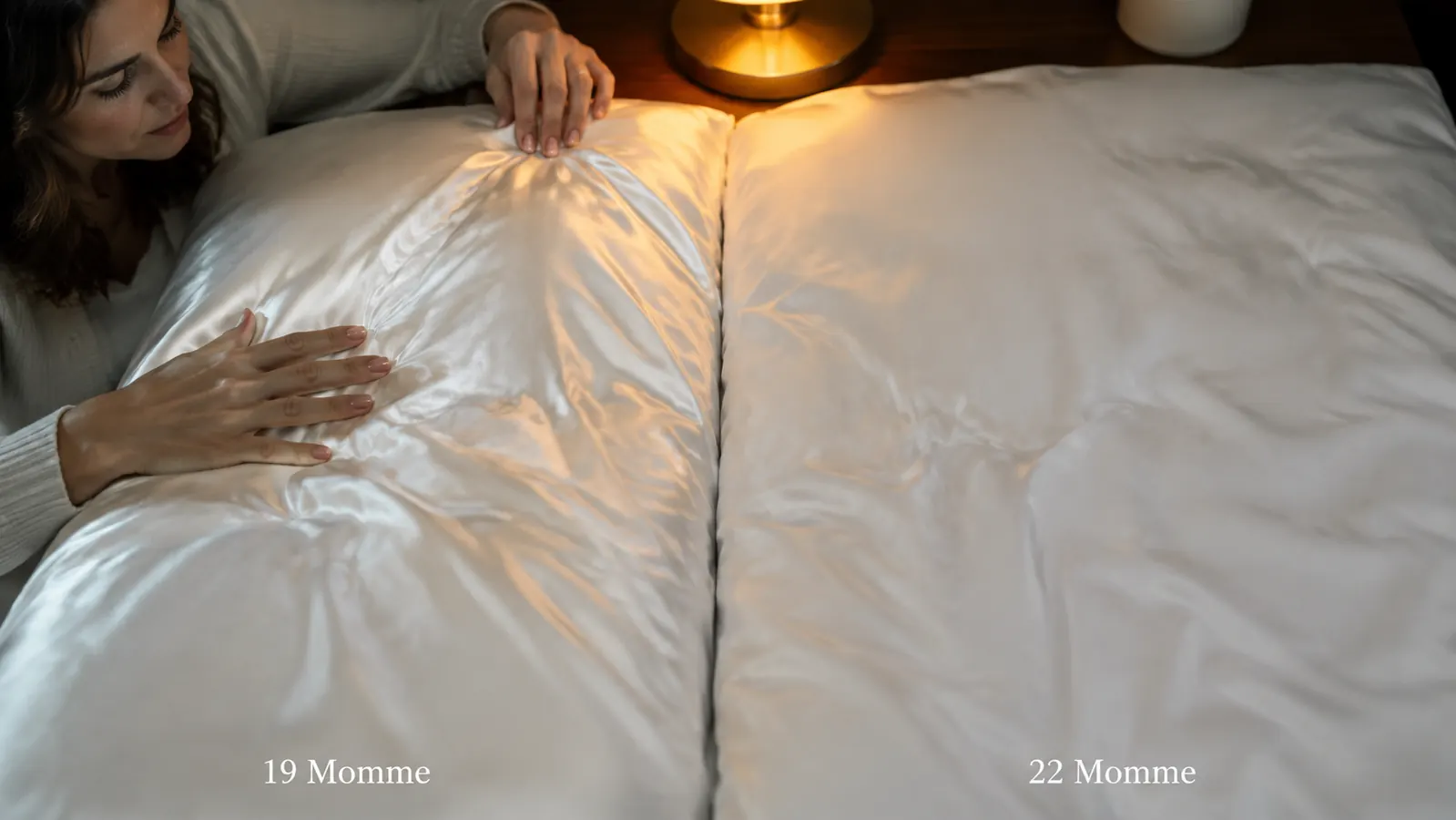
Silk quality is measured in momme, a weight unit that roughly tells you how dense and durable the fabric is. Most listings, including this one, print a momme number somewhere in the bullet points, but almost nobody explains what it means or why it matters until you've already bought the wrong thing once. Higher momme, generally above 19, means a heavier, more durable weave that holds its sheen longer. Lower momme silk feels almost identical in the store lighting of a product photo, but it thins and pills faster with regular washing.
I didn't know to check this the first time I bought a silk pillowcase years ago, a different brand, and it went limp and slightly see-through at the seams within about ten weeks. This Suatien case sits in a mid-range momme that's held up fine for me over six months, but I want to be blunt that at this price point you are not getting the same density as a boutique brand charging triple. That's not a knock, it's just math, and the reviews that gush about how luxurious it feels rarely mention that luxury is a sliding scale even within the world of silk.
If you're comparing this against a plain cotton case and trying to decide whether the price gap is worth it, the momme question is really the crux of it, and I go through that trade-off in more detail in our silk vs cotton pillowcase comparison.
The Slipping Is Worse Than a Minor Quibble
I mentioned it in the opener because it's the first thing that surprised me, and six months in, it's still the single biggest complaint I have. Silk is slippery against itself and against most pillow fabric, which is exactly why it feels so good on your hair and skin. That same property means the case doesn't grip the pillow the way a cotton or flannel case does. On a normal night I wake up with it shifted at least a little. On a restless night, I've had it bunch entirely to one end, leaving half the pillow bare fabric against my cheek.
This isn't a defective-unit problem. It's physics. Every silk pillowcase I've researched has some version of this complaint buried a few pages deep in the reviews, past the five-star pile-on at the top. If you share a bed and your partner moves around a lot, or if you're someone who wakes up wrapped in the sheets, budget for readjusting it most mornings. It stopped being a dealbreaker for me, but it took real trial and error, not the product working out of the box the way the marketing implies.
What actually helped was pillow choice, more than anything I did to the case itself. A firmer, more structured pillow keeps the case from sliding nearly as much as a soft, squishy one does, because there's less give for the silk to slide across. I switched pillows about two months in for an unrelated neck issue and noticed the slipping dropped off almost by accident. If your pillow is soft and lofty, expect more slipping regardless of which silk case you buy.
What I Liked
- Genuinely smoother against hair and skin than any cotton case I've owned
- Hidden zipper is more secure than the envelope closures on cheaper silk cases
- The Suatien pillowcase held up structurally over six months without thinning or snagging
- Feels cool against a warm cheek during hot months
- Reasonably priced for real mulberry silk, not a satin imitation
Where It Falls Short
- Slides on the pillow more than any cotton case, especially with a soft pillow
- Hand washing is genuinely a chore, not a minor footnote
- Momme weight is mid-range, not the density of pricier boutique brands
- The care tag instructions are easy to miss and easy to ignore at your own risk
- Cold nights make it feel thin without a layer underneath
The five-star reviews sell you the upside in one sentence and skip the paragraph about upkeep entirely. That paragraph is where the real decision lives.
The Hand Washing Reality
The Suatien listing says hand wash in cold water, and I want to be honest that I ignored that advice for the first month because I assumed it was the kind of overly cautious instruction manufacturers print to cover themselves, the way a shirt tag says dry clean only when a gentle machine cycle would be fine. I ran it through a normal cold wash with my regular laundry twice before I noticed the sheen had dulled slightly and the fabric felt a touch rougher against my cheek than it had the first week.
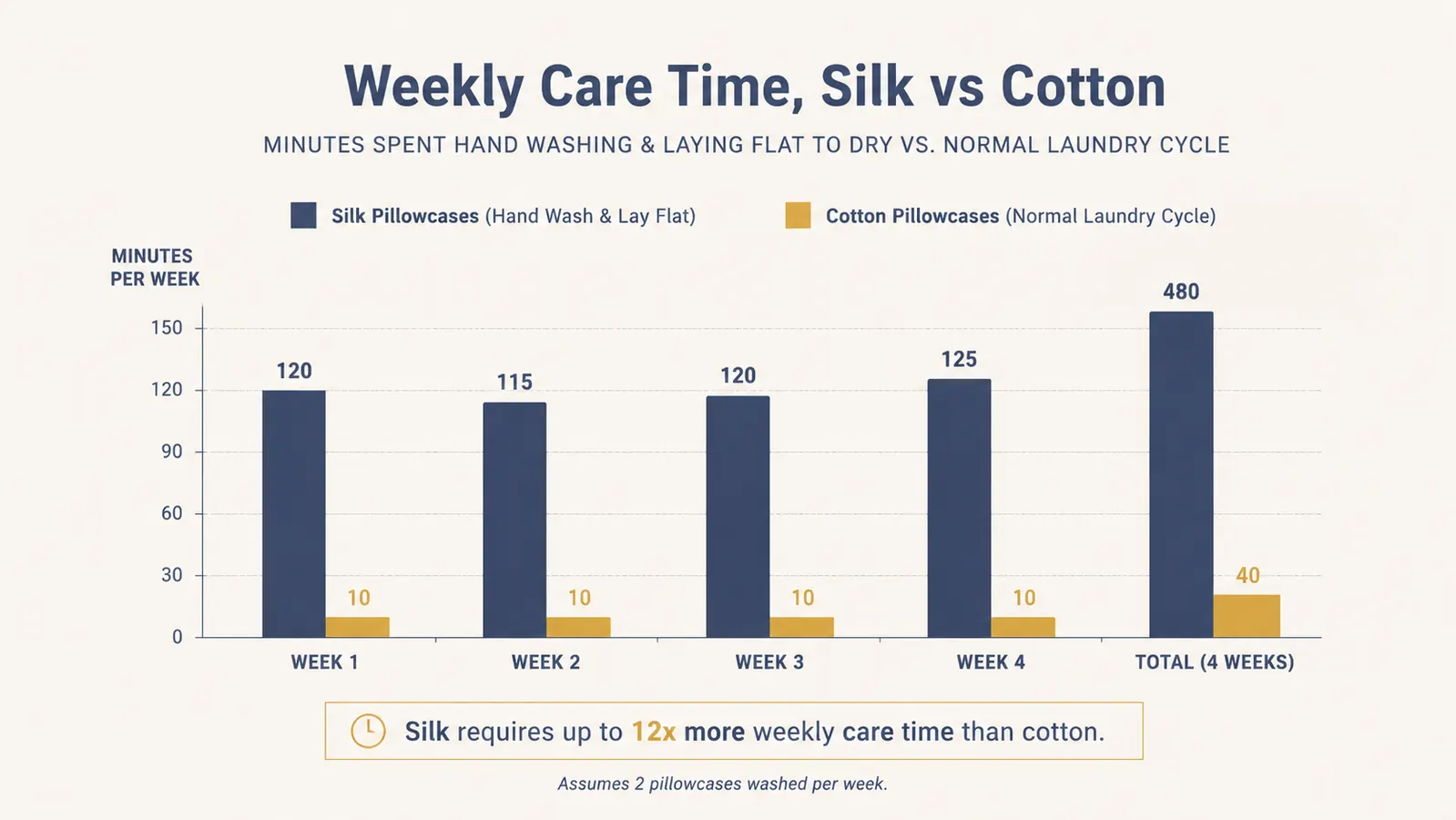
That was enough to make me take the hand wash instruction seriously. Since then I've hand washed it in the sink with a small amount of gentle detergent, roughly every ten to fourteen days, and laid it flat on a towel to dry rather than using the dryer. It takes maybe seven minutes of actual hands-on time, plus a full day drying flat, which means you genuinely need a backup pillowcase in rotation unless you enjoy sleeping on a bare pillow one night a week.
Nobody puts a time estimate on this in the reviews. It's not hard, but it is one more small chore added to a laundry routine that most people are trying to simplify, not complicate. If you already hand wash delicates regularly, this will feel normal. If you don't own anything else that requires hand washing, be honest with yourself about whether you'll actually keep it up, because skipping it repeatedly is exactly how you end up with the dulled, slightly rough fabric I got after two machine washes.
The Smell and Feel Out of the Box
This is a small thing, but it surprised me enough to mention. The pillowcase arrived with a faint chemical smell, the kind you get from fabric that's been treated and packaged tightly for shipping. It wasn't strong or unpleasant exactly, just noticeable, and it took one gentle wash before it disappeared completely. I'd recommend washing it once before the first use rather than sleeping on it straight out of the packaging, both for the smell and because a first gentle wash seemed to soften the feel slightly compared to the slightly stiffer texture it had on arrival.
The zipper pull itself is small and a bit fiddly the first few times you use it, especially in a dark bedroom at night when you're half asleep and just trying to get the case back on after washing. It gets easier with repetition, but if you have limited hand dexterity, the envelope-style closure some competing brands use might genuinely be easier to manage, even though it's less secure overall.
Where the Cooling Claim Falls Short
Silk pillowcases get marketed heavily on the cooling angle, and there's some truth to it, silk doesn't trap heat against skin the way a tight cotton weave does. But it's not an active cooling technology, it's just a fabric that doesn't retain warmth well. That cuts both ways. In July, that was a genuine relief. By November, on nights when my bedroom dropped into the low sixties, the pillowcase itself felt almost cold to the touch when I first lay down, colder than a flannel or brushed cotton case would have felt.
I ended up keeping a plain cotton pillowcase in the drawer for the coldest weeks of winter and swapping back to silk once the room warmed up again. That's a reasonable workaround, but it's worth knowing that this isn't a year-round, one-size-fits-every-season purchase if your climate swings hard between hot and cold. The marketing photos are almost always summer bedroom scenes for a reason.
The Queen Size Fit Runs Snug
One detail that surprised me and that I have not seen mentioned in a single review is how snug this queen size case fits over a standard queen pillow once it has been washed a few times. Silk does not have the give that cotton jersey does, so if your pillow insert runs even slightly oversized, like the plush hotel-style pillows that have gotten popular the last few years, you may find the zipper takes real effort to close, especially the first time after a wash when the fabric is at its tightest. Mine fits a standard queen insert fine, but I swapped a slightly overstuffed pillow back into the closet after fighting the zipper twice, and now I keep that pillow paired with a cotton case instead.
This matters more than it sounds like it should, because a tight zipper closure puts stress on the seam every time you force it shut, and stressed seams are where silk starts to fray first. If you already own an oversized or extra-plush pillow insert, I would size up if the brand offers a king option even on a queen bed, rather than fighting a queen case onto a pillow it was not quite made for. Nobody puts that advice on the product page, and it would have saved me one irritated ten minutes on a Tuesday night.
What I'd Actually Compare It Against
Before committing to this one, I looked seriously at two alternatives. The first was a higher momme silk pillowcase from a specialty sleep brand running at a premium price point, which reviewers described as noticeably heavier and less prone to slipping because the added weight helps it sit in place better. I didn't buy it because I wasn't ready to spend that much on an unproven category for me at the time, but if the slipping issue on a mid-momme case like this one bothers you, that's where I'd look next, not at a cheaper option.
The second alternative was simply staying with cotton and accepting the tangling and creasing, which is what I did for years before this. I don't think that's the right call anymore for anyone dealing with fine hair or noticeable morning creases, the difference really is real. But it's a legitimate choice if you're not willing to deal with any added laundry step, and I'd rather say that plainly than pretend silk has zero cost.
Who This Is For
This makes sense if you're willing to hand wash a delicate item every couple of weeks, you sleep on a reasonably firm pillow that won't make the slipping worse, and you want a genuine step up from cotton without paying boutique prices. It's also a good fit if your main complaint is warm-weather sleep, since that's where the temperature benefit is most obvious and least complicated by seasonal cold.
Who Should Skip It
Skip this if you already resent doing laundry and know, honestly, that a hand wash step will get ignored after the first few weeks. Skip it if you sleep on a very soft, overstuffed pillow and can't switch, because the slipping will likely frustrate you more than any other reviewer's complaint suggests. And skip it if you live somewhere with genuinely cold winters and only want one pillowcase in rotation year round, since you'll want a warmer backup for at least part of the year. If you want the full list of what convinced me to keep using it despite all that, I laid those reasons out separately in 10 reasons a silk pillowcase helps hair and skin, and the mornings-focused version of this story is in how a silk pillowcase changed my mornings.
The five-star reviews skip the hand-wash step and the slipping. This one didn't.
If you want the real trade-offs before you buy, not just the highlight reel, this is the pillowcase I tested them all on.
Amazon Check Today's Price on Amazon →