

My husband snores like there is a small engine idling on his side of the bed. Some nights it is a low rumble I can mostly tune out. Other nights it is a full snort-and-gasp routine that jolts me awake three or four times before 2 a.m. I tried nudging him onto his side. I tried a second mattress in the guest room for a while, which fixed my sleep but wrecked our mornings together. What actually solved it, without either of us having to change bedrooms, was learning to use silicone earplugs correctly. I say correctly because I wasted almost two weeks jamming foam plugs in wrong before I switched to reusable silicone ones and figured out the technique that actually blocks a snoring partner all night.
This guide walks through the five things that matter for using earplugs to block a snoring partner: getting a real seal instead of a half-in plug that falls out by midnight, choosing silicone over foam for this specific use case, breaking in your ears so the pressure does not wake you up on its own, protecting your hearing and your alarm clock at the same time, and keeping the plugs clean enough to actually reuse night after night. None of this is complicated, but almost nobody explains the order that makes it work, so people give up on earplugs after a bad first week when the fix was a small adjustment to how they were inserting them.
Stop losing sleep to a sound you cannot control. Control what you hear instead.
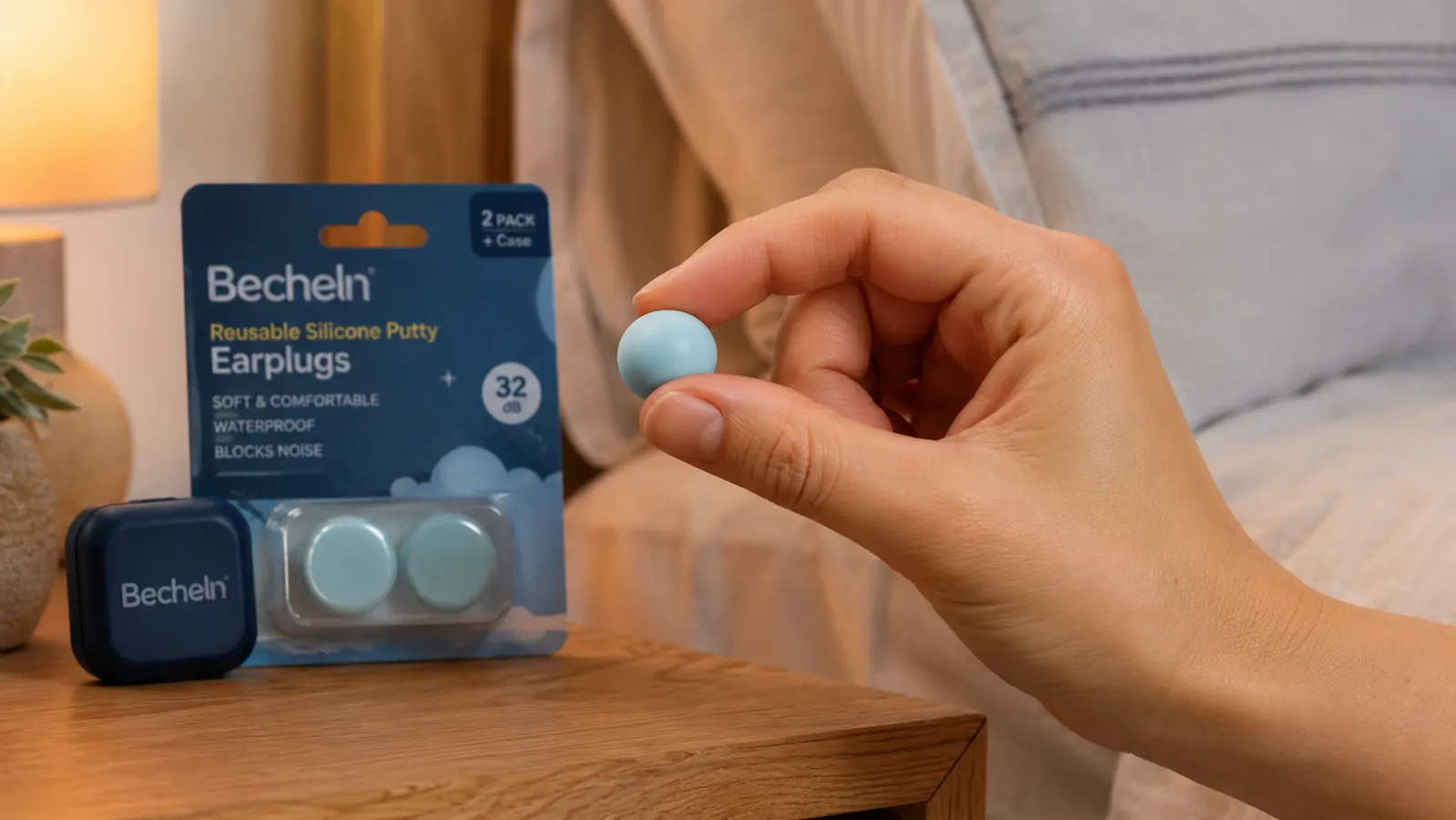
The Becheln Reusable Silicone Ear Plugs mold to your ear canal by hand, no foam expansion needed, and they are waterproof and washable so one pair lasts for months of nightly use.
Amazon Check Today's Price on Amazon →Step 1: Get a Real Seal, Not a Half-In Earplug
Snoring is a low, steady rumble punctuated by sharper snorts, and the sharper sounds are what actually jolt you awake even if the rumble fades into background noise. Blocking both parts takes a full seal around the ear canal opening, not just a plug pushed partway in. A gap of even a millimeter around the edge lets sound leak straight through, which is the number one reason people say earplugs "do not work" for snoring when the real issue was the seal.
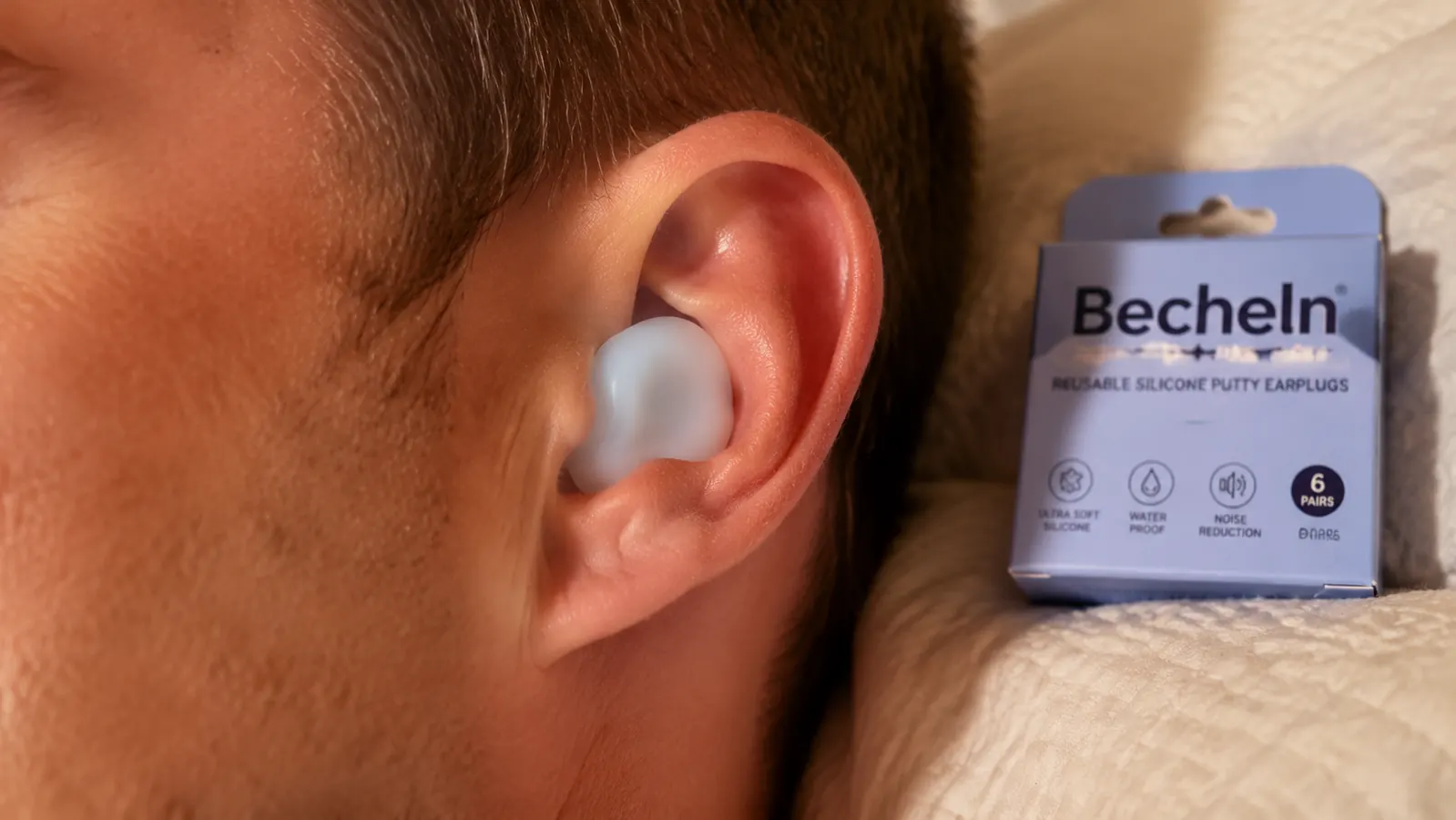
With moldable silicone earplugs like the Becheln set, the seal happens on the outside of the ear canal, not inside it. You warm a small ball of the silicone between your fingers until it goes soft and pliable, then press it flat against the opening of your ear canal and smooth the edges down against your skin so there is no visible gap anywhere around the rim. Done right, it looks almost like a small dome sitting flush against your ear rather than a plug stuffed inside it.
The first few nights I did this wrong. I pressed the silicone in like I was used to doing with foam plugs, pushing toward the canal instead of flattening outward across the opening. It muffled some sound but the snorts still came through clearly enough to wake me. Once I switched to pressing it flat and running my fingertip around the entire rim to check for gaps, the difference was immediate. The rumble dropped to almost nothing and the sharper snorts went from a jolt to barely a blip.
Check the seal every single time you insert them, especially in the first couple weeks. Your fingers get faster at it, but skipping the gap-check is exactly how a plug that worked fine one night mysteriously fails the next.
Step 2: Choose Silicone Over Foam for Snoring Specifically
Foam earplugs expand inside the ear canal and work well for steady background noise like a fan or highway traffic. For snoring, silicone tends to work better for a specific reason: snoring is not steady, it has sudden peaks (the snorts and gasps) layered on top of a steady low rumble, and the external, moldable seal of silicone blocks both the low end and the sharp peaks more evenly than foam's internal expansion does.
Silicone also solves a comfort problem foam never really does for side sleepers. Foam plugs sit inside the canal and can feel like pressure building against your eardrum if you sleep with your ear pressed into the pillow, which is exactly how most people who share a bed with a snorer end up sleeping, angled away from their partner with the exposed ear against the mattress. Silicone sits flatter against the outer ear, so there is less to press against when you roll onto that side.
The other practical difference is reusability. Foam plugs degrade fast, they compress, pick up lint, and usually need replacing every few nights if you want a reliable seal. A silicone set like the Becheln plugs is designed to be reshaped and reused, which matters when you are relying on them every single night rather than occasionally on a plane or at a concert. Waterproof silicone also means you can rinse them clean, which foam simply cannot handle. Over a few months of nightly use, that adds up to real savings compared to buying fresh foam plugs every week or two.
Step 3: Break In Your Ears Before You Judge the Plugs
The single biggest reason people quit on earplugs in the first week has nothing to do with the plugs themselves. It is the sensation of your own body, your heartbeat, your breathing, even the sound of your jaw moving, suddenly amplified once outside noise is blocked. This is completely normal and it fades. Almost everyone new to nightly earplug use reports the first two or three nights feeling strange, sometimes strange enough to pull the plugs out at 1 a.m. out of pure unfamiliarity rather than any actual failure of the product.
Give it a real week before deciding whether earplugs work for you. My first night, I noticed my own breathing so clearly it was almost distracting, and I woke up twice just from the newness of the sensation, not from any sound getting through. By night four, I stopped noticing my own body sounds entirely and only noticed the silence where my husband's snoring used to be. That gap between night one and night four is normal and it is exactly the window most people quit in, right before it would have clicked for them.
It also helps to insert them fifteen or twenty minutes before you actually intend to fall asleep, rather than right as you are drifting off. That gives your brain time to adjust to the changed soundscape while you are still consciously reading or scrolling, so the adjustment period happens while you are awake and calm rather than while you are trying to fall asleep and getting frustrated by the newness of it.
Step 4: Protect Your Hearing and Your Alarm Clock at the Same Time
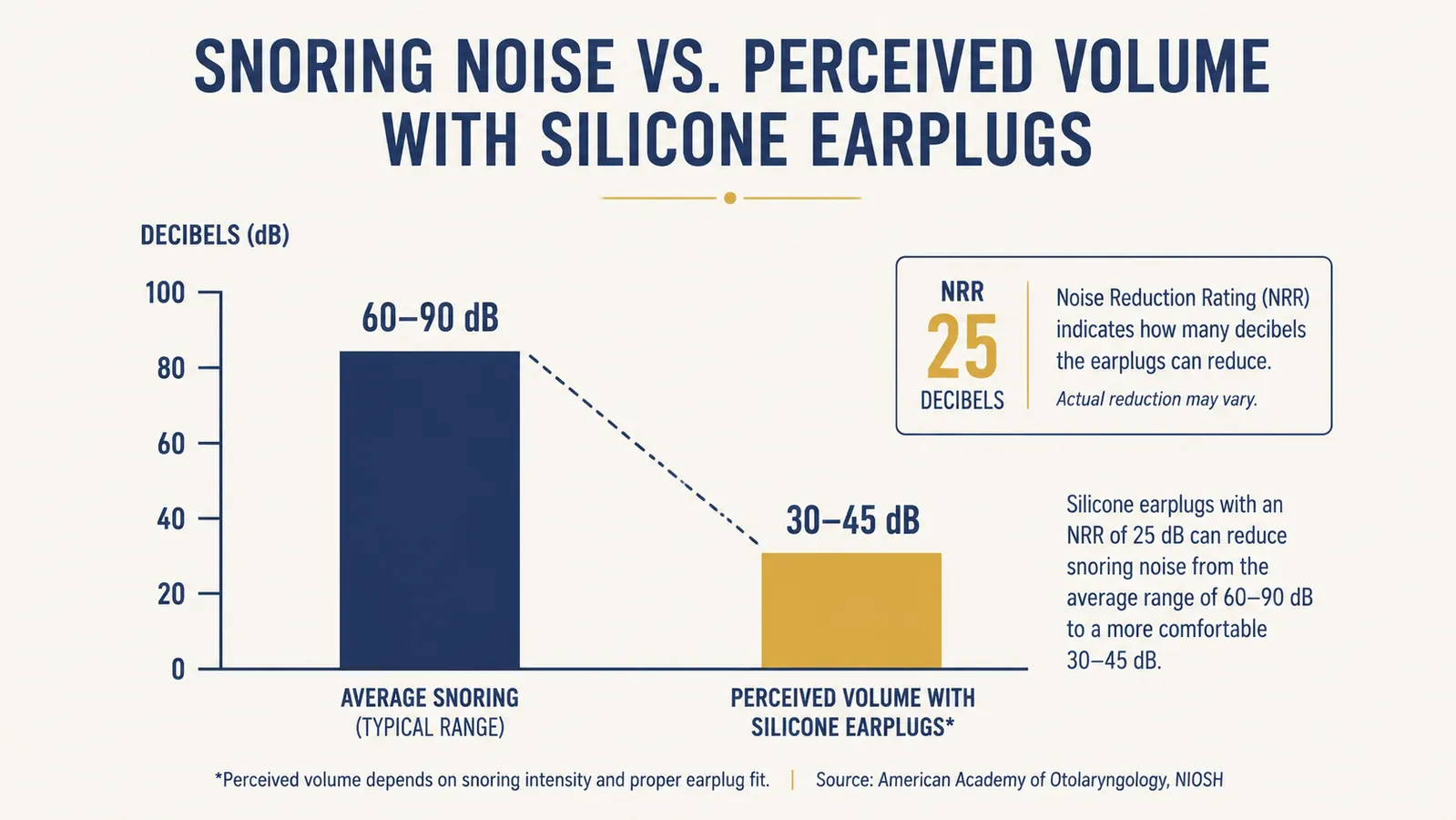
A fair worry with any earplug used nightly is whether you will sleep through smoke alarms, a crying kid, or your own morning alarm. This is a real consideration and worth planning around rather than ignoring. Silicone earplugs with a moderate noise reduction rating, generally in the 25 to 32 decibel range, will muffle a snoring partner effectively while still letting through genuinely loud, sharp alarms like smoke detectors, which are specifically designed to cut through hearing protection at that level.
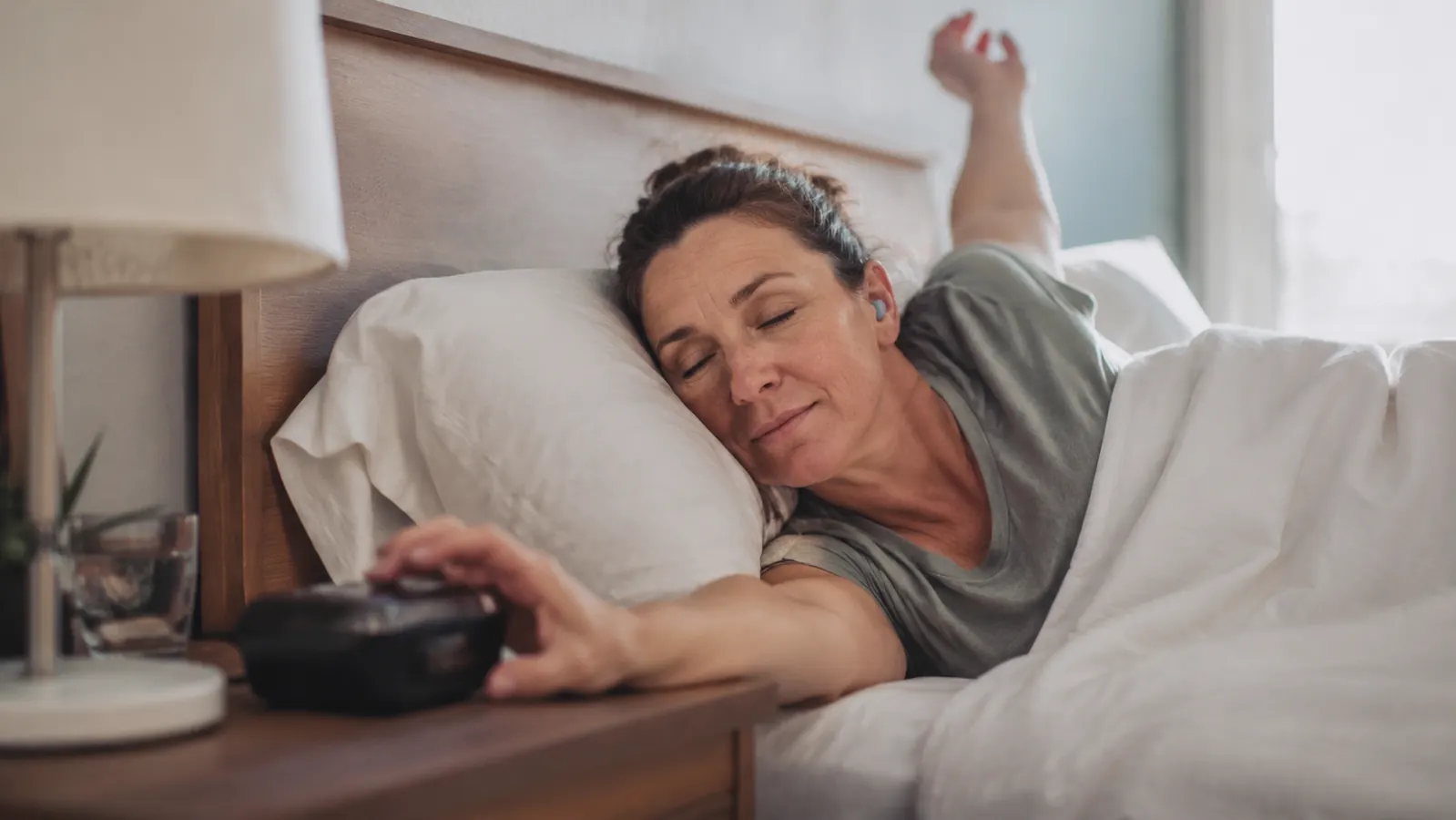
For your own wake-up alarm, the safest fix is not relying on plugs failing to block it, it is switching to a vibrating alarm or a bed shaker placed under your pillow or mattress. I use a cheap vibrating alarm clock now, and between that and my phone's alarm set to max volume on the nightstand right next to my head, I have never once slept through a morning I needed to be up for. If you have small children in the house, it is worth testing on a night you know you can wake easily, to confirm you can still hear a baby monitor or a call from another room at the volume you actually use it at.
One habit that helps here: keep the plugs in a shallow dish on your nightstand, not buried in a drawer, so removing them quickly if something does wake you is a two-second task, not a fumble in the dark.
Step 5: Keep Them Clean So You Actually Reuse Them
The whole appeal of reusable silicone earplugs falls apart if you are not actually cleaning them, since ear wax and skin oil build up on the surface over weeks of nightly molding. The Becheln plugs are waterproof, so a quick rinse under warm water each morning, a gentle wipe with a clean cloth, and letting them air dry fully before you reshape them that night keeps them from getting tacky or picking up a smell.
Once a week I give mine a slightly deeper clean with a drop of mild soap, rinsed thoroughly, and left to dry on a clean tissue rather than straight on the nightstand. Silicone does not degrade the way foam does, so with that kind of light weekly care, one pair realistically lasts a few months of nightly use before the material starts feeling less pliable and it is time to swap in a fresh pair from the pack.
Skip putting them away wet or leaving them balled up from the night before without cleaning. That is the fastest way to end up with a slightly grimy plug that does not mold as smoothly and does not seal as well, which brings you right back to the gap problem from step one.
What Else Helps Alongside the Earplugs
Earplugs solve your side of the problem, but it is worth also addressing the snoring itself where you can. Encouraging your partner to sleep on their side rather than their back reduces snoring for a lot of people, since back sleeping lets the tongue and soft palate collapse toward the airway more easily. A simple trick some couples use is sewing a small pocket with a tennis ball into the back of a pajama shirt, uncomfortable enough on the back to nudge a person toward their side without fully waking them.
Cutting back on alcohol in the few hours before bed helps too, since alcohol relaxes throat muscles further and tends to make snoring louder and more frequent on nights it is in someone's system. Elevating the head slightly with an extra pillow can also reduce snoring for some people, similar to the effect a wedge pillow has for acid reflux, worth trying if your partner is open to adjustments beyond just tolerating your earplugs. Losing weight, when snoring is tied to extra weight around the neck and throat, can also reduce it over time, though that is obviously a longer-term change than anything you can do tonight.
If the snoring is loud, constant, and paired with gasping or breathing pauses your partner is not aware of, that combination is worth mentioning to a doctor, since it can point to sleep apnea rather than ordinary snoring. Earplugs handle the noise problem for you, but they are not a substitute for your partner getting checked out if the snoring pattern sounds more serious than a simple noisy sleeper.
The seal did more than the material ever did. Once I stopped pushing the plug inward and started pressing it flat against the opening, the snoring almost disappeared.
If you are still deciding whether reusable silicone is worth switching to from the foam plugs you have used for years, our full breakdown of 10 reasons earplugs help you sleep through noise covers the wider case beyond just snoring, and our 6-month review of these same silicone plugs goes into how the seal and material held up over that much nightly use.
Give the seal one real week before you decide earplugs are not for you.
Most people notice the difference by night three or four, once the adjustment period passes and the seal becomes second nature. The Becheln set is moldable, waterproof, and reusable for months.
Amazon Check Today's Price on Amazon →