
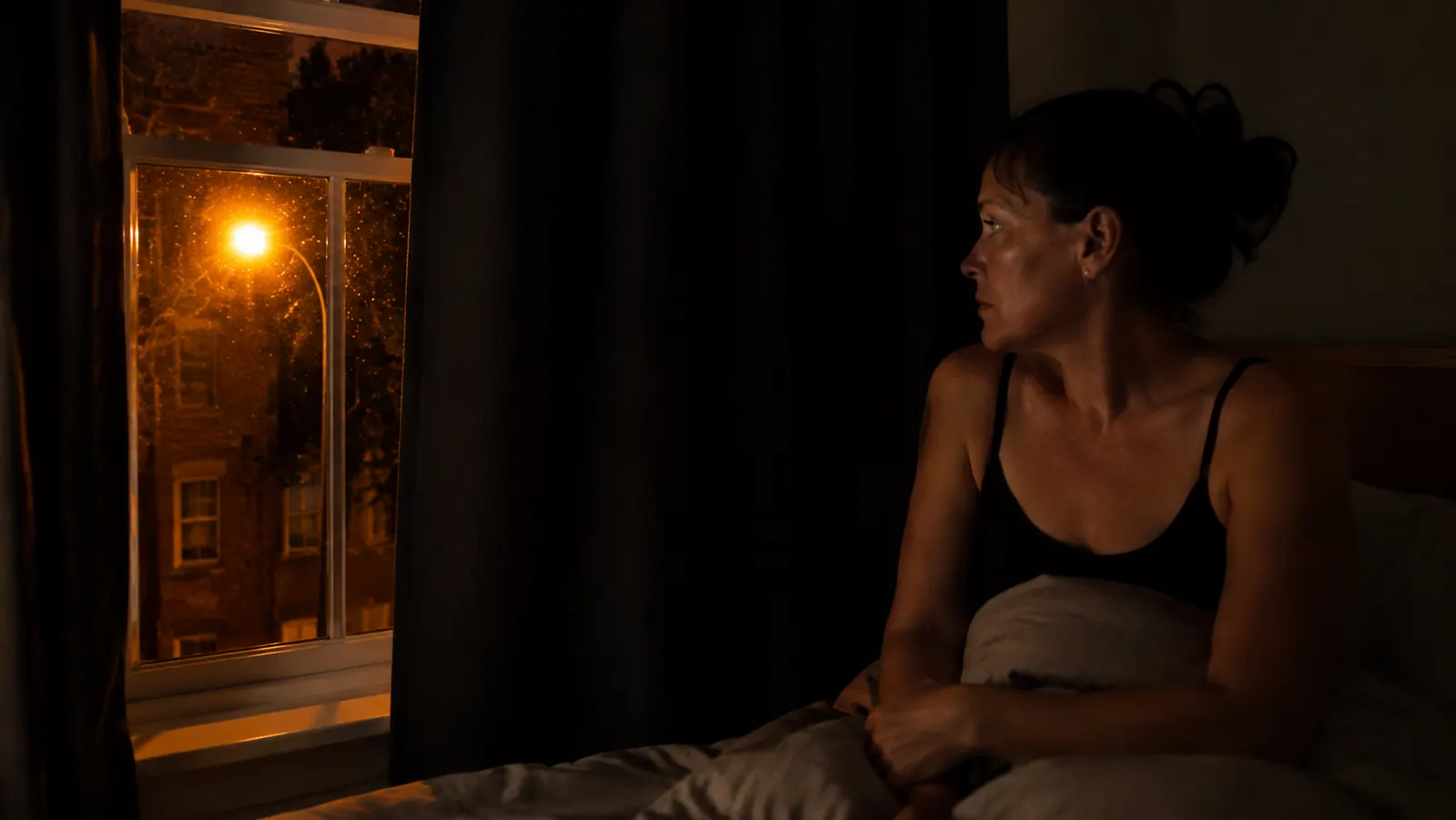
My bedroom window faces a street with a sodium streetlight almost directly across from it. For years, no matter what curtain I bought, I'd wake up at 2am and see an orange line running across my ceiling like a stripe of paint. It wasn't dark enough to bother most people, but I'm a light sleeper, and that one stripe was enough to keep me out of deep sleep.
Blackout curtains fixed it, but not the first pair I tried, and not the way I first hung them. Blocking streetlight is less about the fabric and more about the install. You can buy the darkest curtain on Amazon and still get a glowing halo around every edge if the rod is too short or the panel is too narrow. Below is the exact process I use now, with the BGment blackout curtains I've had up in my bedroom for the last several months, plus every small fix I picked up along the way.
Skip the trial and error: this is the curtain I use
BGment's blackout curtains use a triple-weave fabric that blocks light better than the basic single-layer panels most people start with. Current price on Amazon is usually in the budget range per panel.
Amazon Check Today's Price on Amazon →Step 1: Measure your window for streetlight, not just for looks
Most curtain buying guides tell you to measure the window itself. That's the wrong measurement if your goal is blocking streetlight. You need to measure where the light is actually entering from, which is almost always wider than the window frame. Stand in your room at night with the streetlight on and notice where the glow spreads onto your wall or ceiling. That spread, not the window trim, is what your curtain needs to cover.
In my case, the window itself was 36 inches wide, but the glow from the streetlight fanned out almost 6 inches past each side of the frame once it hit the wall. I measured 48 inches total and used that as my target coverage width, not the 36-inch window measurement.
Write down both numbers, the width and the height, before you buy anything. The BGment panels come in a handful of width and length combos, and picking the wrong one is the single most common reason people end up disappointed with blackout curtains. If you're on the fence between curtains and blinds for a streetlight problem specifically, a fabric panel almost always wins, since blinds still leak light through the slat hinges and the side channels no matter how tightly you close them.
It also helps to do this measuring at the same time of night you actually go to bed, not at 8pm if you fall asleep closer to midnight. Streetlights on timers or dimmers can throw a different spread of light depending on the hour, and I didn't realize mine got noticeably brighter after 11pm until I checked twice. I also measured on a rainy night once by accident and the glow reflected off the wet pavement and threw light almost a foot higher up my wall than on a dry night, so if you live somewhere rainy, check on a wet night too.
Step 2: Mount the rod wider than the window frame
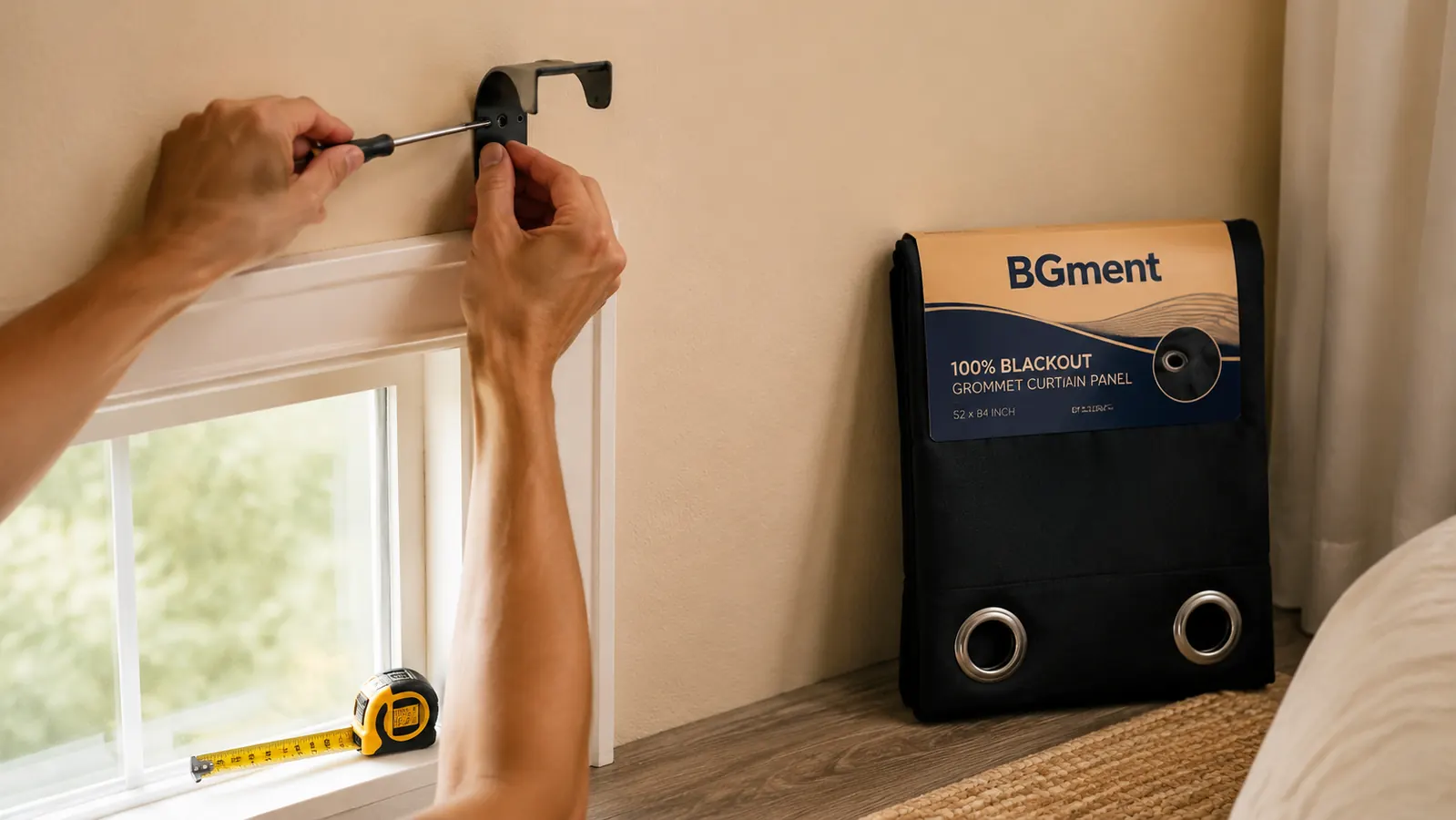
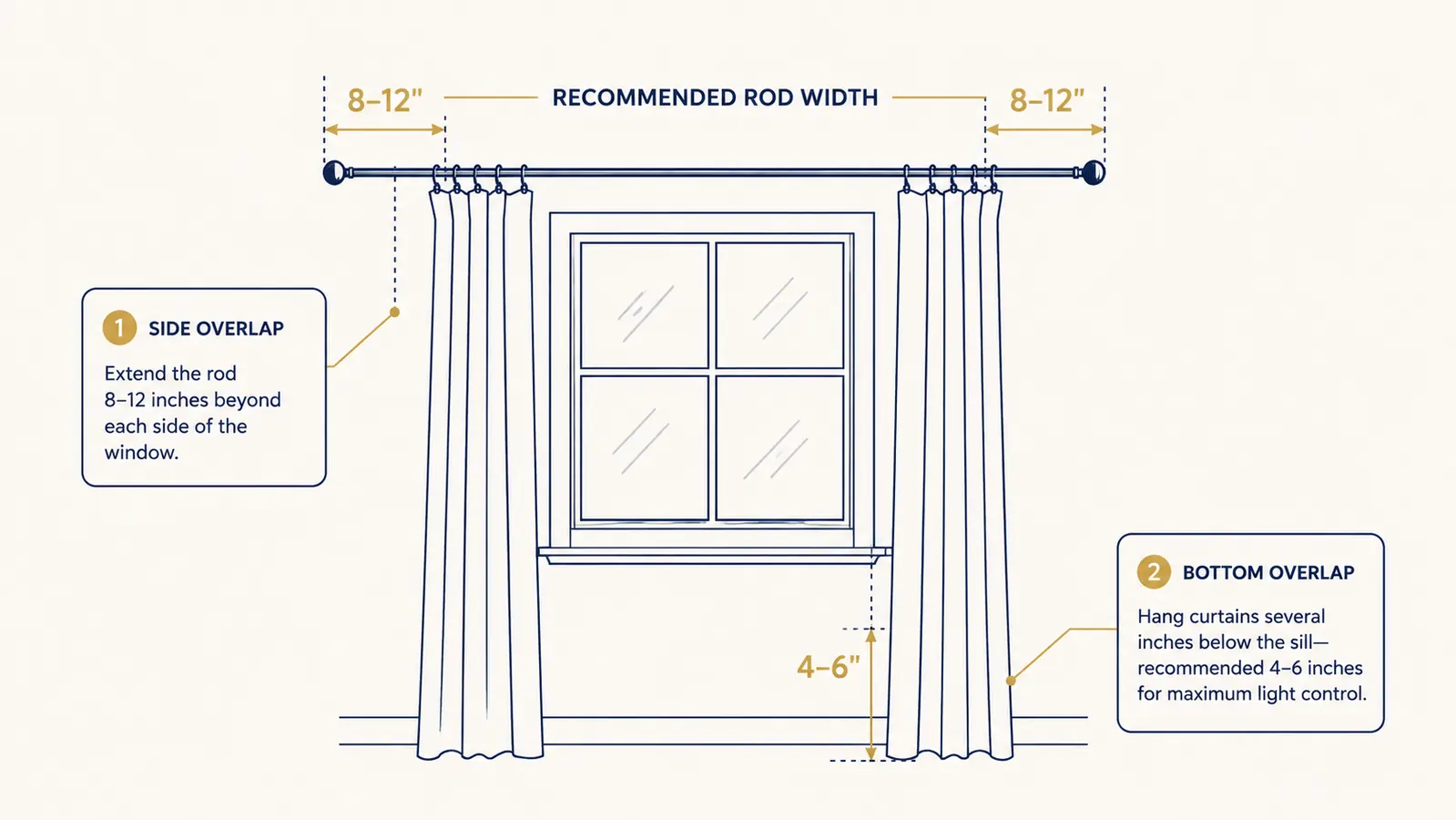
This is the step almost everyone skips, and it's the reason streetlight sneaks in around the edges. Your curtain rod needs to extend at least 8 to 12 inches beyond each side of the window frame, not sit flush with it. When the rod is the same width as the window, the curtain panels hang straight down the sides of the glass and leave a gap of light on both edges, usually right where a streetlight likes to shine in from an angle.
I mounted my rod brackets 10 inches out from each side of the frame. That gave the curtain enough width to wrap slightly past the window opening instead of stopping right at the edge. It looks a little oversized in daylight, honestly, but at night it means there's no sliver of glow creeping in from the side.
If you're renting and can't drill into the wall, look for tension rods rated for the width you need, or a no-drill bracket that clamps onto the window frame's trim. Either works, but the width rule doesn't change. Flush-mounted rods are the number one cause of streetlight leaking around blackout curtains, and it's an easy fix to overlook because it has nothing to do with the curtain fabric itself.
Use a level when you mount the brackets too. A rod that tilts even slightly changes how the panels hang and can open a small triangular gap at one top corner that you won't notice until the room is dark and the light finds it.
Step 3: Hang the panels long, not just wide
Streetlight doesn't only creep in from the sides. It sneaks under the bottom hem too, especially if your window sill is low or your curtain rod is mounted high above the frame (which you want, for the reason above). The fix is to buy panels a few inches longer than the window itself, so the hem falls past the sill and closer to the floor.
My window frame runs 54 inches to the sill, and I bought the 63-inch BGment panels instead of a shorter length. That extra length means the curtain drapes past the sill and pools slightly at the bottom, which blocks the under-hem gap almost entirely. If your rod sits higher above your frame (which it should, per Step 2), you'll need even more length to compensate, so always round up rather than down when picking a curtain length.
Step 4: Overlap the two panels in the middle
The center seam where two curtain panels meet is the other classic leak point. Even good blackout fabric won't help if the two panels just barely touch, because any breeze or shift in the fabric opens a thin vertical line right down the middle, and that's usually right where the streetlight's brightest point lands if your window faces the street head-on.
I overlap my two BGment panels by about 4 inches in the center when I close them for the night. That means buying panels wide enough that, combined, they give you more total width than the rod itself, so there's fabric to spare for the overlap. If you did the math in Step 1 and got 48 inches of coverage needed, and you're using two panels, don't just buy two 24-inch panels. Buy two panels that total closer to 56 inches combined, so you have that 8-inch cushion to overlap in the middle.
A cheap trick for the overlap: a single magnetic curtain clip or a small binder clip at the exact spot where the panels meet, about halfway up the window, keeps them from drifting apart overnight if you toss and turn or the ceiling fan is running.
Step 5: Close the side and bottom gaps with add-on hardware
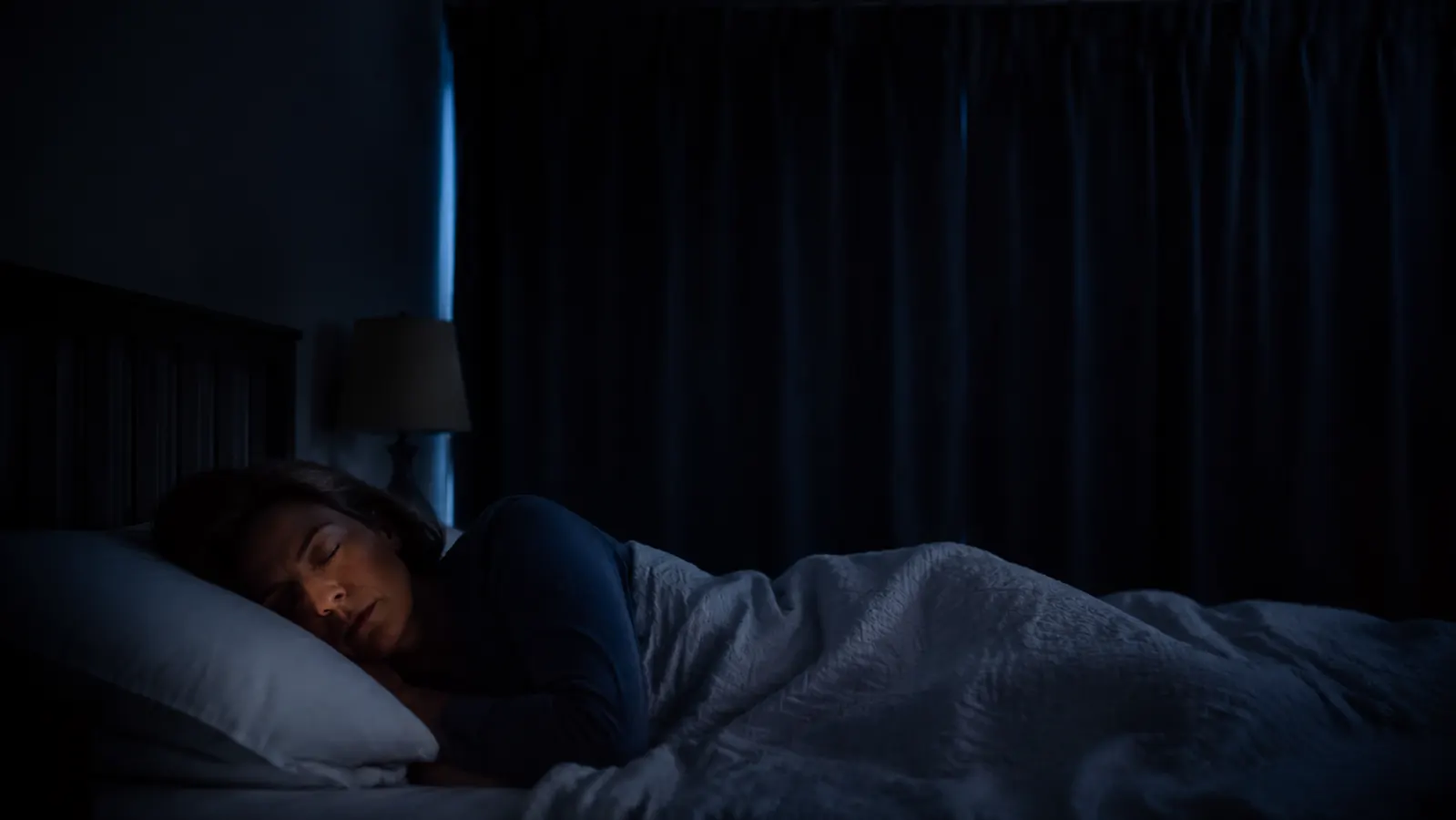
Even with a wide rod, long panels, and a good overlap, you might still get a thin edge of light along the very outer sides where the curtain meets the wall. This is common with any blackout curtain, not just BGment's, because a flat panel of fabric can't perfectly seal a 3D window frame.
Side gaps are the easiest to fix. Blackout curtain liners (a second, cheaper panel you hang behind the main curtain, closer to the glass) or side wall clips, which are small plastic or metal hooks that pin the curtain edge flush to the wall, close that last gap for a few dollars. I use two small adhesive hooks on the wall just outside each curtain edge and tuck the fabric behind them before bed. It takes ten seconds and it's the difference between a genuinely dark room and one with a faint vertical line of orange down each side.
If your gap is at the top instead, a wrap-around or C-channel curtain rod helps, since the fabric curves around the rod itself instead of hanging straight down from rings, which closes off the sliver of light that often shows above the rod pocket. I switched to this style after noticing a faint glow along my ceiling line even with the side clips in place, and it solved the last gap I had. I also learned a lot of this by living with the curtains daily and troubleshooting one gap at a time, which I get into more in my full BGment review if you want the longer version of what held up and what didn't.
Step 6: Get the daytime bonus, block glare and UV too
Once your curtains are dialed in for nighttime streetlight, you get a second benefit almost for free during the day. The same triple-weave fabric that blocks a streetlight's glow at 2am also blocks harsh afternoon sun and a good chunk of UV, which matters if your bed, rug, or furniture sits in direct sunlight for part of the day.
My bedroom gets brutal west-facing sun for about two hours in the late afternoon, and before I hung these curtains, my comforter had visibly faded on one side within a year. Closing the same BGment panels during that window cuts the glare enough that I can nap or work from my bedroom without squinting, and the fading has stopped. It also adds privacy from the street during the day, since the same blackout weave that keeps light out keeps eyes from seeing in, which is a nice side effect if your window faces a sidewalk or a neighbor's porch.
What Else Helps
Blackout curtains handle the window, but streetlight has a way of finding other paths in. A door with a gap at the bottom can bounce hallway or porch light into the room, so a draft stopper or towel along the bottom of the door helps more than people expect. If your streetlight is close enough to shine directly onto the ceiling above your headboard, a slim blackout curtain panel or even a stick-on window film on a secondary window can catch what the main curtain misses.
Grommet-style curtains like the BGment panels also matter here, since the metal rings sit snug against the rod and don't gap open the way clip-on rings can when a draft moves the fabric. I also keep a small eye mask in my nightstand for nights when I'm staying somewhere without good curtains, like at a truck stop or a hotel with paper-thin drapes. It's not a permanent fix, but it's a decent backup for the nights the environment is out of my control.
One last thing worth mentioning: give the curtains a week before you judge them. Fabric that ships folded in a bag needs time to relax and hang properly, and mine looked slightly stiff and gapped at the top for the first few nights before settling into a flatter drape against the rod. If you're still seeing a stubborn gap after a week, it's almost always one of three things: the rod isn't wide enough, the panels aren't overlapping enough in the center, or the panel length is too short for how high the rod sits. Walk back through those three before assuming the fabric itself is the problem.
The curtain does most of the work, but it's the width of the rod and the overlap in the middle that decide whether the room is actually dark or just dim.
Ready to actually block that streetlight?
Grab a set sized for your window (remember: measure the glow, not the glass) and follow the mounting steps above. Most nights now I don't even remember the streetlight is there.
Amazon Check Today's Price on Amazon →