

If you have ever woken up at 2 a.m. with that burning climb up the back of your throat, you already know that acid reflux does not care what time it is. Mine used to hit almost every night within an hour of lying down flat, especially after a later dinner. I tried extra pillows first. I tried sleeping propped up on the couch. Neither one held through a full night. What actually fixed it was switching to a real bed wedge pillow, the Kolbs Bed Wedge Pillow specifically, and learning I had been using it wrong for the first two weeks anyway.
This guide walks through the five things that actually matter for sleeping with acid reflux using a wedge pillow: picking the right incline, positioning it so it does not slide out from under you by 3 a.m., choosing which side to sleep on, timing your last meal, and knowing what to do on the nights the wedge alone is not enough. None of this is complicated, but almost nobody explains it in the right order, so people give up on wedge pillows after a bad first week when the fix was just a small adjustment.
Stop propping pillows on top of pillows. Get the incline built for reflux.
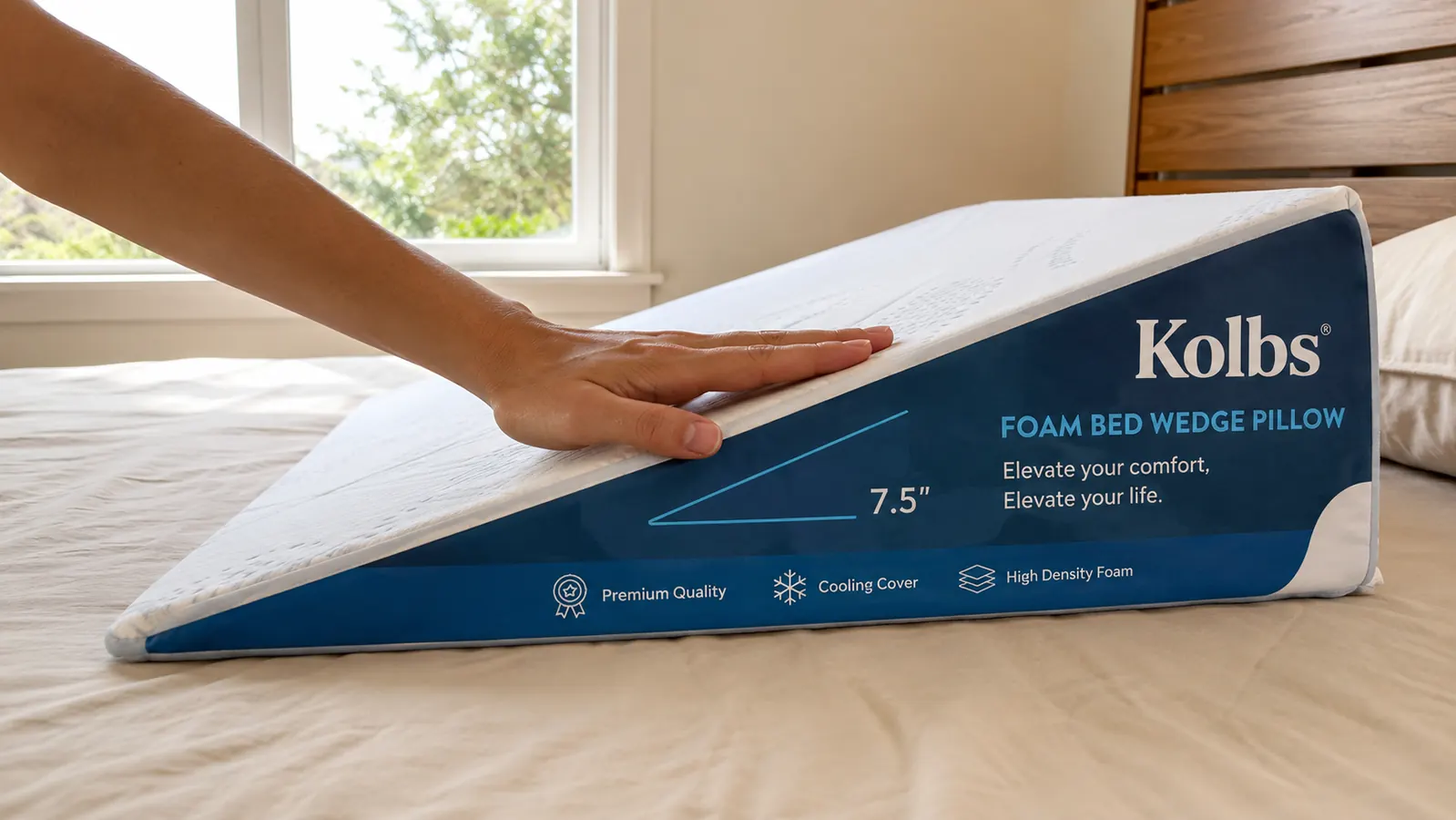
The Kolbs Bed Wedge Pillow holds a steady 30 to 35 degree angle all night instead of flattening out like stacked pillows do by 2 a.m. Memory foam top layer, washable cover, and it is FSA eligible.
Amazon Check Today's Price on Amazon →Step 1: Get the Wedge Angle Right for Acid Reflux, Not Just "Propped Up"
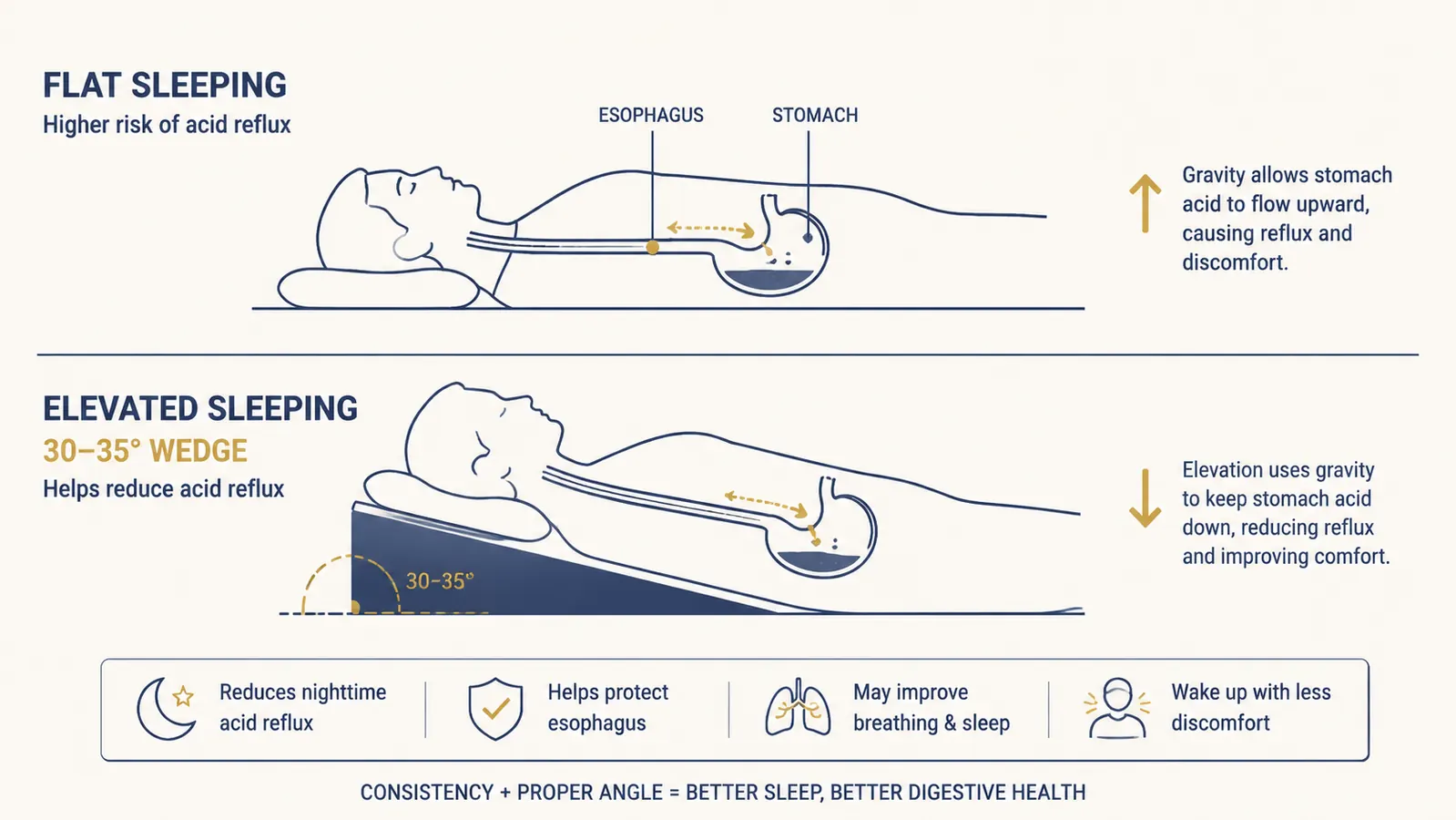
The number that actually matters here is 30 to 35 degrees of elevation from the waist up. That is the range clinical sleep guidance points to for keeping stomach acid from creeping back up the esophagus while you sleep. Lower than that and gravity is not doing enough work. Higher than that and most people just slide down during the night, which defeats the whole purpose by 4 a.m.
This is where stacking two or three regular pillows falls apart. Regular pillows compress unevenly, they shift, and by the time you have fallen fully asleep your head has usually slumped forward into a folded neck position rather than a straight incline. The Kolbs wedge is cut at that 30 to 35 degree range on purpose, so you are not guessing at the angle every night with a pile of bed pillows that used to be flat and full before your face started sinking into them.
The first night I used mine, I actually measured it against the headboard out of curiosity. It held. Three nights later when I went back to my old stacked-pillow setup to compare (for research purposes, I told myself), I was sliding flat again before midnight.
One thing worth knowing before you buy any wedge: incline is measured from the mattress, not from your body. A wedge sitting on top of a soft memory foam mattress will effectively lose a few degrees compared to the same wedge on a firmer bed, because the base sinks in slightly. If your mattress runs soft, it is worth going with a wedge cut a touch steeper than the bare minimum, since you will lose some of that angle to the mattress itself.
Cover material matters more than people expect too. A wedge with a cotton-blend or bamboo-rayon cover that unzips for washing is worth paying a little more for, since you are sleeping directly against it every night the same way you would a pillowcase. The Kolbs cover comes off and machine washes, which matters more in month three than it does on night one.
Step 2: Anchor the Wedge Pillow So It Does Not Slide
Nobody warns you about this part, and it is the reason a lot of people quit on wedge pillows in the first week. A foam wedge sitting loose on top of a fitted sheet will migrate. You shift positions a few times a night, the foam has a slick surface against cotton, and by morning it is halfway off the mattress or turned sideways.
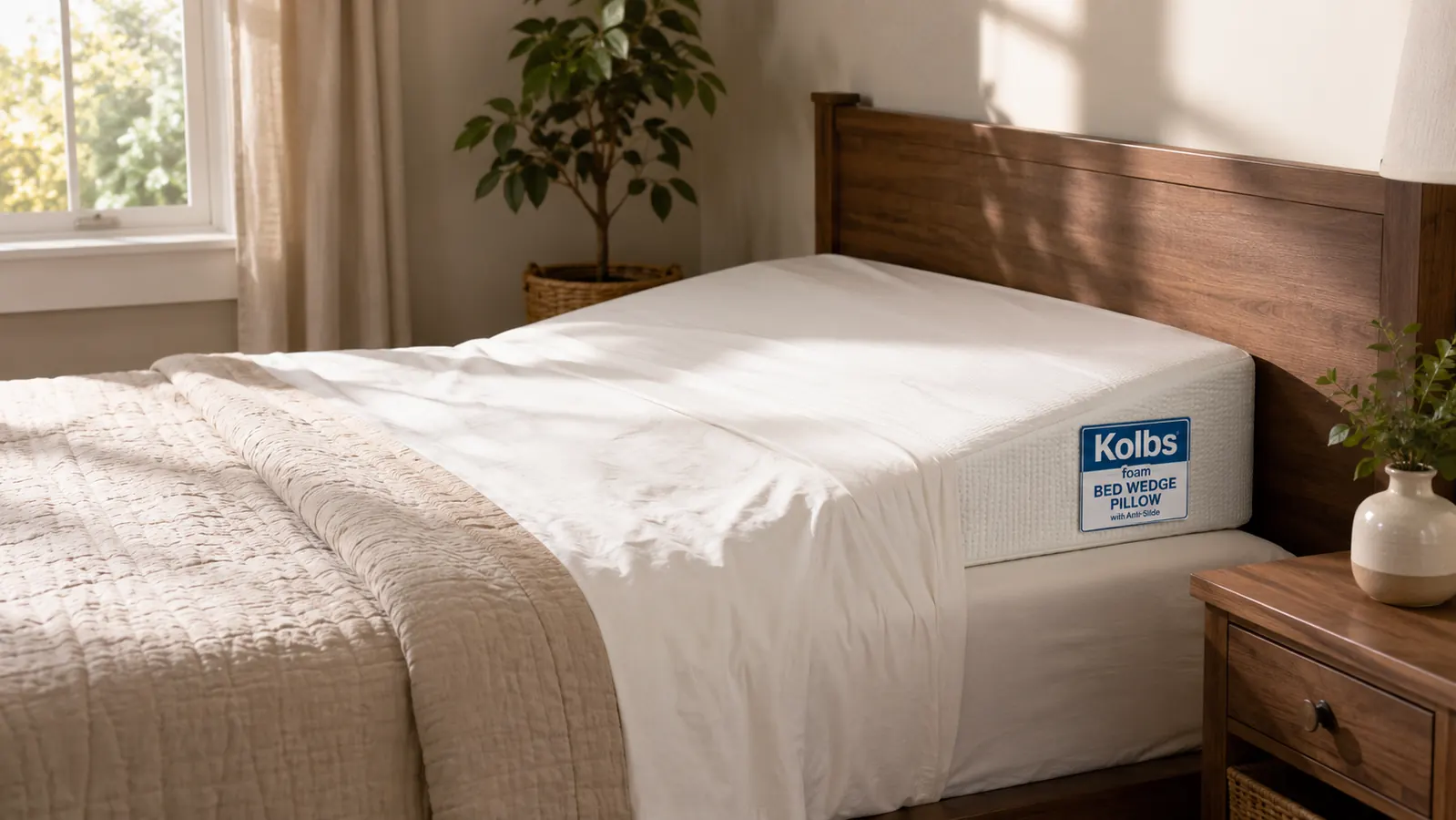
The fix that worked for me was tucking the wedge under the fitted sheet itself, so the sheet's elastic edge holds it against the mattress the same way it holds a regular pillow-top mattress pad. If your fitted sheet does not stretch that far, a thin non-slip shelf liner or rug grip pad cut to size under the wedge does the same job. Either way, test this on night one. Do not wait until you are already annoyed and blaming the pillow itself when the actual issue is that it was never anchored.
If you sleep with a partner or a dog who likes to climb into bed, expect some extra migration in the first week no matter what you do. It settles once everyone in the bed gets used to the new shape. My dog Biscuit spent the first three nights trying to sleep in the gap between the wedge and the mattress before he gave up and found a new spot at the foot of the bed.
Step 3: Pick Your Sleep Side, Not Just Your Incline
Elevation handles gravity, but which side you sleep on matters almost as much for acid reflux. Left-side sleeping keeps the stomach positioned below the esophagus in a way that makes it harder for acid to travel back up. Right-side sleeping does the opposite, it can actually make reflux worse for a lot of people, because of how the stomach sits relative to the esophageal opening on that side.
Combine the wedge incline with left-side sleeping and that is genuinely the best combination for nighttime reflux that does not involve medication. I am naturally a stomach sleeper, so this took real adjustment. What helped was tucking a small pillow behind my back so rolling onto my right side took more effort than just staying put on my left.
Give this adjustment at least a week before you decide it is not working. Your body has a default sleep position it has used for years, and it will keep drifting back to it out of habit even after your brain agrees the left side is better. I woke up on my back or right side more nights than not for the first ten days. By week two, left side had become the default without me forcing it.
A body pillow running the length of your torso is the other trick that helps lock in left-side sleeping, since it gives your top leg and top arm somewhere to rest instead of pulling your shoulders back toward center. You do not need to buy one just for this, a firm regular pillow hugged against your chest does the same job in a pinch.
Step 4: Time Your Last Meal Around the Wedge, Not Instead of It
A wedge pillow is not a permission slip to eat a big meal at 9 p.m. and expect the incline to handle it. Give your stomach at least three hours between your last real meal and lying down, longer if it was heavy, fried, or acidic. Reflux triggers pile up fast: tomato-based sauces, citrus, chocolate, caffeine, alcohol, and anything fried are the repeat offenders I had to actually track before I saw the pattern.
The wedge and the meal timing work together. On nights I ate dinner by 6:30 and used the wedge, I slept through with zero burning. On nights I had a late dinner and used the wedge anyway, I still got some breakthrough discomfort, just less severe and later in the night than without it. The pillow reduces the problem. It does not erase bad timing.
Keeping a short note on your phone of what you ate and how the night went is more useful than it sounds. After about two weeks I could see clearly that pasta with red sauce past 8 p.m. was a guaranteed bad night regardless of the wedge, while the same pasta eaten at 6 p.m. with the wedge in place caused nothing at all. That kind of pattern is hard to see without writing it down, and easy to see once you do.
Step 5: Know When the Wedge Alone Is Not Enough
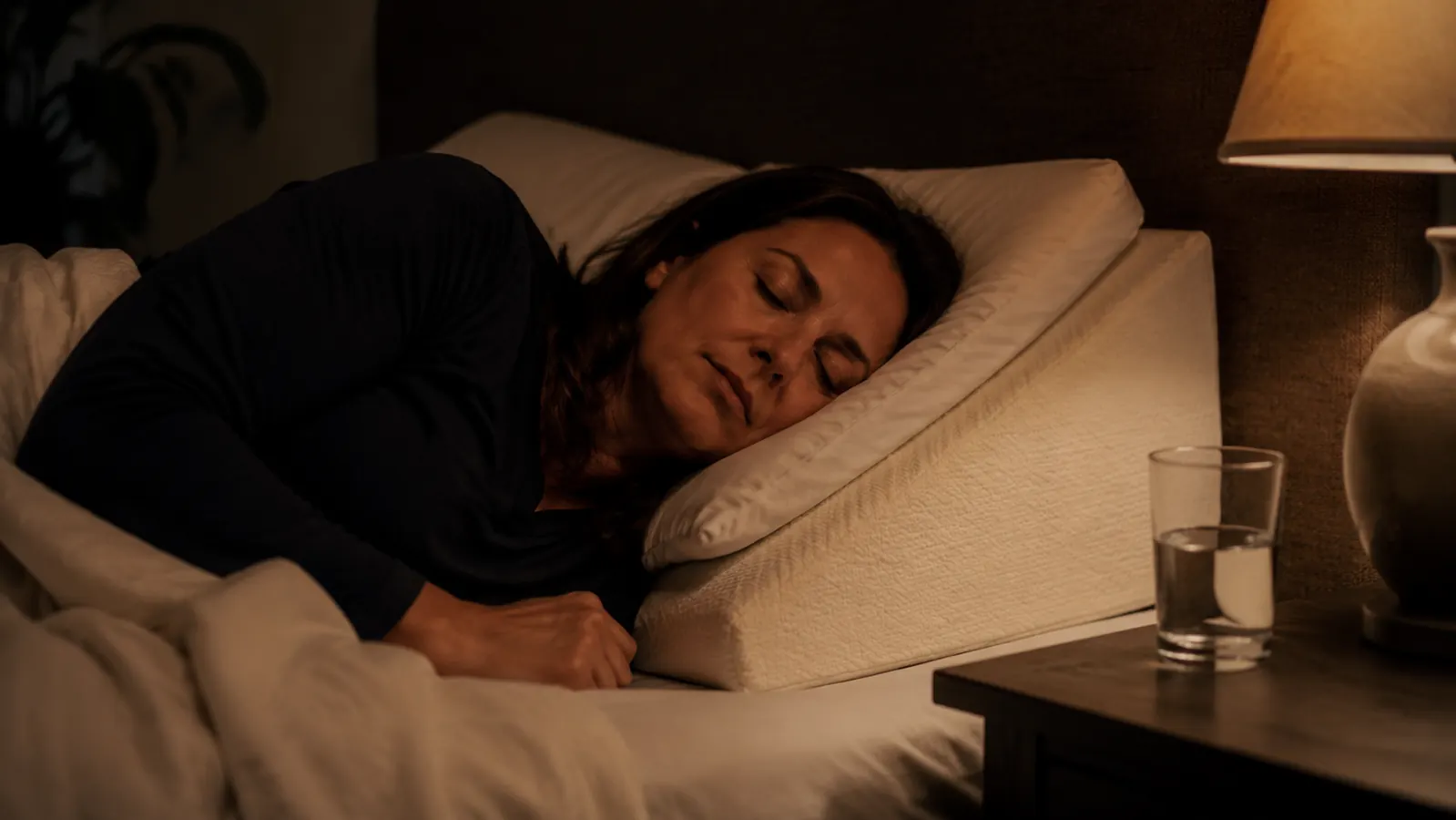
For most people with occasional or mild nighttime reflux, the wedge plus left-side sleeping plus earlier dinners is enough to get a full night without waking up burning. But a wedge pillow is a positioning tool, not a treatment for an underlying condition. If you are getting reflux most nights regardless of what or when you eat, if you have a chronic cough, hoarseness in the morning, or trouble swallowing, those are reasons to talk to a doctor rather than just buying a better pillow. GERD that is left unmanaged long term can affect the esophagus in ways a wedge pillow was never designed to address.
I want to be honest here because I do not think a pillow review site should pretend foam solves everything. The wedge fixed my occasional reflux, the kind tied to bad food timing and eating too late. It is not a substitute for medical care if your reflux is frequent, severe, or getting worse. Think of the wedge as the first, easiest thing to try, not the last thing you try after everything else has failed.
What Else Helps Alongside the Wedge
A few small habits stack well with the wedge. Loosening waistbands before bed instead of sleeping in tight pajama shorts reduces the pressure pushing up on the stomach. Avoiding carbonated drinks in the evening cuts down on the gas that makes reflux worse. And if you are a side sleeper already, pairing the wedge with a slightly firmer regular pillow under your neck (not stacked on the wedge, just resting where your neck naturally falls at the top of the incline) keeps your spine from kinking at the transition point between the wedge and a flat pillow.
Weight around the midsection also puts more pressure on the stomach and makes reflux more likely regardless of sleep position, so if that is part of your picture, it is worth addressing alongside the wedge rather than instead of it. None of these habits replace the incline. They just remove the extra pressure that works against it.
Stress plays a role too, more than most people want to admit. Reflux and an unsettled stomach tend to show up together, so a short wind-down routine before bed, even just five minutes of quiet with the lights low, tends to make the whole setup work better than the wedge on its own during a stressful week.
The wedge did the gravity work. Eating dinner by 6:30 and sleeping on my left side did the rest. I needed all three, not just the pillow.
If you share a bed, it is worth mentioning that a full-width wedge changes the feel of the mattress for a partner too. Some couples both switch to the incline together, some only wedge one side, using a narrower wedge tucked to one edge of the mattress. If you are curious how a proper wedge stacks up against just piling on more of your regular pillows long term, our comparison of the wedge pillow against stacking extra pillows breaks down exactly where the DIY approach falls short, and our full 6-month review covers how the incline held up over time.
Give the incline three nights before you judge it.
Most people notice the difference by night two or three, once the anchoring trick above stops the slide. The Kolbs wedge holds its shape and angle far longer than stacked pillows ever will.
Amazon Check Today's Price on Amazon →